
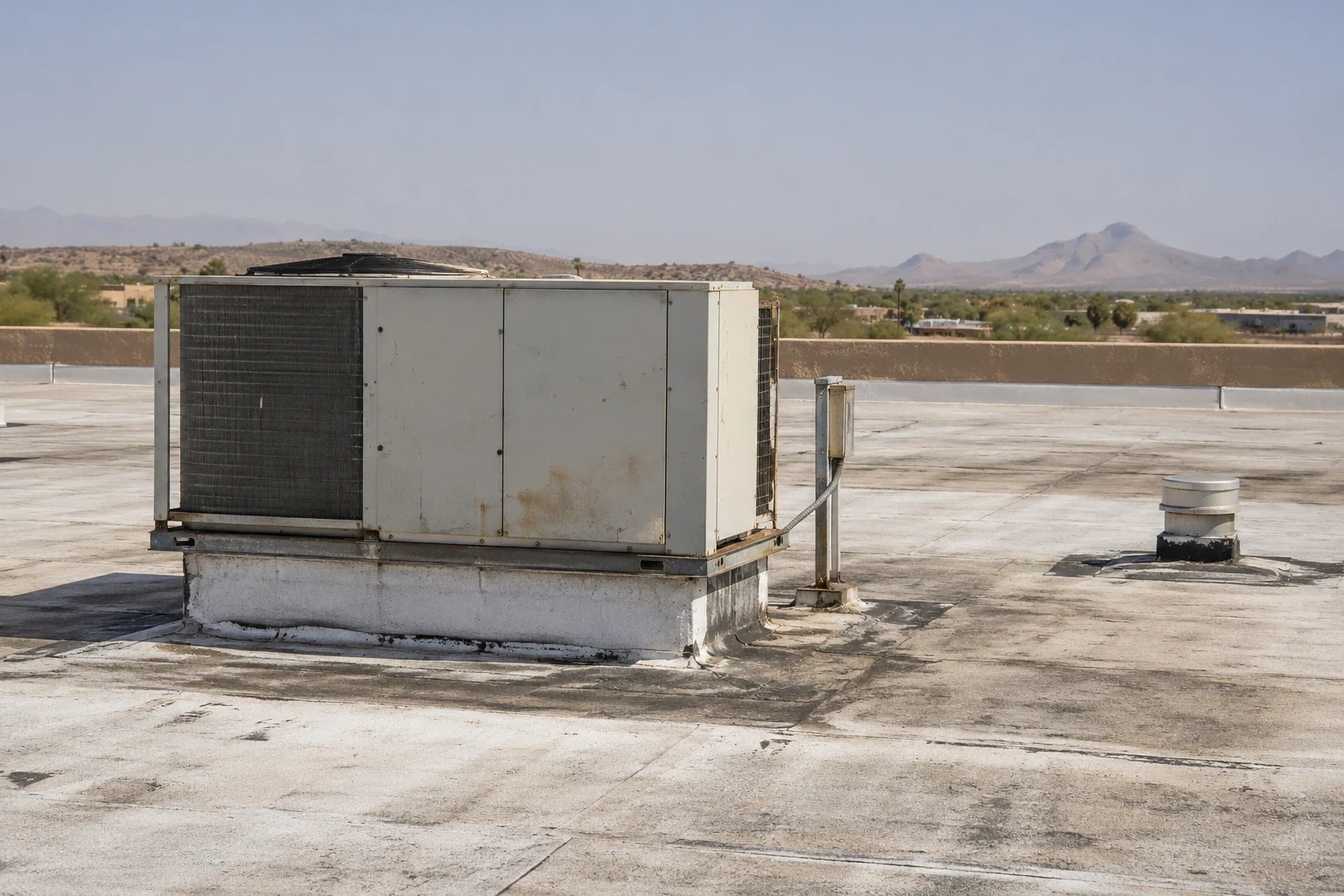
Commercial Roof Repair in Rio Rancho, NM
A lifted lap or open flashing can admit water long before a ceiling shows a stain. In Rio Rancho, NM, strong sun, seasonal hail, and brief monsoon downpours put stress on seams, terminations, and drainage details. We inspect the reported area, trace the water path, and test the material that would define the repair boundary. A patch goes only where the substrate and surrounding membrane can support it. If moisture or damage extends beyond that point, we document the added area before changing the scope. The facility director receives a repair recommendation tied to observed conditions, not a guess based on the ceiling mark.
Water Path and Failure Point
Repair starts with the roof, not the room where water appeared. We compare the interior report with penetrations, seams, curbs, wall transitions, drains, and nearby repairs. Water can travel along a deck or insulation layer before reaching a ceiling, so a stain does not establish the opening above it. We inspect uphill and across the likely path, looking for split membrane, open laps, failed sealant, displaced metal, or a puncture. Where a hidden condition remains possible, we use targeted moisture testing. The resulting map separates the entry point, wet material, and the area that can remain in service.
Rio Rancho’s summer storms make that tracing practical. A 2018 monsoon burst near Enchanted Hills delivered more than two inches in about an hour, while another northwest event reached very high short-duration rates. On a commercial roof, a fast downpour can reveal a blocked bowl, an undersized or obstructed path, or a low area that holds water after the outlet clears. We check those details rather than sealing the first visible seam. If a drain is involved, we inspect the bowl and surrounding membrane together. A repair that closes one entry point but leaves the runoff path impaired is not a complete correction.
Repair Boundary
Once the failure point is confirmed, we mark the material that must be removed and the sound surface needed for a reliable tie-in. A small patch may be suitable for an isolated puncture or short open lap. If the membrane is brittle, insulation is wet, or several details fail along one transition, a broader repair or partial replacement may make more sense. We note each condition and explain what remains outside the scope. Where testing shows widespread moisture, the facility team can compare repair with full replacement rather than extending patches across an unstable assembly.
Material compatibility matters at every patch. We identify the existing membrane when possible, check the condition of the surface, and select a repair method that can adhere or weld to that assembly. A coating is not a universal fix for a seam that has separated, an open penetration, or wet insulation. Metal edges, pitch pockets, pipe boots, and curb corners may require different preparation and flashing. We photograph the repair boundary before work and record the product and method used. When the roof system cannot be confirmed from visible evidence, we state the test or small opening needed before committing to a permanent detail. That prevents a temporary seal from being described as a completed assembly repair.
Membrane and Metal Details
Field seams need clean, compatible surfaces and a sound weld or bond across the full repair length. We remove loose material, prepare the membrane, and inspect the completed seam for voids, fishmouths, and edge lift. At a termination, the work must control movement and water entry where the membrane meets a wall, curb, or edge. The TPO system or other assembly determines which repair materials and procedures fit. We also check the layer below the surface when the condition calls for it. If the substrate is soft or wet, a surface patch cannot restore the attachment beneath it.
Metal details need their own inspection. Coping, counterflashing, scuppers, gutters, and edge metal can loosen, corrode, or separate at joints. We check fasteners, laps, sealant condition, cleats, and the transition to the roof membrane. Hail can leave dents without opening the assembly, so we distinguish appearance from a split, puncture, or displaced termination. Rio Rancho roofs near Southern Boulevard and the NM 528 commercial corridor may have different access and drainage layouts from a campus or industrial building, but the repair still follows the installed detail. We record what failed and how the corrected metal or membrane returns water to the intended drainage path.