
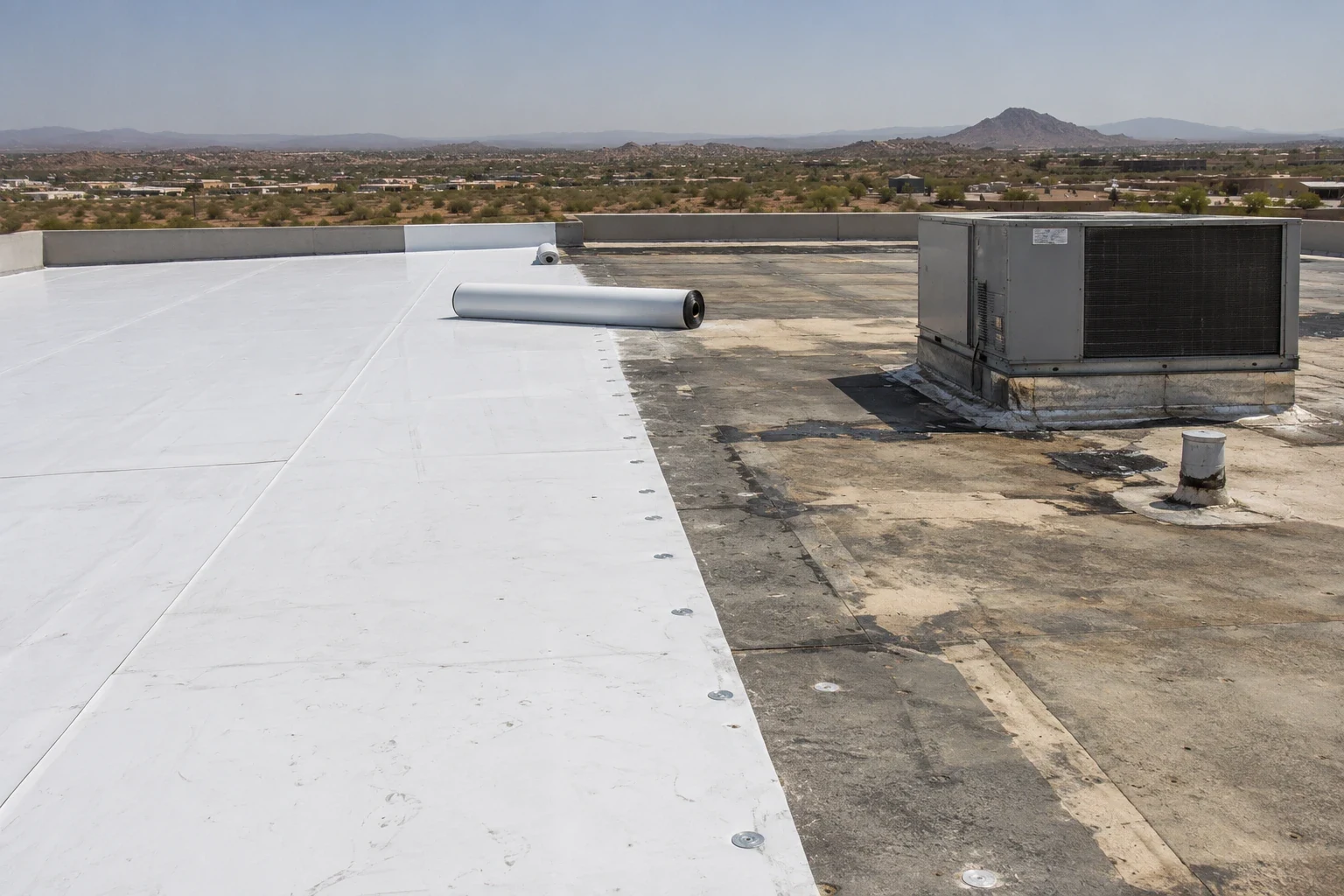
Commercial Roof Recover in Rio Rancho, NM
A recover adds a new roof layer over an existing assembly, but only when the old roof can support that decision. In Rio Rancho, NM, heat, hail, and sudden monsoon rainfall make a weak layer or blocked drainage detail harder to ignore. We start by checking attachment, moisture, deck condition, drainage, and the number and compatibility of existing layers. Core cuts or other targeted tests show whether insulation is dry enough to remain. The report then marks recoverable zones separately from areas that need removal. That boundary protects the facility director from paying to cover a problem that should be opened first.
Existing Layer Review
Before recommending an overlay, we identify what is already on the deck. The inspection records membrane type when identifiable, visible repairs, insulation condition, penetrations, perimeter details, and signs of trapped moisture. We test representative roof zones rather than relying on a single dry core or a surface stain. If wet insulation is present, installing another layer over it can leave moisture in place and complicate future repairs. Where readings vary, we expand testing around the suspect area and show what removal would expose. Those results also help compare a recover with full roof replacement or a focused repair scope.
Attachment deserves equal attention. A new system must transfer wind forces through the existing layers to a deck that can hold the fastening pattern, or use another approved attachment design. We inspect the substrate at test cuts, review available records, and look for loose, delaminated, or unstable material. Existing fasteners, adhesives, and membrane seams do not automatically provide a suitable base. The new assembly has to be compatible with the old one, and the perimeter cannot be stronger on paper than the deck beneath it. If the current roof has an unknown build-up, we document that uncertainty and set a test area before pricing a larger overlay.
Code and Added Load
Every recover adds weight and changes roof height. We review the existing layers, structural capacity information available to the owner, drainage elevations, parapet height, curbs, and door or equipment clearances before setting a scope. A new board and membrane can raise the finished surface enough to affect counterflashings, scuppers, drains, and rooftop transitions. If added dead load cannot be supported or a detail cannot be rebuilt to a reliable termination, recover is the wrong approach for that zone. New Mexico’s commercial building code is based on the 2021 IBC as amended; the applicable permit path and assembly requirements need confirmation for the project.
Energy-code requirements also affect the assembly. The state’s 2021 Commercial Energy Conservation Code applies to covered commercial work under its effective rule. We evaluate insulation needs, existing thermal layers, and attachment details together rather than treating the overlay membrane as a stand-alone choice. A recover may be efficient when the old roof is dry, stable, compatible, and within code limits. It does not become the lower-risk option simply because tear-off is avoided. The written recommendation shows the evidence for recover, removal, or selective replacement so the facility team can compare scope and future maintenance consequences. Where a sheet membrane is selected, we also record the TPO assembly details that maintenance staff will need later.
Drainage and Edge Height
Drainage can decide whether the new layer works. We trace the surface path toward each drain or scupper and inspect the bowl, leader, sump, crickets, and low areas. A second layer can reduce the space available at a drain and leave a rim that slows runoff. Before installation, the detail must account for the new finished elevation and direct water into the outlet. We also inspect whether the existing deck or insulation has settled. A fresh membrane cannot correct a structural depression by itself. If the roof holds water after the drain clears, we determine whether tapered insulation, localized correction, or removal is needed before the recover proceeds.
Edges need the same elevation check. Parapet caps, coping, wall flashings, equipment curbs, skylights, and expansion joints all meet a higher roof surface after an overlay. We verify that flashing can extend to the required termination and that the new membrane can tie into stable material. Rio Rancho’s sun and seasonal hail put movement and impact stress on exposed terminations. If the existing edge metal is loose or the substrate is deteriorated, the recover scope needs an edge rebuild rather than a cover strip hiding the defect. We mark each transition on the roof plan and photograph the condition so the owner can see where added height changes the detail.