
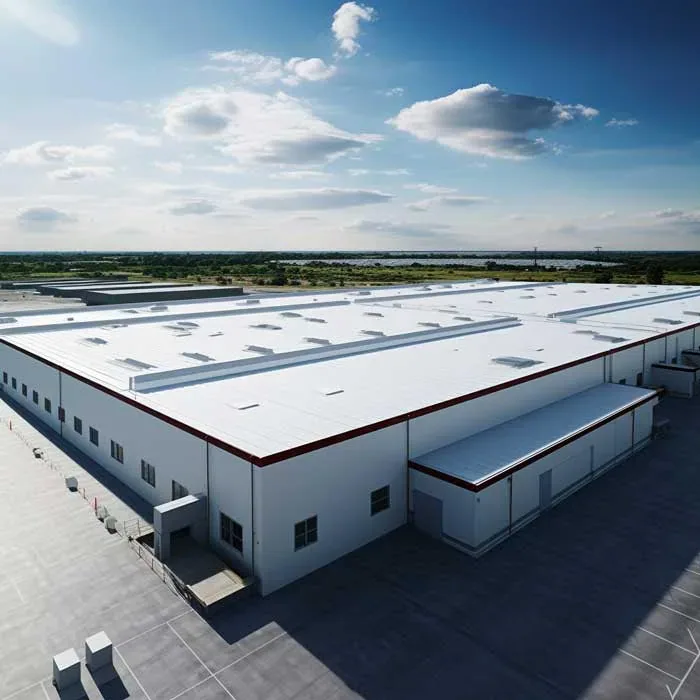
PVC Commercial Roofing in Rio Rancho, NM
A PVC roof detail has to stay welded where sheets meet and watertight where the membrane turns up a curb. In Rio Rancho, NM, seasonal hail and monsoon bursts make those transitions part of the system decision. We inspect seam condition, flashing, attachment, insulation, and drainage before specifying a repair or new installation. If an existing sheet has a split or patch, we check the material and surrounding substrate before selecting the weld or flashing method. The facility director receives a roof-zone record that distinguishes a local PVC defect from a broader assembly concern.
PVC Membrane Review
PVC is a thermoplastic single-ply membrane joined at seams with hot-air welding. We inspect weld width, laps, corners, patch edges, and the condition of the sheet at equipment and wall transitions. A probe can identify an unwelded section that looks closed from standing height. We also look for contamination, shrinkage, punctures, or movement around penetrations. The roof plan records each test and repair area. Before using PVC repair material, we confirm the existing membrane and check that the substrate is firm enough to support a durable tie-in.
New installation details depend on the deck, insulation, cover board, attachment method, edge conditions, and roof use. We review the perimeter zones separately because wind and movement affect those terminations. At rooftop equipment, the flashing needs adequate height and service clearance. The drain flange must match the membrane and finished roof elevation. A TPO comparison can help when the owner is choosing between thermoplastic systems, while an existing EPDM roof requires its own repair materials and seam method. We select for the assembly and building conditions, not by surface color alone.
Seams and Corners
Welds are checked after they cool, and the repair extends through the full failed area to sound membrane. We clean and prepare the sheet, set the overlap, and weld using the system requirements. At a corner or T-joint, the patch shape and reinforcement matter because several seams meet in a small space. If moisture has reached the insulation, we mark that extent and determine whether removal is needed before closing the sheet. The service record shows the test location and completed edge so a later inspection can find the repair.
Edge metal, parapet caps, and curb flashing use the same principle: a transition cannot be left with an exposed path behind the membrane. We inspect termination bars, counterflashing, fasteners, and sealant. Movement at a curb or loose edge can stress an otherwise good field weld. A hail mark needs a direct inspection for a puncture or split instead of being treated as membrane failure. If hail affects the seam, the repair boundary includes the adjacent weld and substrate that must support it.
Before closing a repair, check the full weld width and confirm the probe does not catch at corners or transitions. Record the test location and ambient conditions so a later inspection can compare like details.
Roof Use and Maintenance
Commercial kitchens and facilities that exhaust grease or chemicals onto a roof need careful material selection. We inspect exhaust locations, residue, nearby seams, and the path used for filter service. PVC may be considered where the specified roof assembly and exposure support it, but the product requirements and installation detail control. We check for accumulated grease or cleaning agents that could affect the surface and coordinate filter changes with roof maintenance. An exhaust curb must be flashed separately; the field membrane does not make a poor curb detail reliable.
Service traffic can damage any membrane. We note where technicians cross, where tools are carried, and whether walk pads protect the route. Drains and scuppers are checked for debris, and the roof map identifies outlets that require regular clearing. A maintenance plan can include post-service checks at rooftop equipment and a reinspection after heavy weather. Near the NM 528 and Northern Boulevard industrial area, facility access and equipment routes are defined with each building contact. The Industrial Park route does not tell us a particular roof’s layout; the site map does.