
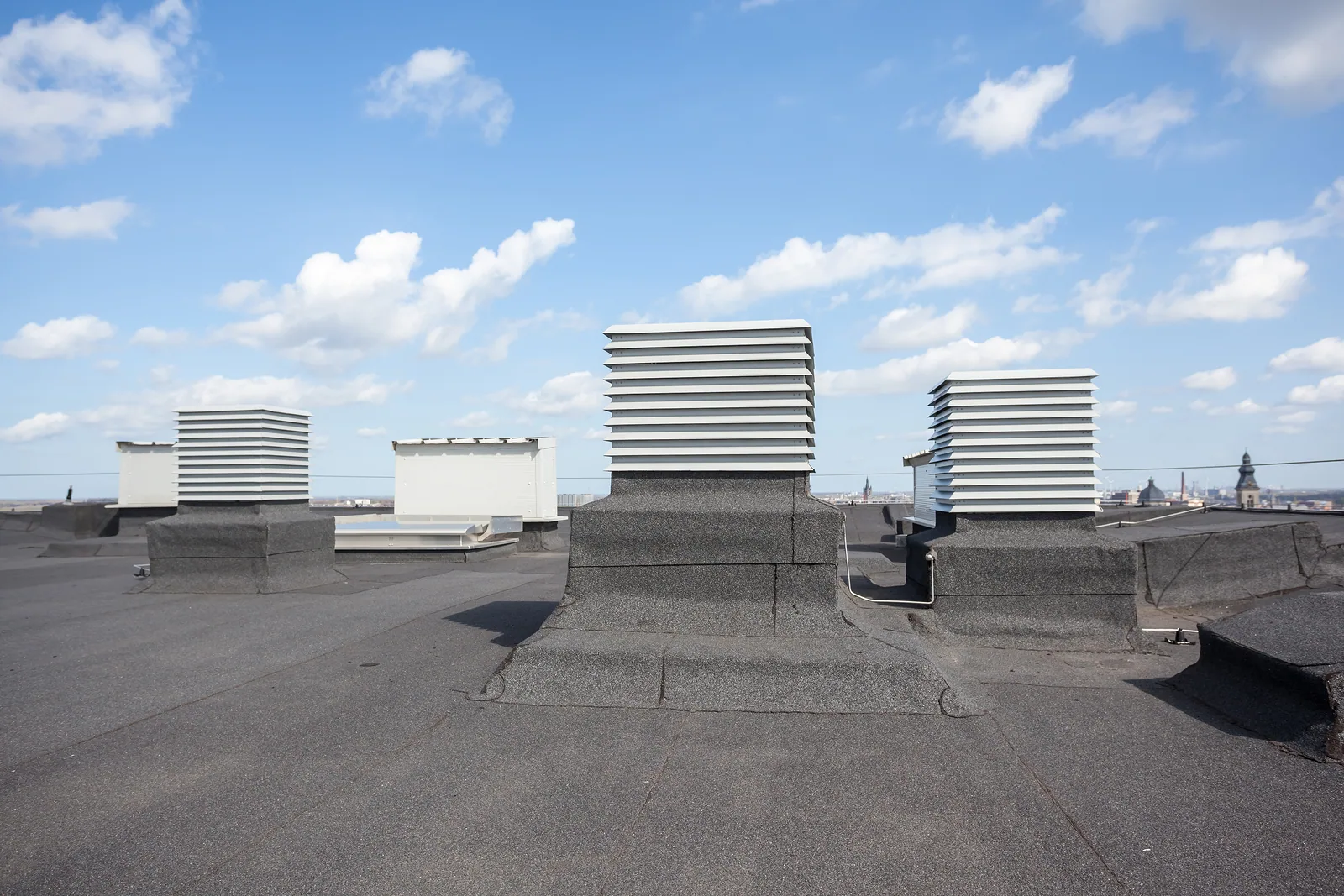
EPDM Commercial Roofing in Rio Rancho, NM
An EPDM lap that has lost adhesion can admit water even while the sheet looks intact. In Rio Rancho, NM, sun and seasonal storms make the condition of seams, termination bars, and pipe boots important to a roof decision. We inspect the membrane and its attachment, check the substrate for moisture, and trace the reported leak to a roof zone before selecting a repair. The scope distinguishes a local seam correction from insulation or flashing work that extends beyond it. The facility director receives a map of tested areas and the detail that needs attention.
EPDM Membrane Condition
EPDM is a flexible single-ply membrane whose seams are typically joined with adhesive or seam tape rather than heat welding. We inspect the lap edges, patches, terminations, field sheet, and prior repairs for separation, wrinkles, punctures, or loss of bond. The repair method depends on the system and the condition of the surface. We remove loose material, clean and prepare the EPDM, then install compatible tape, adhesive, or flashing. We do not use a TPO weld procedure on EPDM or apply a coating without checking compatibility.
Age or a chalked surface does not prove the entire membrane has failed. We check flexibility, attachment, seams, penetrations, and the condition of insulation beneath suspected areas. If a seam is open in one zone but the surrounding field is sound, a localized repair may be appropriate. If test cuts find widespread moisture or the membrane has repeated separation, the owner may need a larger replacement review. A TPO system or PVC system has different seam methods; confirming the installed material is the first step toward a lasting tie-in.
Laps, Tape, and Adhesion
We inspect the lap for clean contact, wrinkles, open edges, and evidence of water moving beneath the sheet. At a repair, the surface is prepared according to the chosen system and conditions. Seam tape must be placed on a clean, dry surface with the correct overlap and pressure. Adhesive needs the right application and set time. We roll the repair and check the edge so the work does not leave a channel for water. If the substrate is damp or contaminated, we correct that condition before installing new tape or flashing.
Terminations deserve separate attention. We review the bar, fasteners, metal counterflashing, wall transition, and corners where the membrane changes direction. A loose bar or failed sealant can pull the sheet and open the lap. At pipe penetrations, a compatible boot or uncured flashing is selected for the assembly and shaped to the detail. Hail can damage a boot or create a puncture, but a mark alone is not proof of a breach. Rio Rancho has recorded quarter-size hail; we inspect the membrane and nearby details directly before writing a storm repair.
Heat and Water Management
Sun exposure can affect seams, sealants, and exposed flashing, while heavy rainfall tests the drainage path. We inspect the membrane at roof edges, drains, scuppers, curbs, and low points, noting whether water can reach the outlet. A clear drain does not correct a depressed insulation layer. If a roof holds water after a short storm, we compare the surface condition with the drain bowl, sump, and known low areas. Rio Rancho’s monsoon rainfall has been intense in localized parts of the city, so we check the actual roof rather than infer a defect from a regional storm report.
When a leak is reported, we follow the likely water path from the interior mark to the roof detail. EPDM can carry water along a seam or beneath a patch, so the leak opening may not sit directly above the stain. We test suspect insulation and document the repair boundary. If wet material extends beyond the seam, a patch alone cannot restore the assembly. The facility team can compare a focused repair with a replacement or a properly tested recover.