
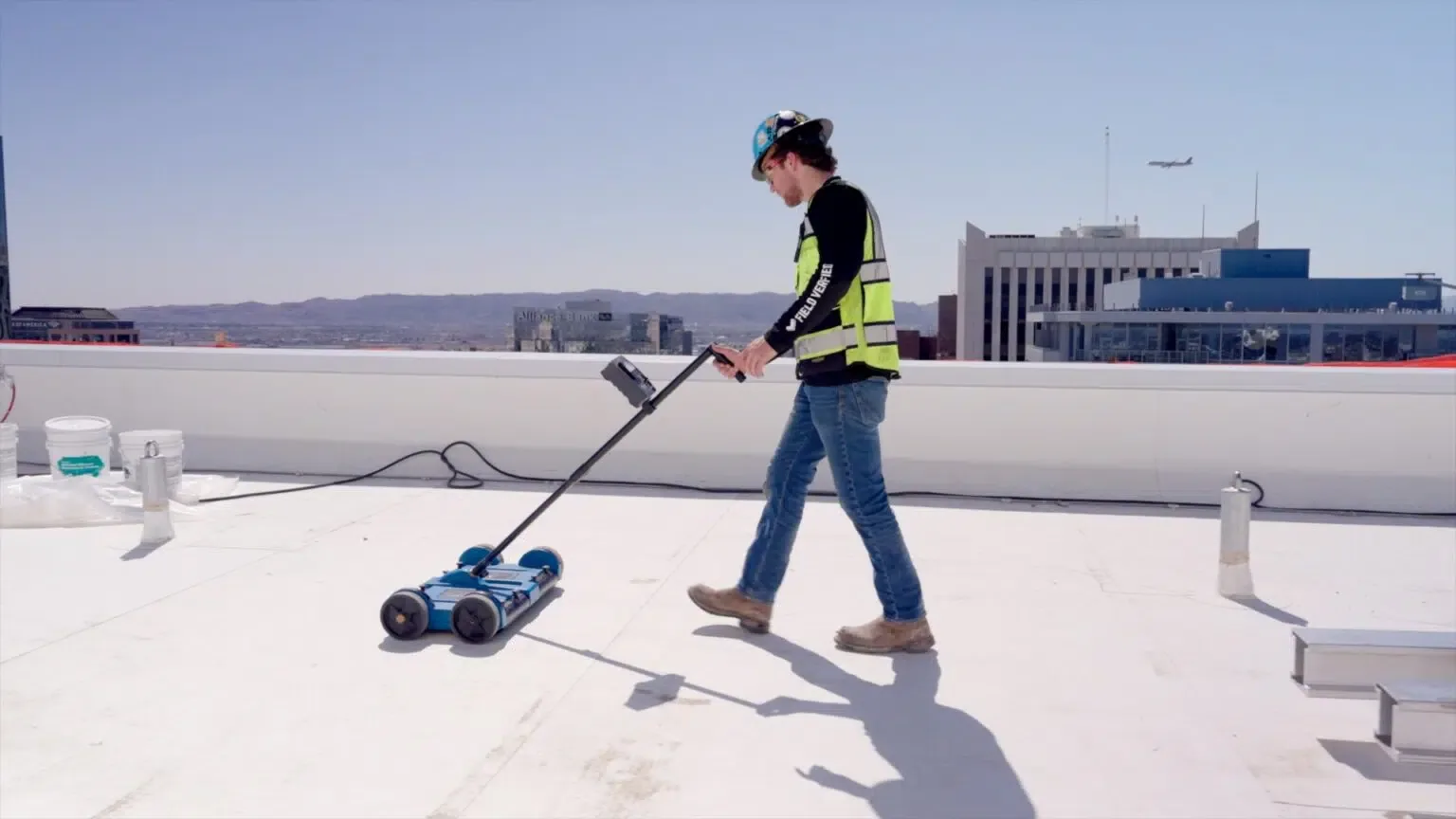
Infrared Roof Moisture Survey in Rio Rancho, NM
A thermal pattern is a lead, not a moisture finding by itself. In Rio Rancho, NM, an infrared survey can help screen a large low-slope roof for areas that deserve closer testing, especially after a leak or before a repair boundary is set. We account for roof construction, surface conditions, timing, and recent weather, then map candidate anomalies by zone. Suspect areas are checked with a second method, such as a core cut or approved moisture meter, before wet insulation is included in a scope. The facility director receives a clear separation between thermal observation, confirmed moisture, and the next step.
Survey Conditions
Infrared work depends on a temperature difference between wet and dry areas and on the roof surface being suitable for the scan. We review the roof type, insulation assembly, surface color, shading, rooftop equipment, and weather history before scheduling. Recent rain, cloud cover, wind, or a wet surface can weaken the contrast or create misleading patterns. We select a survey window and record the conditions that affect interpretation. A thermal image is not treated as a roof map until it is tied to a visible reference point, roof zone, and site plan.
Rio Rancho’s summer rainfall arrives in localized bursts and dry intervals, so survey timing matters. A roof that has recently received water may show thermal differences, but that pattern alone does not prove moisture is trapped in the assembly. We use the scan to identify areas for follow-up, not to label every temperature change as damage. Surface equipment, shadows, patches, and changes in insulation can produce different signatures. The technician notes those influences and avoids assigning a wet boundary until a second test supports it.
Roof-Zone Mapping
We plan a scan route that covers the accessible roof field, perimeters, drains, and areas reported by the facility team. Thermal observations are paired with visible-light images so a candidate pattern can be located relative to curbs, seams, and roof edges. The map identifies which areas were scanned, which were inaccessible, and where confirmation is still needed. On a large facility, zones can be numbered to support testing and future repair bids. That makes the survey useful to maintenance staff who need to direct a core cut or compare the results with a prior inspection.
Rio Rancho’s commercial development is concentrated along major roads, with industrial activity identified around Northern Boulevard and NM 528. A survey at a technology or industrial building may include equipment clusters, restricted walkways, and roof sections that cannot be accessed during production. We coordinate with the facility director before laying out the route. If rooftop equipment blocks a suspected area, we note the limitation and do not infer a condition beneath it. The same principle applies to a roof with multiple membrane repairs: each anomaly is tied to a visible surface feature before testing.
Confirming an Anomaly
After the scan, we rank candidate areas for confirmation based on the thermal contrast, roof history, reported leaks, and assembly layout. A core cut can show the layers and whether insulation is wet at that exact point; a meter reading can provide another check when appropriate for the system. We document each test location and restore any opening. If results confirm moisture, we map its measured extent and identify the removal or repair needed to establish the boundary. If a suspect location tests dry, the report records that result instead of leaving a false wet area on the repair plan.
No survey method samples every square foot. We explain what was scanned, how representative test points were selected, and what remains uncertain. A targeted survey can support hands-on roof inspection, repair planning, or a broader replacement evaluation. The scope should not price full removal from a thermal image alone. It should connect confirmed moisture to the roof zone, material layer, and repair boundary that the facility team can review.