
Commercial Roof Leak Repair in Rio Rancho, NM
A ceiling drip marks where water surfaced; the roof opening may sit farther along the runoff path. In Rio Rancho, NM, brief monsoon bursts can put drains, seams, and penetrations under pressure before a facility team has time to move equipment. We map the interior report to the roof, inspect the details around it, and test the area that would define a permanent repair. The result is a marked boundary between confirmed damage, suspected moisture, and intact membrane. For an active leak, we can protect the building first and return for a lasting repair when the surface and assembly can be checked properly.
First Roof-Zone Check
We begin with the building contact’s report: when water appeared, which rooms or equipment are affected, whether the leak changes with wind or rain, and what access limits apply. That detail narrows the roof zone, but it does not replace inspection. Inside, we look for the path water followed and protect sensitive contents. On the roof, we check seams, penetrations, curbs, wall transitions, edge metal, drains, and old repair lines. A roof opening can be uphill from the ceiling mark or several feet to one side. The inspection keeps each possibility visible until the membrane and substrate support a repair location.
When water is still entering, the first task is temporary control. Our emergency response runs through nights, weekends, and holidays. We isolate affected areas, protect interior operations, and apply a suitable temporary dry-in when roof access and conditions allow. That protection is not described as a permanent repair. We record its location and the follow-up inspection needed so a maintenance team knows what remains open. If the roof is wet, windy, or unsafe to access, the facility contact receives a clear next step rather than an unsafe promise of immediate roof work. A permanent detail waits until materials can bond, weld, or fasten correctly.
Finding the Entry Point
Water may travel through a lap, along insulation, or beneath a curb before it reaches an interior finish. We inspect the reported location and work outward across the roof plane, tracing seams and transitions in the direction water can move. We also ask whether the leak appeared during a short downpour, after sustained rain, or during a wind-driven storm. That timing can help prioritize drain bowls, scuppers, wall joints, or exposed terminations. Rio Rancho has recorded short, intense rainfall near Enchanted Hills and northwest neighborhoods. After a heavy burst, we inspect the building's runoff path and outlet before assigning a cause.
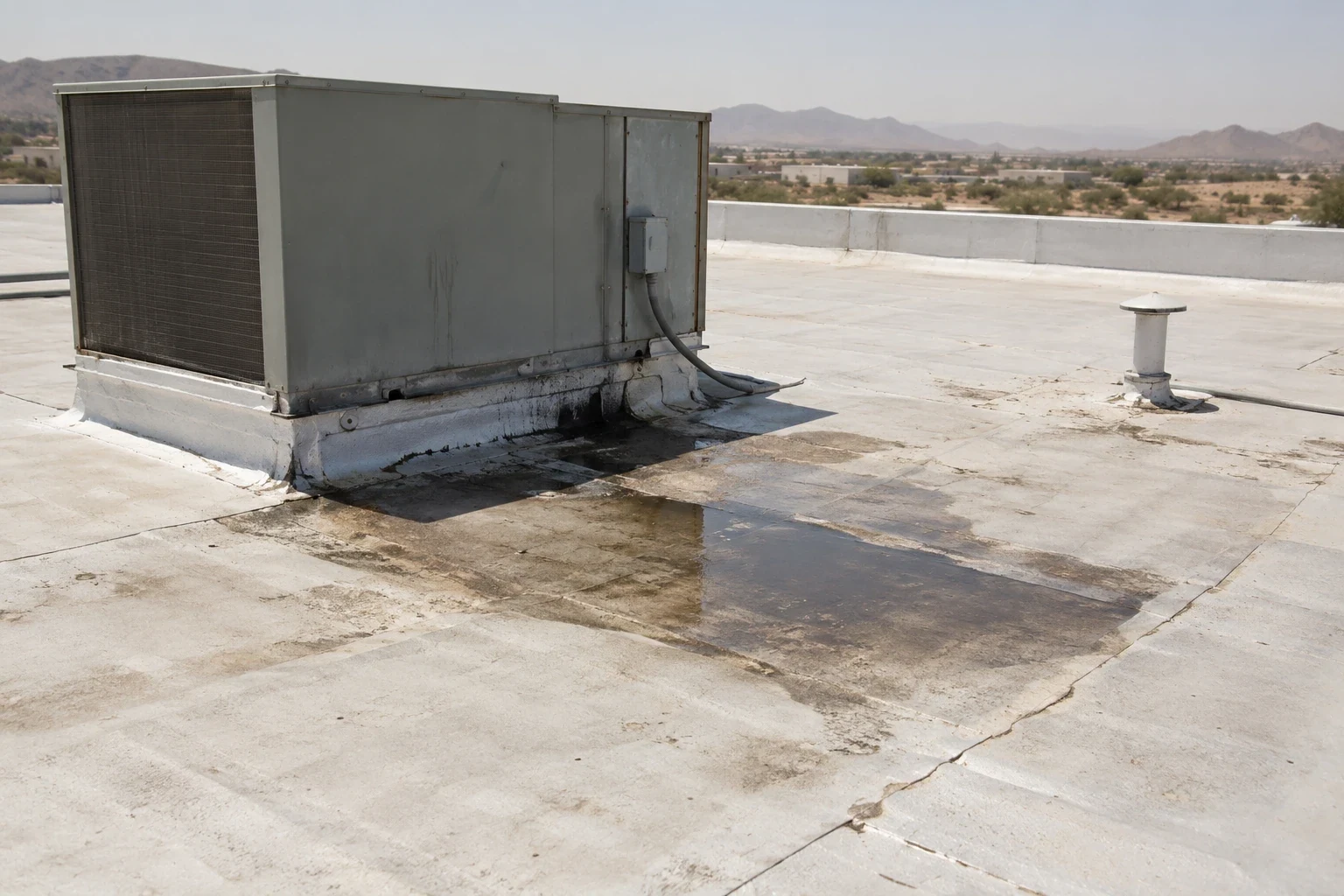
A drain can be clear while water still ponds nearby. We look for debris at the bowl, a blocked leader, a depressed sump, displaced insulation, or a seam that crosses the low route. A stain near a wall can also begin at a higher penetration or an open counterflashing. We use moisture testing where the surface inspection leaves uncertainty, then note the tested area on the roof plan. If a core is needed, its location and repair are recorded. Each finding is classified as confirmed, suspected, or not present. That vocabulary helps the facility director choose a repair without treating every wet ceiling tile as a reason to replace the entire roof.
Permanent Repair Boundary
A permanent repair needs clean, sound material at its edges. We remove failed patching or loose membrane, prepare the existing surface, and extend the repair to a point where a compatible tie-in can hold. The selected method depends on the roof system, substrate, seam condition, and amount of moisture below the membrane. An isolated puncture may need a local patch; a longer open seam can require a new weld or bonded detail. If insulation is wet or multiple transitions have failed, a small surface repair will not correct the assembly. We document where a broader roof repair or replacement review becomes the better decision.
We identify membrane type before choosing a repair material. TPO and PVC seams are heat welded; EPDM and other systems use their own compatible adhesives, tapes, and flashing methods. We do not apply a generic coating over a detail that needs a rebuilt termination. Curbs, pipes, skylights, and rooftop equipment each interrupt the field membrane differently. We check the flashing height, fasteners, seal, and movement at the base. Hail marks are inspected for actual cuts or punctures, while dents without a membrane breach remain noted as surface condition. The repair record states what failed and what material closed the path, helping later maintenance avoid incompatible patch layers.