
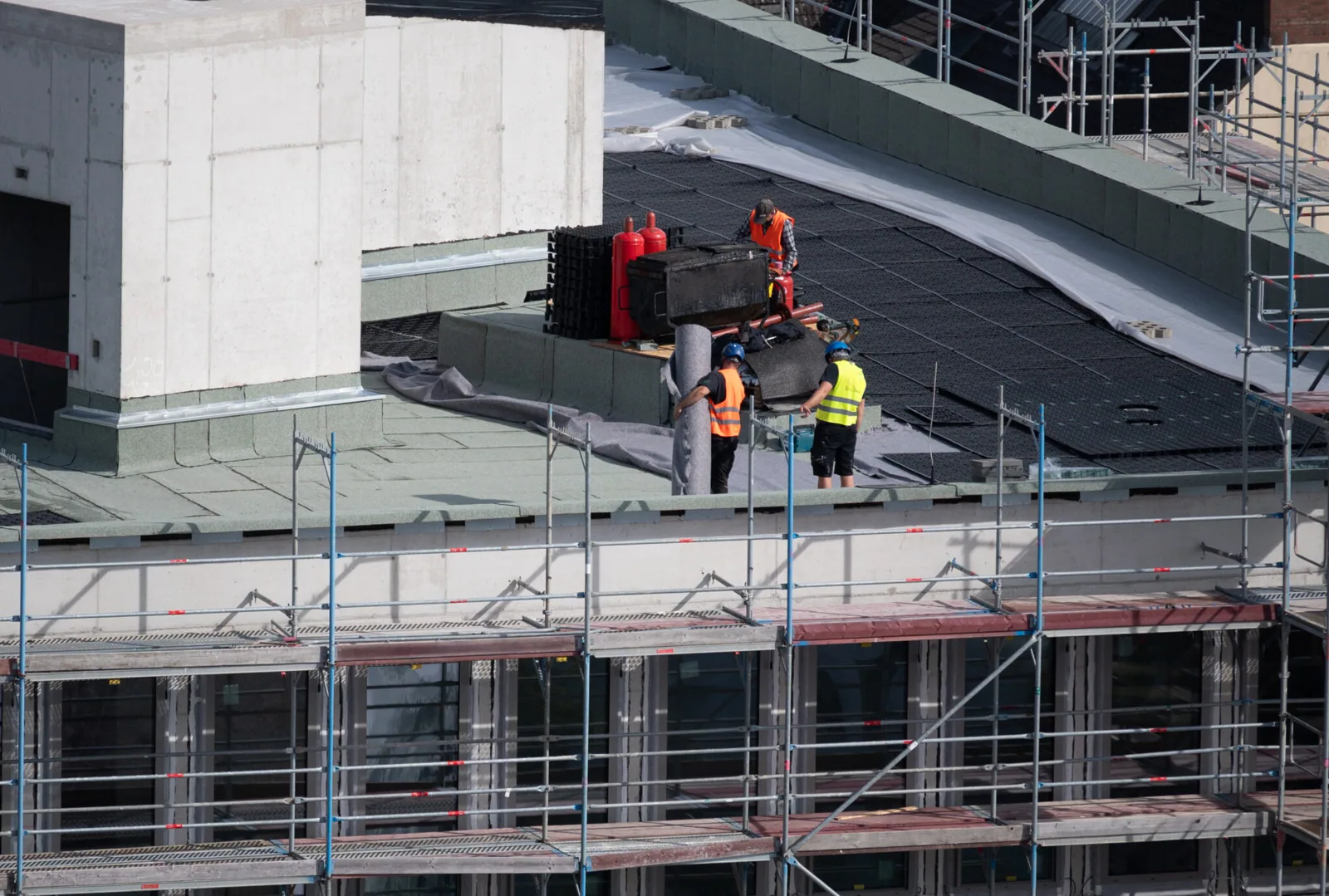
Occupied-Building Commercial Reroofing in Rio Rancho, NM
A reroof can move across an occupied building without closing every operation, but only if the roof is divided into work zones that can be secured each day. In Rio Rancho, NM, sudden monsoon bursts, active equipment, and tenant access all affect the sequence. We plan tear-off limits, entrances, staging, interior protection, and daily dry-in with the facility director before work starts. The schedule identifies the roof area open each shift, who must be notified, and what condition closes the zone. This gives staff a work plan they can use while the building remains in service.
Roof-Zone Phasing
We map the roof by wing, drain area, equipment zone, or another boundary that matches the building. Each phase states the tear-off limit, substrate check, insulation and membrane sequence, temporary protection, and final transition. The daily work area is kept within the crew’s ability to close before leaving. If a test cut reveals wet insulation or a deck condition, we stop at a defined line and document the change before expanding removal. The facility contact receives the change and its effect on access, schedule, and scope.
Phasing also accounts for where material can be lifted, staged, and removed. We review roof hatches, crane access, loading areas, pedestrian routes, fire lanes, and equipment service paths. A wing that houses a critical operation may be scheduled during a lower-demand window, while another area proceeds first. We set the expected noise and delivery periods so staff can notify tenants. If the roof has multiple levels, the transition between elevations is planned as a finished detail rather than left open for the next phase. A marked roof-zone map keeps these boundaries visible to the building team. It also ties requests from tenants or operators to the same labels used in daily reports.
Dry-In and Weather Window
Each open roof section needs a stopping point that can be protected from overnight weather. The crew removes only the area scheduled for that shift, prepares the substrate, installs the new layers, and ties off or dries in the edge before leaving. Rio Rancho’s monsoon rainfall can be intense and localized, so the sequence checks the forecast and leaves a secure boundary if conditions change. If rain arrives before the planned phase is closed, the response is already defined: protect the opening, check the interior, and report what remains exposed.
Weather can affect more than tear-off. Surface moisture, temperature, wind, and curing conditions influence membrane and coating installation. We set an alternate task when the roof cannot accept a permanent material, such as preparing another dry zone or completing detail work under safe conditions. The facility contact receives schedule changes before crews cross an occupied area. The work log records completed zones and the end-of-day protection status. That record matters when one section is complete and another has not yet been released for work.
People and Building Systems
Occupied reroofing requires protection below as well as above. We identify sensitive rooms, production lines, medical or educational uses, server areas, and pathways where debris or noise would interrupt operations. The owner tells us which spaces need temporary barriers, notifications, or a planned shutdown. We protect air intakes and equipment from dust, keep access routes clear, and coordinate rooftop-unit service. The crew knows which roof hatch and interior route are approved. If conditions change below, the facility lead can contact the onsite supervisor and pause the affected zone. We also review how demolition waste will leave the building, where carts can travel, and which doors must remain clear. If a tenant needs uninterrupted access, the sequence can move that roof zone to another shift rather than route workers through a restricted area. Dust protection around intakes and interior pathways is checked before removal begins and after each work area closes. The facility team identifies sensitive equipment and required clean-room or infection-control boundaries in advance.
Rio Rancho includes education, commercial, civic, and manufacturing uses. The City Center planning area combines education, employment, commercial, and entertainment components, while Intel operates semiconductor manufacturing and packaging facilities in the city. Those examples describe different operational contexts; the actual building schedule is set with its own facilities team. At City Center, an occupied public or education use may need an entry plan; near the Industrial Park, production and equipment routes may govern staging. We confirm specific constraints rather than assume them from the location.