
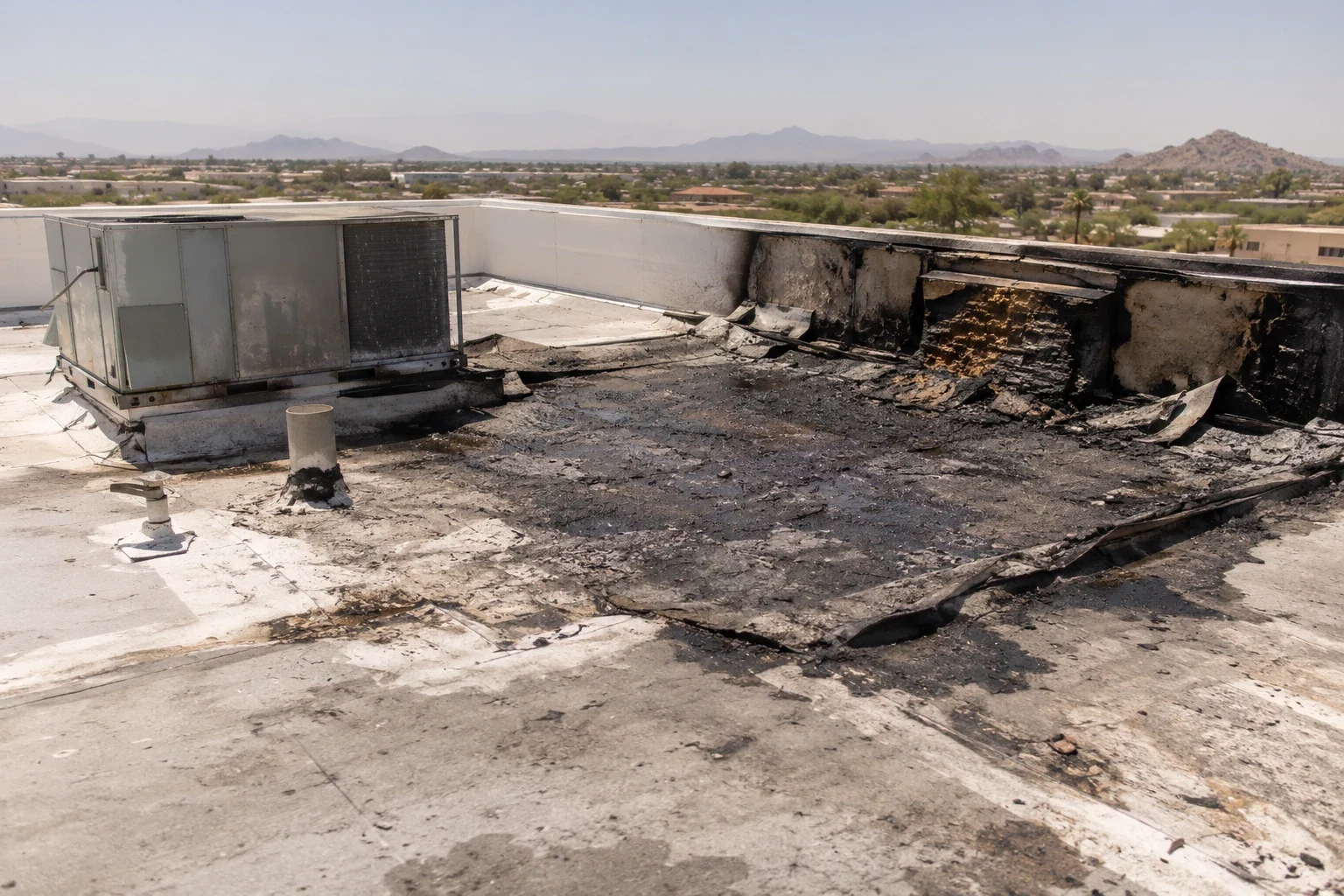
Commercial Roof Fire Damage Repair in Rio Rancho, NM
A blistered membrane beside a rooftop exhaust is not enough to define a fire repair. We first confirm that the area is released for roof access, then inspect the opening, heat-affected materials, attachments, and water path around it. The report distinguishes visible charring or deformation from material that needs testing below the surface. In Rio Rancho’s industrial and commercial corridors, a fire-related roof scope may also depend on equipment controls and occupant protection, but the inspected building sets the actual boundary.
Confirm the site is ready for inspection
Before climbing to the roof, we confirm that emergency responders and the owner have released the area, that access is safe, and that utilities or rooftop equipment are in the approved state. We coordinate with the facility contact on restricted zones, interior protection, and any active mitigation. A roof opening may expose the building to weather, so the visit plan includes temporary protection and a secure end-of-shift condition. The emergency roofing response documents immediate stabilization separately from permanent restoration.
Rio Rancho’s industrial employment uses are near Northern Boulevard and NM 528, while commercial activity also follows Southern Boulevard. Those corridors can include different operations and access procedures, but the route does not establish what burned or how far heat traveled at one site. We inspect the actual roof assembly and confirm the incident boundary with the authorized building contact. A property in the industrial park area still needs its own safe access release and equipment coordination.
Map visible heat and smoke effects
We look for melted or distorted membrane, damaged insulation, compromised deck, displaced metal, failed sealant, and openings at curbs or walls. Smoke residue can coat surfaces without proving that the membrane lost function, while intense heat can damage layers that do not appear charred. Photos show the affected roof zones and adjacent material. Where heat has opened a roof lap, a seam repair review documents that connection separately. A roof condition inspection records the observation, the access limit, and any test that may change the scope.
Rio Rancho has a strong manufacturing presence, including Intel’s advanced semiconductor manufacturing and packaging operation. A production building may have controlled roof entry and equipment restrictions, so the operations lead confirms the access route and permitted work window before inspection. If roof penetrations, exhausts, or process equipment may be involved, the inspection identifies the exact interface and separates roofing work from equipment inspection or electrical review.
Verify the layers before removal expands
A surface observation cannot show the condition of insulation, deck, or attachment below every heat-affected area. We identify where a test opening would answer a repair question, define how it will be restored, and obtain approval before cutting. If material is charred or delaminated, the removal limit follows the verified condition. The test report preserves photos, sample location, result, and the part of the roof that remains unexamined. If heat has changed a wall or curb transition, a flashing assessment records that tie-in separately.
Testing can also distinguish a heat-affected area from a nearby section that appears similar but remains serviceable. We note method and sample depth, and do not extend a single test result across a large roof without evidence. If moisture entered during fire suppression or through an opening, that is assessed separately from heat damage. The report lists observed wet material, moisture readings, and any sample that would determine whether insulation replacement is part of the scope.