
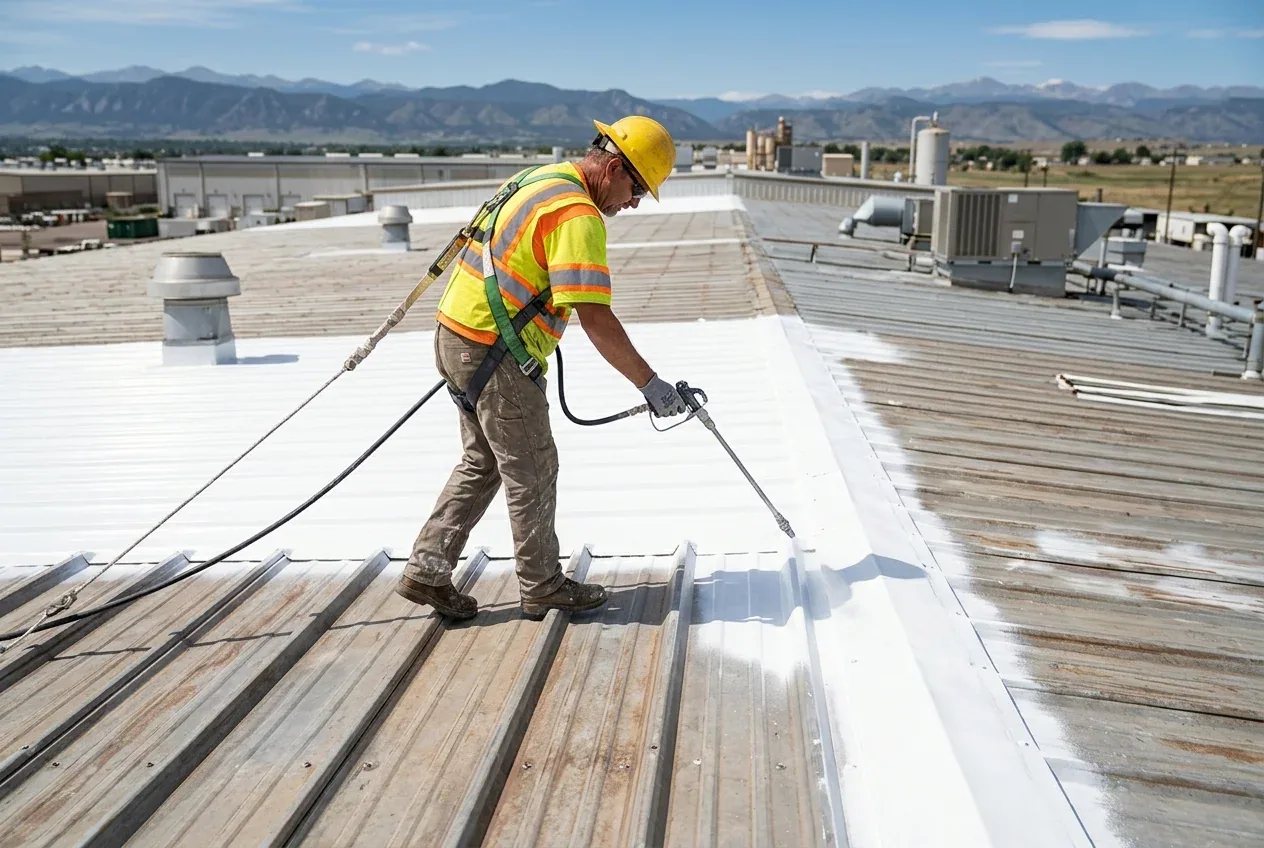
Commercial Roof Seam Failure Repair in Rio Rancho, NM
A lap that opens at its edge can admit water before the split is visible from the roof entrance. We locate the seam, check its bond or weld, and inspect the adjacent field for movement, contamination, or prior repair. The report marks the tested roof zone and separates a local seam failure from moisture that may have traveled beneath the sheet. In Rio Rancho, strong sun, high summer temperatures, and short monsoon bursts put exposed laps through repeated stress, but the seam itself determines the repair.
Check the lap before selecting a patch
We identify the membrane type, seam orientation, weld or adhesive condition, and whether the surrounding sheet remains securely attached. A probe can locate an open portion, but it does not establish how far moisture has spread below. We mark the length checked and photograph the ends of the failure. A roof inspection records those details and notes whether the area is safe and accessible for a repair.
Rio Rancho’s industrial employment area lies near Northern Boulevard and NM 528, while commercial uses follow Southern Boulevard and other major southern routes. Those locations have different operating patterns, but none identifies the roof membrane or seam condition at a specific building. We verify the material from records and field characteristics. A property in the Cabezon district receives a roof-zone map tied to that facility, not an assumed system based on its business use.
Follow water beyond the visible split
A ceiling leak may sit downhill from the seam or below a penetration where runoff collects. We inspect adjacent laps, roof slope, drains, curbs, and previous repairs to see whether the reported path matches the opening. If a test sample could change the removal boundary, we define its location and restoration before work. A condition record identifies the visible seam, tested area, and any conclusion that remains pending.
Monsoon rain has produced rates approaching three inches per hour in northwest Rio Rancho during an August event. Intense runoff can move across a roof quickly and test a weak lap, but a recorded storm does not prove that a seam opened at another building. We inspect the actual flow path, including the downstream drain and overflow. If water gathers at a low point, a separate ponding-water assessment determines whether outlet restriction or a roof-plane issue needs attention beyond the seam.
Restore the seam with system-compatible work
For a thermoplastic roof, cleaning and a controlled hot-air weld may reconnect the lap when the existing sheet supports that method. We verify the assembly against the characteristics of TPO roofing before selecting a patch. Other assemblies need an adhesive, lap treatment, or manufacturer-compatible detail appropriate to that system. We verify the existing membrane and bond surface before selecting materials. A repair cannot depend on loose sheet, wet insulation, or a contaminated lap. The seam repair scope names the preparation, patch dimension, tie-in, work area, and closeout check.
Where the split reaches a curb or wall transition, a seam patch alone may not restore the full water path. We inspect the nearby flashing and termination for movement or open corners. A flashing review can address a separate interface that shares the same leak report. If fasteners, attachment, or deck have failed, we document the condition and obtain approval before extending removal beyond the confirmed seam area.
Preparation affects the bond. Dust, oxidation, moisture, adhesive residue, or a previous patch can change how the new material joins the field. We expose only the area needed to reach sound membrane and confirm the work surface is ready. A test weld or adhesion check can be appropriate when the system or surface condition is uncertain. The closeout then states whether the new lap was checked after installation and identifies any section beyond the repair line that still needs review.
Temperature and wind can affect the work window, particularly when an exposed seam is left open during preparation. We stage material and protection so the crew can finish the authorized length and close the roof before conditions change. If the seam is too long to complete safely in one shift, the owner approves smaller work zones and the order in which they are handled. That decision protects the interior without disguising a partial repair as a full seam renewal.