
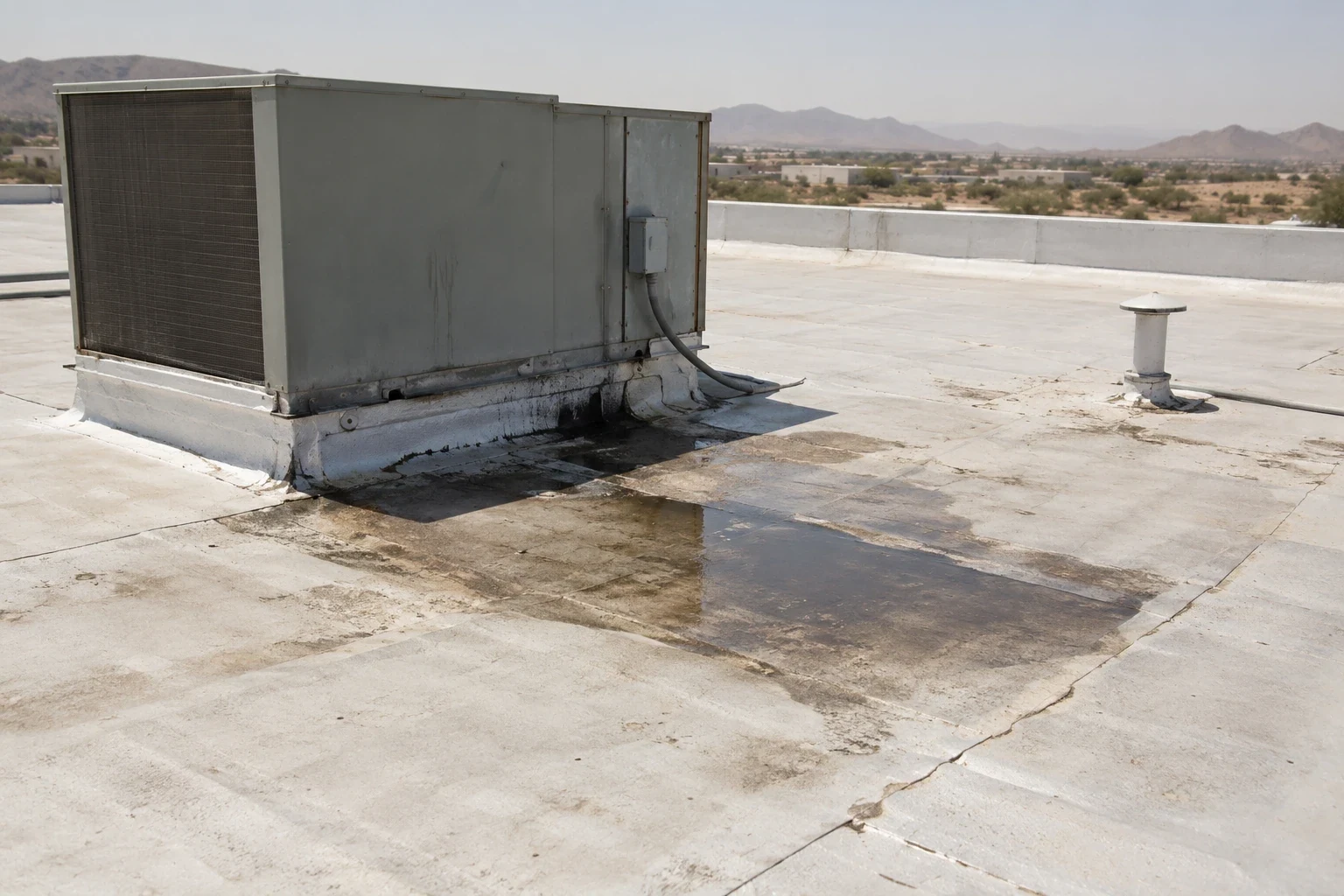
Commercial Roof Membrane Puncture Repair in Rio Rancho, NM
A puncture beside a service walkway can admit water through a roof that otherwise appears intact. We locate the cut, identify the membrane, and inspect the surrounding sheet for foot traffic, equipment work, or a prior repair that may have affected the area. The scope records the tested zone and stops at sound material. Rio Rancho’s strong sun and seasonal hail can make roof inspections part of routine facility care, but only a visible or tested condition establishes the repair boundary.
Locate the cut and its surrounding stress
We inspect the puncture, nearby seams, field membrane, protective walkway, and any object or work activity associated with the report. The opening may be small while water travels beneath the sheet, so the photo should include the closest curb, drain, or roof-zone marker. We identify whether the membrane is torn, cut, punctured, or abraded and whether the substrate is exposed. A roof inspection records the condition and access limits before material is lifted.
Rio Rancho’s industrial employment area near Northern Boulevard and NM 528 includes buildings with varied uses and operating demands. That context does not establish what caused a puncture at a specific roof. We ask about recent equipment service, antenna work, maintenance traffic, and loose material, then compare those reports with the mark. A facility in the Industrial Park area receives the same property-specific review, including a check of access paths used by roof technicians.
Check whether water reached the assembly
A clean puncture can lead to moisture in the insulation or deck, but that condition must be verified. We examine the field and nearby low points, note interior reports, and consider whether a scan or test opening would affect the work. The moisture survey narrows the inspection area; an opening confirms the assembly at its location. The report states which method was used and does not treat one test result as a rating for the whole roof.
During a 2018 monsoon shower, Enchanted Hills received more than two inches of rain within roughly sixty minutes. That short rainfall history gives local facility teams a reason to record active entry promptly, but it does not prove that a punctured membrane at another property is wet below. We inspect the actual path and determine whether water is isolated to the damaged spot or connected to a seam, drain, or curb. A visit in Enchanted Hills remains based on that building’s evidence.
Patch compatible material to a sound boundary
The repair method depends on the installed system. We clean and prepare the surrounding surface, remove unsound material, and use a compatible patch with a fully bonded or welded perimeter as appropriate. The patch should extend onto stable membrane without covering a seam or drain detail in a way that blocks movement or flow. A puncture repair scope identifies the material, preparation, patch size, tie-in, and the check performed after installation.
Foot traffic can create more than one puncture or abrasion along a maintenance route. We inspect the likely path around equipment, hatches, and frequently serviced units, then note whether walkway pads or a changed access route are appropriate. A roof equipment access review can help coordinate future service work at curbs and supports. If the same area also has a cut through a seam, a seam investigation should remain distinct from the puncture patch.