
Commercial Roof Maintenance in Rio Rancho, NM
A maintenance visit earns its place when it finds a small failure before water reaches an occupied space. In Rio Rancho, NM, strong sun, seasonal hail, and fast monsoon bursts make seams, drains, and exposed edges worth checking on a schedule. We walk the accessible roof zones, clear eligible drainage points, photograph changing conditions, and separate immediate repairs from items that can be watched. Each visit updates the roof map so a facility director can compare the same detail over time. The goal is a practical sequence of inspection, repair, and recordkeeping that protects operations without confusing a maintenance note with a replacement recommendation.
Maintenance Intervals
The right interval depends on roof type, equipment traffic, drainage, prior findings, and the building’s operating risk. A roof with many penetrations or frequent service visits may need more frequent checks than a clear field membrane. We review the last inspection, open repairs, seasonal storm exposure, and roof access limits, then set visits that fit the property calendar. Rio Rancho’s monsoon season brings wet bursts and dry breaks, so a pre-season review and a post-event check may answer different questions. A schedule should identify which zones get a hands-on visit and what event or condition triggers an unscheduled inspection.
Each visit follows a consistent map but does not assume that last year’s condition remains. We inspect membrane seams, flashings, curbs, drains, scuppers, edge metal, expansion joints, walk pads, and penetrations. We note debris, standing water, loose components, and repairs that have changed. Roof traffic from HVAC or electrical work is recorded because a new penetration or dropped tool can create a fresh issue. If a technician reports a leak, the maintenance route includes that area and the likely water path. This keeps the work focused on current evidence rather than repeating a checklist without attention to what changed.
Drain and Debris Control
Water needs a clear route to each drain or scupper. We remove accessible debris where authorized, inspect the bowl and screen, and check that the surrounding membrane has not lifted or split. A clear drain does not correct a low area, settlement, or blocked leader, so we note whether water remains after the outlet is open. Downspouts and discharge points are also checked when they are part of the service scope. After a localized Rio Rancho downpour, that route matters: a storm can drop more than two inches near Enchanted Hills in about an hour, even when conditions differ elsewhere in the city.
Debris should be removed without cutting or dragging material across the membrane. We check that fasteners, branches, packaging, and other loose items are cleared from sensitive roof details. If a drain requires repair, we document the bowl, sump, flashing, and adjacent seams instead of treating cleaning as a complete correction. A maintenance record can then distinguish routine clearing from a drain or scupper repair. The facility director sees which outlets were serviced and whether a follow-up is needed to correct the slope or membrane around them.
Seams and Perimeter Details
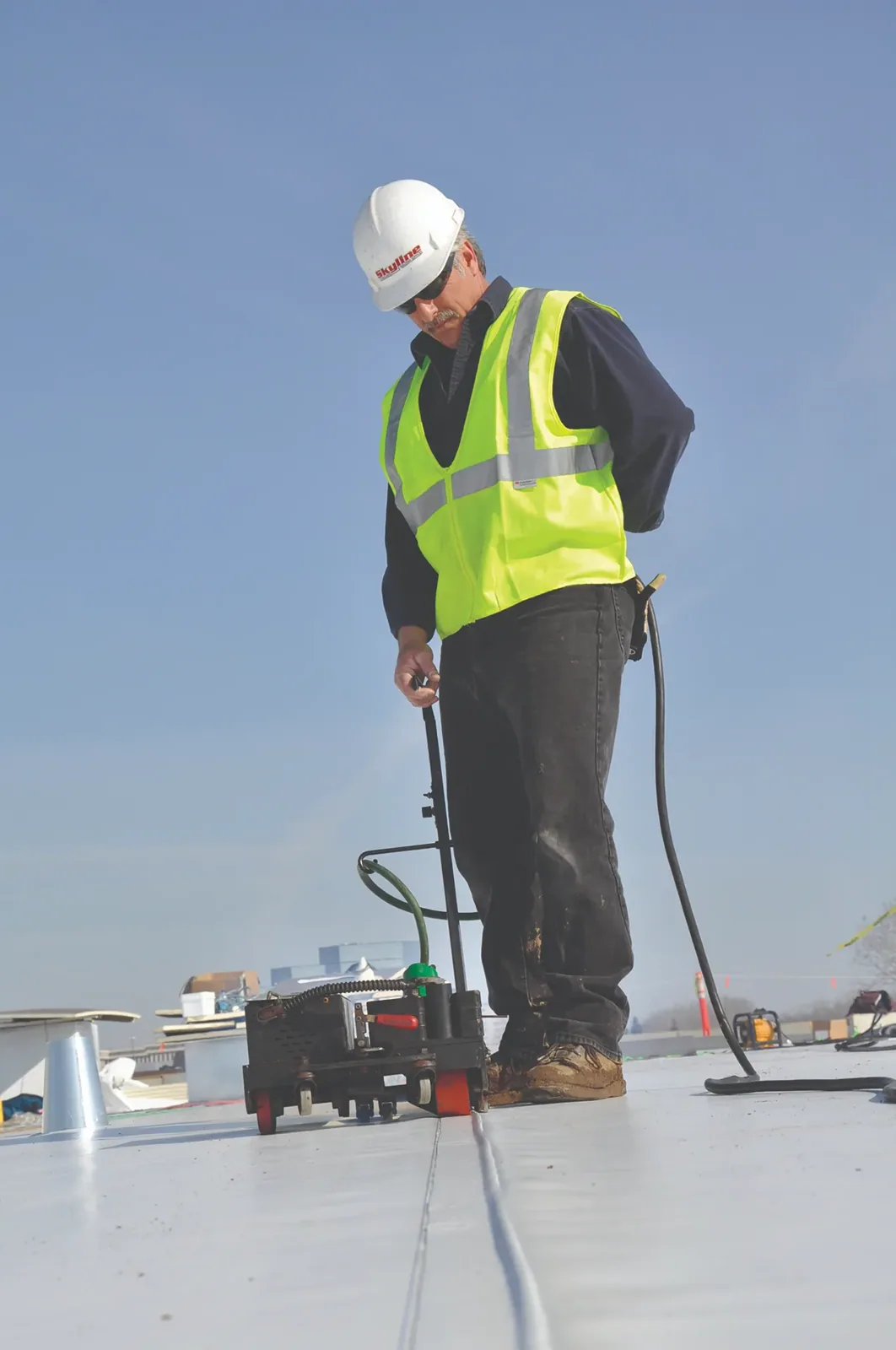
Small openings often begin at transitions. We inspect laps, corner patches, pipe boots, equipment curbs, skylights, parapet walls, and edge metal for movement, open sealant, loose fasteners, or damage from service traffic. We photograph the detail before touching it and classify the condition as sound, monitor, or repair. A sealant bead is not added automatically; first we determine whether the underlying flashing is intact and whether movement or wet material has caused separation. Where the membrane itself needs correction, a system-compatible repair is more durable than coating over a weak edge.
Heat and UV exposure can age exposed sealants and surface materials, while hail can create impacts that deserve closer inspection. We look for a breach rather than assume every dent leaks. At the roof edge, we check coping joints, cleats, and termination bars. Around equipment, we record missing supports or damaged flashing that may let water reach the insulation. Planned commercial areas such as Rainbow Business Park and the City Center district have different roof layouts and access needs; the maintenance route follows each actual building map.