
Commercial Roof Drains and Scuppers in Rio Rancho, NM
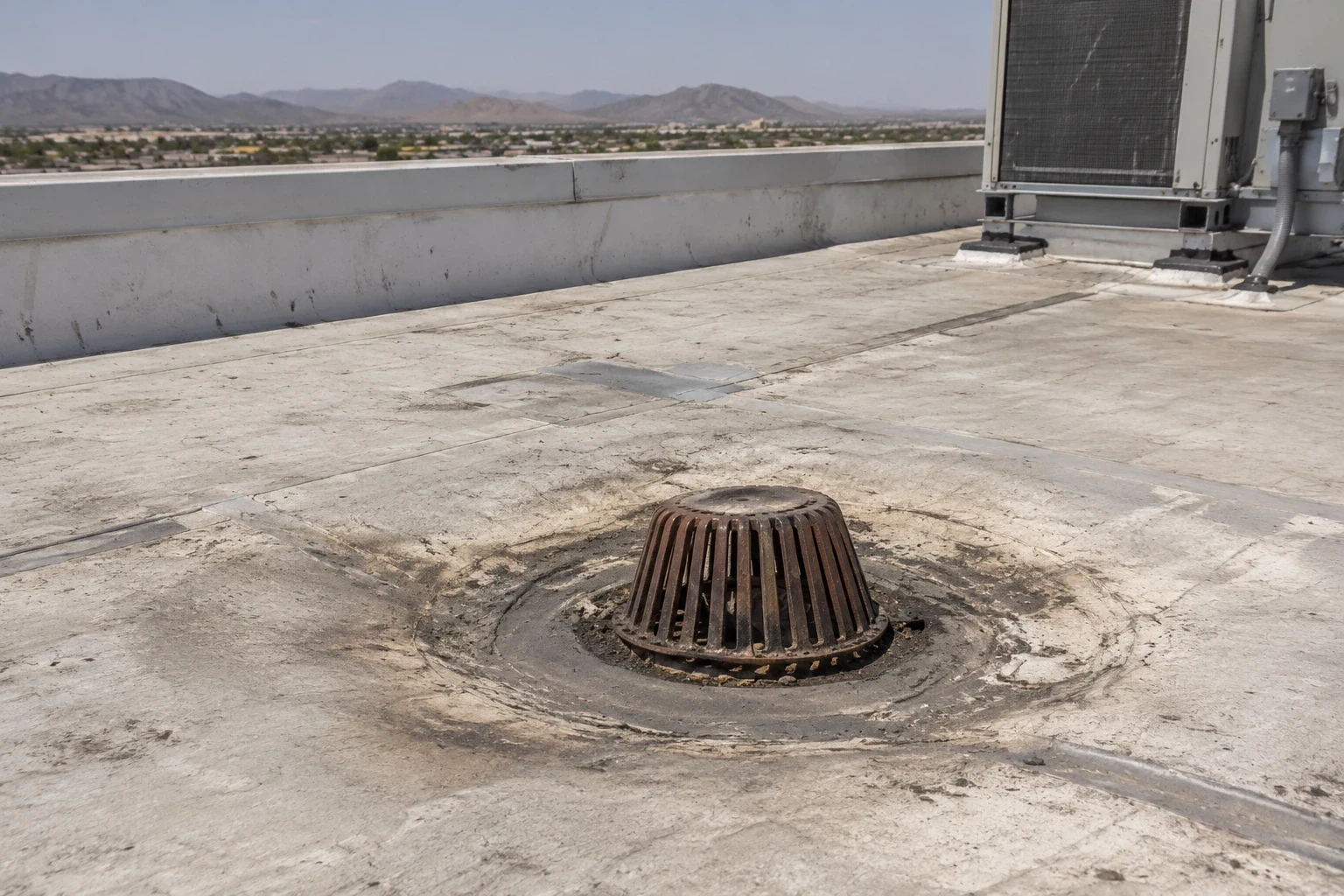
A drain bowl can be clear while water still sits beside it. In Rio Rancho, NM, localized monsoon downpours can deliver more than two inches near Enchanted Hills in about an hour, so the facility team needs to know whether water can reach an outlet and leave the roof. We inspect the bowl, strainer, leader, sump, scupper, cricket, and membrane around the opening. We also check for a low area that remains after the outlet clears. The repair recommendation separates cleaning from slope, flashing, or insulation work and marks the roof zone where each condition appears.
Follow the Runoff Path
We begin at the roof’s high points and follow the intended flow toward each drain or scupper. Debris, loose packaging, leaves, and sediment can block an opening, but repeated ponding may point to a depressed sump, uneven insulation, deck movement, or an incorrect cricket. We note how water reaches the bowl and what happens after an obstruction is removed. A drain that empties slowly may have a leader or downstream restriction outside the visible roof area. We identify the observed limit and coordinate access to the connected system if the repair requires it.
At the opening, we check the drain flange, membrane attachment, clamping ring, strainer, and seal around the bowl. At a scupper, we inspect the throat, sleeve, flashing, and connection to the exterior discharge. A loose flange or split membrane can let water enter the assembly even if the outlet flows. We also inspect secondary drains and overflow scuppers where installed, because the emergency path should not be blocked by debris or a failed detail. The condition is recorded with a photograph and a roof-zone label so the facility director can distinguish maintenance clearing from a permanent drain repair.
Ponding and Low Areas
Water that remains after the outlet is clear needs a different response from a clogged strainer. We map the standing area, check its depth and boundary, and inspect the underlying insulation or deck where the symptoms suggest a depression. A small amount of residual moisture immediately after a storm is not the same as persistent ponding. We record when the surface was observed and whether the roof had time to drain. If testing finds wet insulation, the repair may require opening the assembly and rebuilding slope rather than adding a surface patch.
Rio Rancho rainfall can be intense but localized. Strong, short-duration rain has occurred near Enchanted Hills and northwest Rio Rancho. That context is a reason to verify capacity and runoff; it does not establish a defect at a particular property. We inspect actual drain spacing, bowl condition, roof slope, and overflow route. If the low area is near a seam or curb, we check those details for water entry. A ponding-water repair may involve a targeted insulation correction, a drain detail rebuild, or a larger assembly review depending on test results.
Drain and Scupper Repairs
A durable repair restores the transition between roof membrane and drain or scupper. We remove failed material, prepare the substrate, and install compatible flashing that seals to the bowl or sleeve. The scope may include a new clamping ring, strainer, drain body, or leader connection when the existing component is damaged or obstructed. If the bowl sits too high or low relative to the roof surface, we address the elevation and surrounding sump. The repair detail is shown on the roof plan and photographed before and after work.
For a field membrane near the drain, we inspect seams and insulation around the opening before closing the detail. A split radiating from a bowl may require more than replacing a screen. TPO, PVC, EPDM, built-up, and modified bitumen roofs use different flashing methods, so we confirm the assembly before selecting materials. If the insulation and cover board need adjustment, we set the repair boundary to include that layer. Drain maintenance can be part of a scheduled maintenance program, but recurring standing water may require a separate correction.