
Commercial Roof Due Diligence Surveys in Rio Rancho, NM
A seller’s estimate may name a roof system without showing which zones were inspected. Before a building changes hands or a loan is refinanced, we identify the assembly, map the areas reached, and separate observed defects from records that still need confirmation. Commercial properties along Southern Boulevard and around the Northern Boulevard industrial area need a building-specific roof survey before acquisition, with access arranged through the seller or facility contact. The survey gives the buyer a building-specific basis for the next decision.
Review records against the roof in place
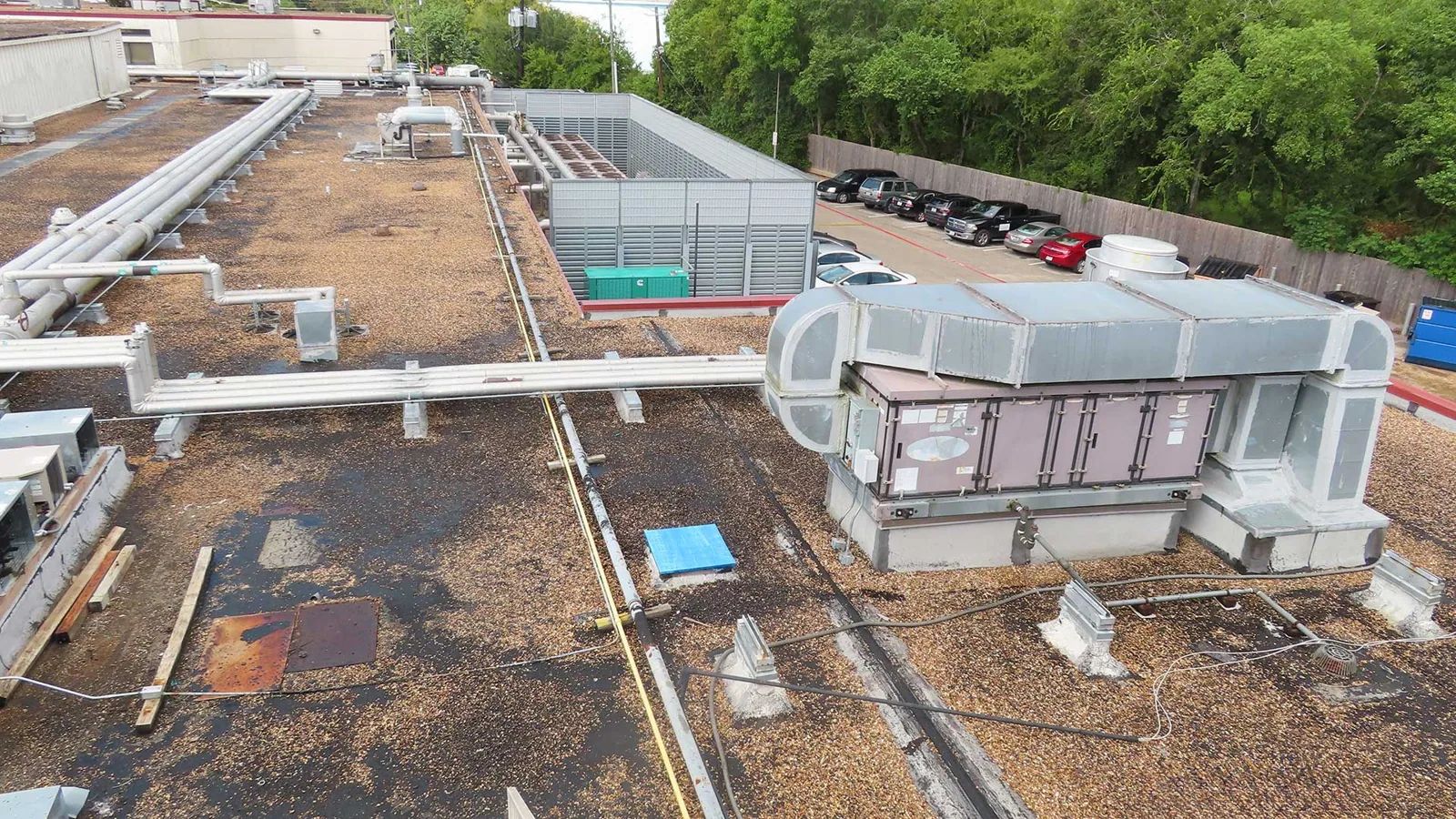
We review roof plans, invoices, prior inspections, reported leaks, equipment changes, and available warranty documents. The field walk checks membrane or panel type, seams, edges, curbs, drains, and visible repairs. If a drawing and installed assembly differ, we note the discrepancy. A condition report lists confirmed findings and items that still need a test or record.
Rio Rancho’s plan places industrial employment near Northern Boulevard and NM 528, with commercial activity along major southern roads. The difference can affect loading, access, or operating windows, but a land-use category does not identify the roof construction at an asset. We inspect the specific property. A site in the industrial park area still requires its own roof map and contact who can authorize access.
We compare the reported repair dates with marks and materials that can be identified on site. A roof plan may not show a later curb or patch, and an invoice may describe work without its exact roof zone. The survey lists those gaps and, when possible, photographs the detail that needs a record correction. This gives the transaction team a more reliable handoff than relying on a general statement that maintenance was performed.
Identify defects and inspection limits
We document visible openings, loose details, ponding, prior patches, corrosion, and interior reports, then distinguish each observation from a suspected condition below the surface. Photos are tied to a roof zone and show context for a future review. If a part of the roof could not be entered because of safety or access limits, the report lists it as uninspected. A commercial roof survey records visible conditions; a test or opening is needed to assess concealed layers.
In July 2018, a cloudburst near Enchanted Hills deposited a little over two inches of rain within one hour. The July 2018 cloudburst near Enchanted Hills is a reason to include drains and overflows in an acquisition survey. We report the actual outlet and low-area condition found at the visit. If water remains after the drain is clear, a drainage investigation can define an additional question for the buyer.
Use samples to resolve a material question
A scan can identify a location for further review, while a core sample or test opening can confirm the assembly at a selected point. We state the method, weather or surface conditions, opening location, observed layers, and restoration. The result applies to the sample area; it does not turn the full roof into a pass or fail. A moisture survey may narrow the investigation before the buyer authorizes destructive testing.
If wet insulation, damaged deck, or poor attachment is confirmed, we identify the observed removal boundary and what could expand it. If the test is dry, the scope remains based on the remaining evidence. We keep recommended testing separate from the estimated construction work so an acquisition team can compare a limited verification cost with the uncertainty of proceeding without it. The survey lists the decision each test would support.
Testing should be selected to resolve a question that matters to the purchase or loan. A sample may determine whether a local repair is sufficient, whether wet insulation needs removal, or whether a broader investigation is warranted. We describe the sample point and the conditions on the day it was taken. The result should not be applied to a separate addition, roof height, or material unless the field evidence shows those areas share the same assembly.