
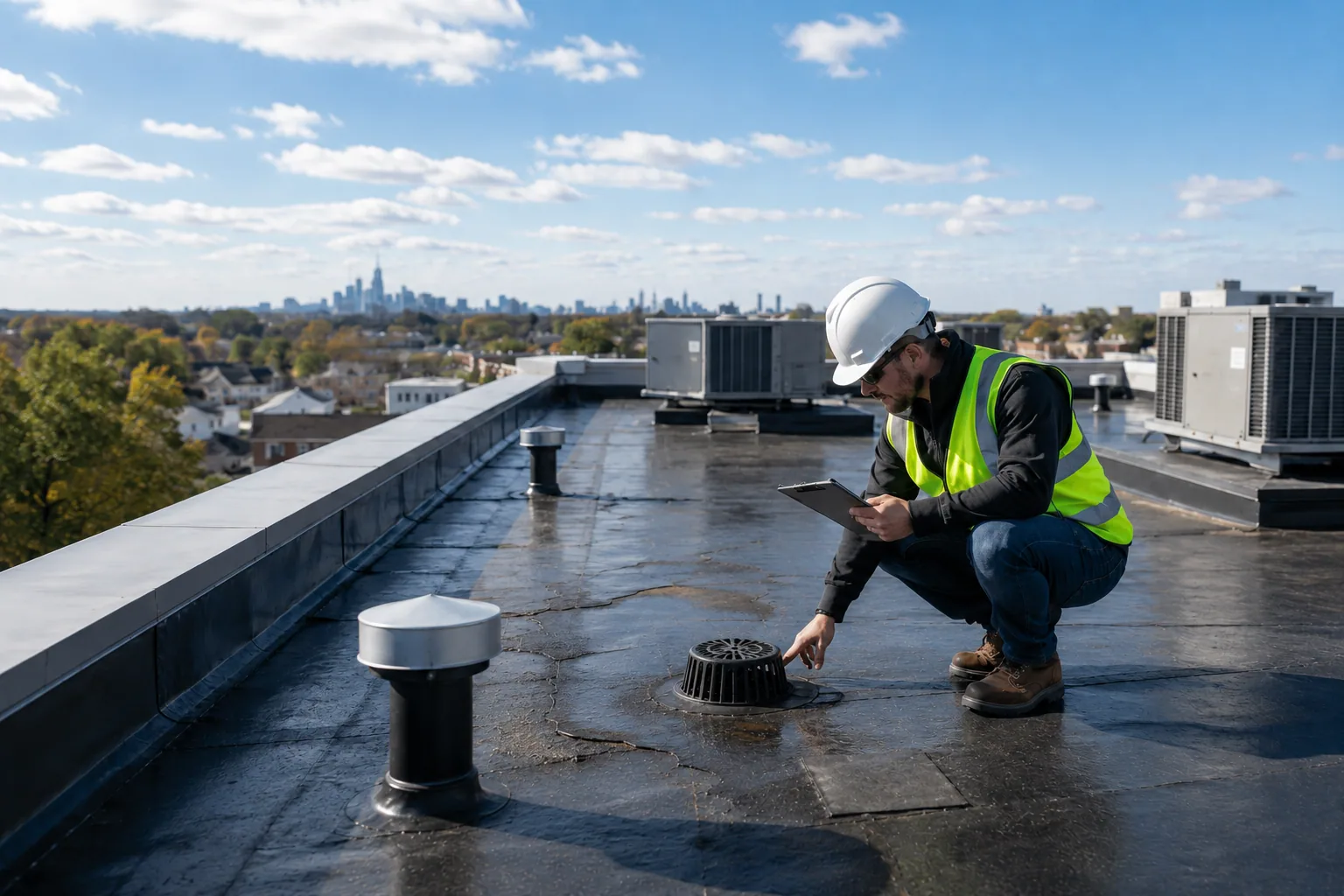
Commercial Roof Asset Management in Rio Rancho, NM

A roof file without a zone map can turn a maintenance call into a second inspection. We identify each building, the roof system, areas reached, observed conditions, and the work that remains open. For Rio Rancho portfolios, that record matters across Southern Boulevard commercial properties and employment areas near Northern Boulevard and NM 528, where access and building use can differ. Asset management keeps those site-level details available without treating one roof’s condition as evidence about another.

Build the record around the building

A useful inventory records the property identifier, roof map, system type, installation or repair history supplied by the owner, access limits, and current inspection date. We add photos tied to roof zones and note which details were actually reached. If the assembly is unclear, the record names that question rather than assigning a membrane from the building’s use. The condition report captures observations and any test that could change the repair boundary.

Rio Rancho City Center is planned for commercial, education, and employment uses along routes including Paseo del Volcan and Unser Boulevard. A portfolio may include offices, retail, and production buildings across those corridors. The map and route help schedule visits; the inspection still verifies each roof. A property in the industrial park area needs its own access contact, equipment restrictions, and closeout record.

When records conflict, we preserve the record for each item and note which details were confirmed in the field. A drawing can show a drain that has since moved; an old invoice may name a coating without identifying its location. We mark those differences instead of overwriting the prior history. This makes it easier to follow a repair through several managers and prevents an undocumented change from becoming the assumed roof assembly.

Keep condition separate from priority

Condition tells what was observed; priority tells what should happen next. We distinguish active water entry, an open detail, a repair that can be scheduled, and an unknown area that needs testing. Each item carries a roof zone and an action, such as clear an outlet, repair a flashing, or verify moisture. The inspection service can update the evidence when the last report no longer reflects current conditions.

A priority list should not assign urgency from age alone. A membrane with a localized stable patch can differ from another system of similar age with confirmed wet insulation or failing edge securement. We identify what supports the rank and what could change it. If a test sample is the missing input, that request stays visible so the manager does not mistake a preliminary condition rating for a final repair scope.

It also helps to track open tests separately from open repairs. A suspected wet zone may need a core sample before a contractor can price removal, while a confirmed split seam can receive a defined local repair. We list owner approval, expected access, and the result that will close each item. The status can be updated after the test without changing unrelated roof ratings across the portfolio.

Track repairs and open questions

Work orders should connect an approved repair to the condition that prompted it. We record the material, repair boundary, photo, date, and any remaining test or access limit. If another trade moves a curb or adds a penetration, the next roof inspection checks that interface and records the change. A maintenance visit can review accessible drains, seams, flashings, and equipment transitions on a schedule suited to the property.

One July 2018 storm near Enchanted Hills dropped over two inches during a short period, a reason to check drainage after local rain. That weather fact supports attention to drainage after a storm, but it does not establish which portfolio roofs experienced standing water. We note actual conditions during the visit and keep storm reports separate from building observations. A property near Enchanted Hills receives its own runoff and outlet check.

Use evidence to schedule capital work

Portfolio tracking can help compare near-term repair, further testing, recovery, and replacement, but each option needs a verified area and system. We list the data behind each recommendation and the next decision date. A capital schedule can separate active leaks from work that can be budgeted for a later period. When ownership is distributed across assets, an investor review can compare the records while preserving each building’s assumptions.

Access windows and tenant operations affect timing. A roof near City Center may have public-facing service hours, while an industrial facility may control equipment shutdown and roof entry. We note those constraints with the property record, not as a universal condition for a whole district. If the portfolio has a site that cannot be inspected, mark it as open and identify the access or test needed before a capital decision depends on it.

Budget timing should reflect the cost drivers that are actually known. Access lifts, night work, protection below, disposal, insulation replacement, equipment coordination, and weather can change the sequence or scope. We identify which items are observed and which remain allowances. When an allowance is large enough to influence a capital decision, the next step may be a test opening or a more detailed estimate before the budget is finalized.

Keep the next manager in the loop

A change in ownership or facility staff should not erase the roof history. We provide the current map, open items, completed repairs, and inspection limits in a format the next contact can use. A multi-site program can standardize fields and visit timing across properties without combining their findings. For buildings with production controls, the manufacturing roof record includes equipment access and operating constraints that must stay tied to its facility.

At each handoff, the manager should be able to answer three questions: what was inspected, what work was approved, and what still needs evidence. We identify a point of contact and the condition that should trigger another visit. The closeout keeps the roof record useful to maintenance, finance, and operations without asking any of them to infer the scope from a general score.

Common Questions About Commercial Roof Asset Management

What belongs in a commercial roof asset record?

Keep the building identifier, roof map, system, inspection date, photographs, repairs, tests, access limits, and next action together. We distinguish observed condition from assumption and mark any zone that was not reached. That gives the next manager a site-specific starting point.

Can one condition rating cover several buildings?

A portfolio summary can compare buildings, but each roof needs its own map and findings. We do not transfer a leak, test result, or repair need from one property to another. The summary points back to building-level evidence and identifies any roof that remains uninspected.

How often should the asset file be updated?

Update it after an inspection, repair, equipment change, or weather-related report that changes the roof condition. A planned maintenance interval can also keep accessible drains and details in view. We recommend a timing that fits the roof, access, and outstanding items rather than relying on a generic calendar alone.

Can asset management help with capital planning?

Yes. It can distinguish immediate work, further testing, and longer-term renewal using the evidence recorded for each property. We state the basis for a priority and the missing information that could change it, so a budget review does not mistake an estimate for a tested scope.

What if a building cannot be inspected?

We record the access limit and whether it affects the recommendation. The property remains open in the portfolio record until an approved visit or test provides evidence. An uninspected building is not labeled clear because nearby roofs have been checked.

Organize the roof record by property

Share the portfolio list, available roof plans, repair records, access contacts, and current leak concerns. We will map inspected zones and identify the next action for each building.