
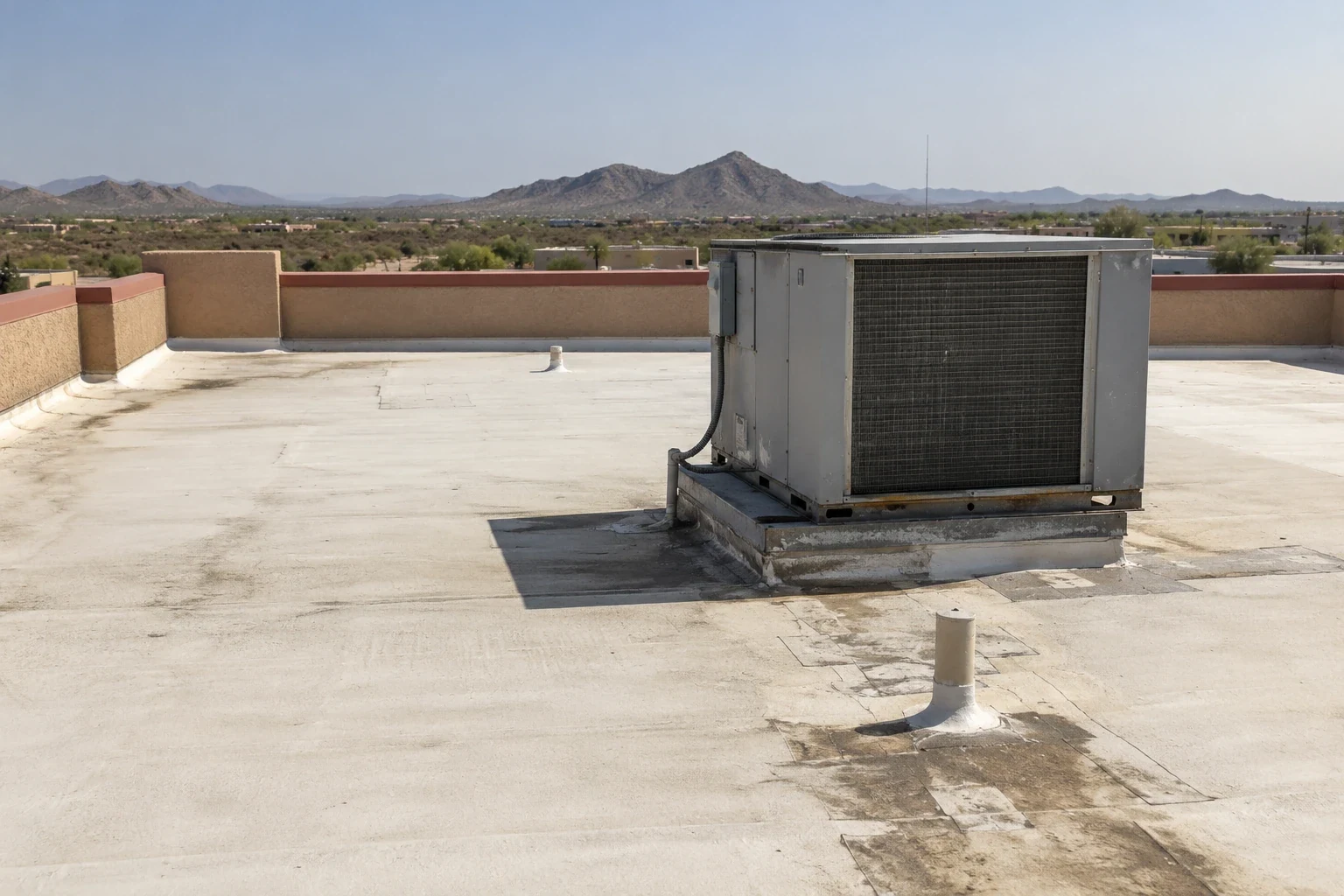
Commercial Roofing for Retail and Restaurant Chains in Rio Rancho, NM

A wet ceiling near a dining room or sales floor puts the roof detail and the daily customer path in the same repair conversation. We locate the reported area, inspect the roof assembly above it, and set a work zone that protects the business below. The field record shows the tested roof area, access limit, and any condition that changes the repair boundary. Rio Rancho’s intense sun and quick monsoon downpours make drainage and application timing relevant, while each store still needs its own schedule and evidence.

Keep customers and deliveries clear

Before work begins, we confirm the store entrance, receiving schedule, roof access, staging space, noise limits, and contact who can authorize a test. A delivery door may sit beneath the roof area, and a restaurant may need the kitchen exhaust to remain active. We sequence the repair so material handling and temporary protection do not block those operations. The occupied-store work plan divides the project by roof zone and identifies how each exposed area will be secured before opening resumes.

Rio Rancho commercial uses cluster along Southern Boulevard and major southern roads, while City Center includes commercial, employment, entertainment, and residential planning. Those broad districts support a multi-store route, but each tenant’s hours, deliveries, and roof system are specific to its property. A Rio Rancho City Center visit still requires the store manager or facilities contact to confirm access and customer-flow constraints. We keep the inspection map tied to one location even when several chain sites share a service day.

Trace the source before closing a room

A ceiling stain can form away from the roof opening. We trace the likely path across seams, curbs, exhaust penetrations, drains, and changes in roof height, then compare it with the interior report. A photo includes the nearby details needed to return to the same zone. If concealed moisture could alter removal, a small approved test can confirm the assembly below. The roof review records what was checked and what remains unconfirmed before the owner approves a repair or a broader replacement discussion.

Enchanted Hills was among the places receiving over two inches of rain during a July 2018 monsoon hour. That local example shows why outlets and overflow paths deserve attention before the summer rain period; it does not establish an issue at another shopping center. We inspect drain bowls, strainers, scuppers, and the membrane beside them at the actual store. If water remains after an outlet is cleared, a ponding-water review can determine whether the next step is a repair, test, or drainage correction.

Match the correction to the roof system

Retail properties may have membrane, metal, coating, or several assemblies across additions. At a food-service curb, the installed sheet and the condition of its receiving surface govern whether a welded patch, compatible adhesive, or new flashing will hold. A repair near kitchen exhaust needs a compatible tie-in and coordination with the equipment contact. The repair scope names preparation, materials, access, protection, and the boundary where work stops. If a test reveals a wider area, we document the finding and request approval before removal grows.

A roof that needs broad renewal requires a different operating conversation. We compare recovery and replacement against existing layers, moisture, drainage, edge height, access, and the time a sales floor or dining room can be protected. A replacement plan includes staging and end-of-day dry-in rather than relying on a calendar estimate alone. If a leak is active, temporary stabilization can reduce immediate exposure while the permanent scope is established and approved.

Use one standard without merging sites

Chain operators benefit from common report fields, but a shared checklist cannot substitute for property-specific observations. We record location, roof-zone label, system, access limits, photographs, repairs, and next action for each store. A property manager’s roof register can keep these details available to the local contact while headquarters compares urgency across locations. Each roof still receives its own findings and approval path.

Where a chain has a mix of storefronts and food service, note which rooms or equipment should stay operational during work. Kitchen exhaust, refrigeration, point-of-sale wiring, and customer access may require separate coordination with the facility team. For a larger restaurant group, a hospitality operations file can also help distinguish guest-facing hours from back-of-house access. We document the actual roof-side work and do not treat a business category as evidence of a particular roof defect.

Leave a practical reopening record

At closeout, we show the repair location, photographs, materials, test results, protection removed, and any follow-up condition. If a portion of the roof could not be reached, the record says so and identifies a return window. A condition file gives managers a way to compare future visits and tie each recommendation to what the crew observed. The store contact can use the same roof-zone name when reporting another leak.

For stores in City Center, Southern Boulevard, or an Enchanted Hills commercial area, route planning can reduce repeated setup, but the closeout remains site-specific. We note whether receiving, exhaust, or customer access returned to normal and which area still needs attention. If a future vendor moves equipment or cuts a new penetration, the file helps the owner identify the affected tie-in. That keeps a later service visit focused on the changed detail instead of re-opening unrelated roof zones.

When a location manager reports a leak, record the date, room or sales-floor zone, recent weather, and any equipment or sign work near the affected area. Those details help the roofer compare a new report with the prior closeout. If water reappears after a repair, we inspect the original tie-in and adjacent runoff path before assuming the earlier work failed or expanding the repair to another roof section.

A route through Rio Rancho City Center can cover several nearby stops, yet a store’s work order should remain its own. We connect photos and recommendations to that address, the roof zone, and the approved operating window. If a portfolio contact forwards the record, the receiving team can identify which location needs another visit without confusing it with the next store on the route.

Common Questions About Retail and Restaurant Chains

Can a roof repair happen while a store stays open?

Often, if safe access, deliveries, customer traffic, and weather protection can be coordinated. We define the work zone and the condition required before the store resumes normal use. If equipment needs a shutdown or the work blocks a receiving area, we schedule that part with the local contact.

How do you inspect a leak near a kitchen or sales floor?

We connect the reported interior area with roof seams, curbs, exhausts, drains, and prior repair locations. If the assembly below the surface could change the work, we request an approved test opening. The report distinguishes a confirmed opening from a symptom that still needs verification.

Can you inspect several chain locations in one route?

Yes, when each store confirms its own roof access, operating hours, and contact. We keep separate maps, photographs, and findings for every location. A route can group mobilization, but a repair decision remains tied to its building and evidence.

What should a store manager share before roof work?

Provide the access route, receiving and customer schedule, roof plans, reported leak, equipment restrictions, and the person who can approve testing. Let us know about kitchen exhaust or other systems that cannot be interrupted. We will identify the work boundary and protection plan before starting.

What does a closeout tell headquarters?

It identifies the property, roof zone, condition, work completed, materials, photographs, limits, and any next action. We note whether store operations were affected and whether another visit is required. Headquarters can compare priorities without treating an uninspected roof as clear.

Coordinate a chain roof visit

Send the store location, reported condition, operating and delivery windows, roof access contact, and available records. We will document the work zone and closeout for the local team.