
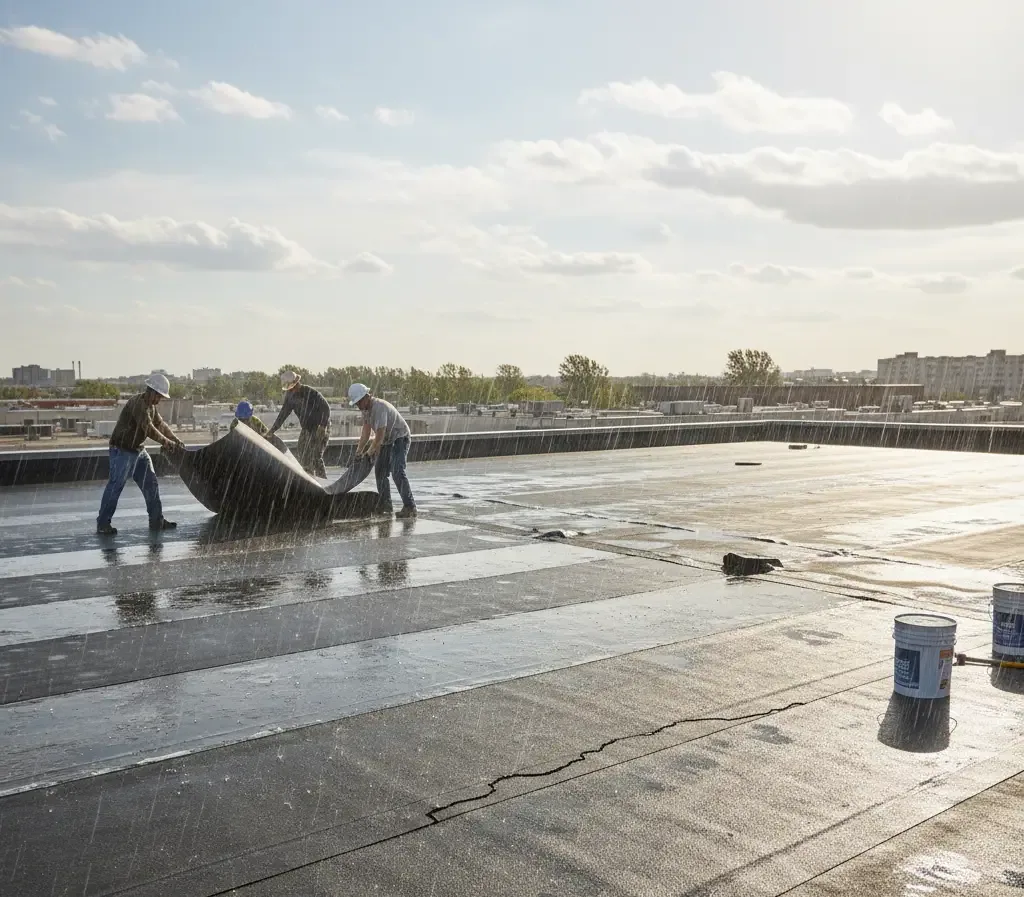
Holcim Elevate Roofing in Rio Rancho, NM

A loose termination can change the repair boundary before a membrane field is touched. On a Holcim Elevate roof in Rio Rancho, NM, we identify the installed system and attachment before selecting a patch or recover detail. Holcim Elevate's commercial portfolio includes UltraPly TPO and RubberGard EPDM, which use different seam and repair methods. The roof record may name an older Firestone product, but the field condition still controls. We map the zone, inspect the termination and adjacent laps, and confirm the material before defining work.

Confirm membrane and attachment

UltraPly TPO and RubberGard EPDM are not interchangeable simply because both cover a low-slope roof. We compare the membrane surface, seam construction, attachment, flashing, and available project records. At a repair, the substrate and existing layers matter as much as the product family. A damaged section may be suitable for a local patch only after the surrounding sheet is checked; brittle material, trapped water, or a failed termination can require a wider boundary. The roof inspection records what is observed and what requires a test opening.

Rio Rancho's planned City Center combines commercial, employment, education, and residential uses, while the Northern Boulevard and NM 528 area includes industrial employment. At either type of property, equipment density, access, and operating hours shape inspection logistics. They do not identify the membrane. We review the installed assembly at each roof zone and coordinate the access window with the facility contact. A City Center roof visit starts with a roof plan, reported condition, and restrictions on work below. When comparing options, an owner can also review how GAF membranes differ from the installed assembly.

Read the seam before patching

A TPO seam is heat welded; EPDM seam work follows a different preparation and bonding process. The repair crew first cleans and evaluates the existing surface, then verifies the repair material against the system in place. We inspect the field seam, its end, nearby penetration flashing, and any earlier patch edges. If the defect begins at a termination or curb, adding a patch only over the visible opening can leave the path open. The EPDM assembly review and field inspection help distinguish the membrane family from a similar-looking surface.

Rio Rancho sees strong sun, summer heat, seasonal hail, and short monsoon downpours. Those exposures can make laps, edge metal, and drain transitions worth checking, but a regional event does not prove damage to a particular building. We look for an actual breach, movement, or open detail. After a storm, we also trace whether water moved from the reported zone toward the outlet or parapet. A flashing repair addresses a failed transition; a confirmed field-seam split receives its own measured scope and closeout photographs.

Test before considering a recover

A recover adds an assembly over existing material, so the roof must be checked below the visible surface. We assess moisture, attachment, drainage, structural limits, edge height, and the number of existing layers. Holcim Elevate retrofit material discusses system options, but it does not replace a building-specific inspection. Where a test opening is needed, we document the layers and the condition of the substrate before the owner compares recover with tear-off. Wet insulation, poor attachment, or crowded penetrations can change the recommendation even when the top membrane appears serviceable.

Near Northern Boulevard, a large operating facility may have equipment work and production schedules that constrain access. We divide the roof into zones, note the path between access points, and establish which area can be tested without interrupting operations. At City Center, tenant activity and roof use may call for a different sequence. A recover evaluation lists prerequisites, edge details, and exclusions. When replacement is the better fit, the replacement scope identifies removal, temporary dry-in, insulation, and transition work rather than treating the new membrane as a surface-only change.

Trace runoff through each roof zone

Water at an interior ceiling may have traveled from a seam, curb, wall, or drain long before it appeared indoors. We follow the likely runoff path across the Holcim Elevate roof and check the primary outlet, overflow, and nearby flashing. A wet insulation test or core cut is considered where it can resolve the repair boundary. The record distinguishes a visual observation from a verified condition. If the drain bowl is blocked, clearing it may restore flow; if water remains after the outlet is clear, the roof plane and insulation need a closer assessment.

A short monsoon burst can load a drain bowl before debris clears from the outlet. We inspect the actual bowls, scuppers, overflows, and low areas, then compare what we find with the building's route for runoff. A drain and scupper check can include a ponding-water assessment when water remains after the path is clear. The report connects each condition to a roof zone and a next action.

Close out with system-specific evidence

A useful closeout names the membrane where verified, the material used, the tested seam or flashing, photographs, and any condition left for follow-up. If the owner provides a project warranty or specification, we record the applicable restriction before permanent changes. We do not infer coverage from a label. The report can carry the roof map, repair limits, moisture results, and access notes into the building file.

Equipment vendors can disturb a completed curb or conduit flashing, so the owner should keep alteration dates beside the roof-zone record. At Rio Rancho's Enchanted Hills Commerce Center and City Center, access procedures can differ by property, but the same documentation principle applies: identify what was inspected and which detail was restored. A second membrane option can be compared against the building's structure, drainage, existing layers, and project requirements, including a Carlisle assembly when it is under consideration.

For occupied buildings, we coordinate noisy or disruptive work with the operations contact and protect the area below. The plan states where tools and materials will be staged, how debris will be removed, and how an open roof section will be kept dry overnight. If a sudden leak needs immediate attention, our emergency response stabilizes the affected area first; permanent Holcim Elevate repair follows after the system and boundary are confirmed. The closeout notes temporary measures separately from completed restoration.

Common Questions About Holcim Elevate Roofing

How do you distinguish Holcim Elevate TPO from EPDM?

We examine the sheet, seam construction, flashing, attachment, and project records. TPO and EPDM require different repair preparations, so the material is confirmed before a patch is selected. If records and field evidence conflict, we identify the uncertainty instead of treating the product name as settled.

Can an older Firestone roof still be called a Holcim Elevate system?

Records may use an earlier product or company name. We document the name shown in the records, then verify the roof that is physically installed. The inspection describes its membrane, seams, attachment, and condition without assuming that every area was installed at the same time.

What has to be checked before a recover?

We review moisture, attachment, drainage, layers, edge height, and structural limits. Test openings may be needed to confirm the substrate. A recover is considered only when the existing assembly and planned transitions support it; the evaluation records what could rule it out.

Can a monsoon event show whether this roof needs repair?

A storm can prompt an inspection, but its regional rainfall record does not establish what happened on one property. We check the reported zone, drainage, seams, edges, and penetrations, then document visible or tested damage separately.

What should be in the roof repair closeout?

Keep the roof zone, product where confirmed, materials, preparation, seam or flashing repaired, photos, test results, and any remaining item together. That record helps maintenance staff recognize a prior repair if a unit vendor later works nearby.

Set the repair boundary on the roof

Share the property location, roof records, reported condition, access contact, and any work-hour limits. We will verify the installed Holcim Elevate assembly and document the tested repair area.