
Carlisle SynTec Commercial Roofing in Rio Rancho, NM
A Sure-Weld TPO lap is only one piece of a roof assembly. We check the sheet, seam, edge, attachment, and drain details before selecting a repair. Sure-Weld is a reinforced TPO membrane with a polymer base, reinforcing fabric, and thermoplastic top layer. Those components guide the inspection; roof records and field conditions identify whether a building has that system. In Rio Rancho, heat and brief monsoon rain make seam and drainage checks useful, but each property sets its own repair boundary.
Confirm membrane and attachment
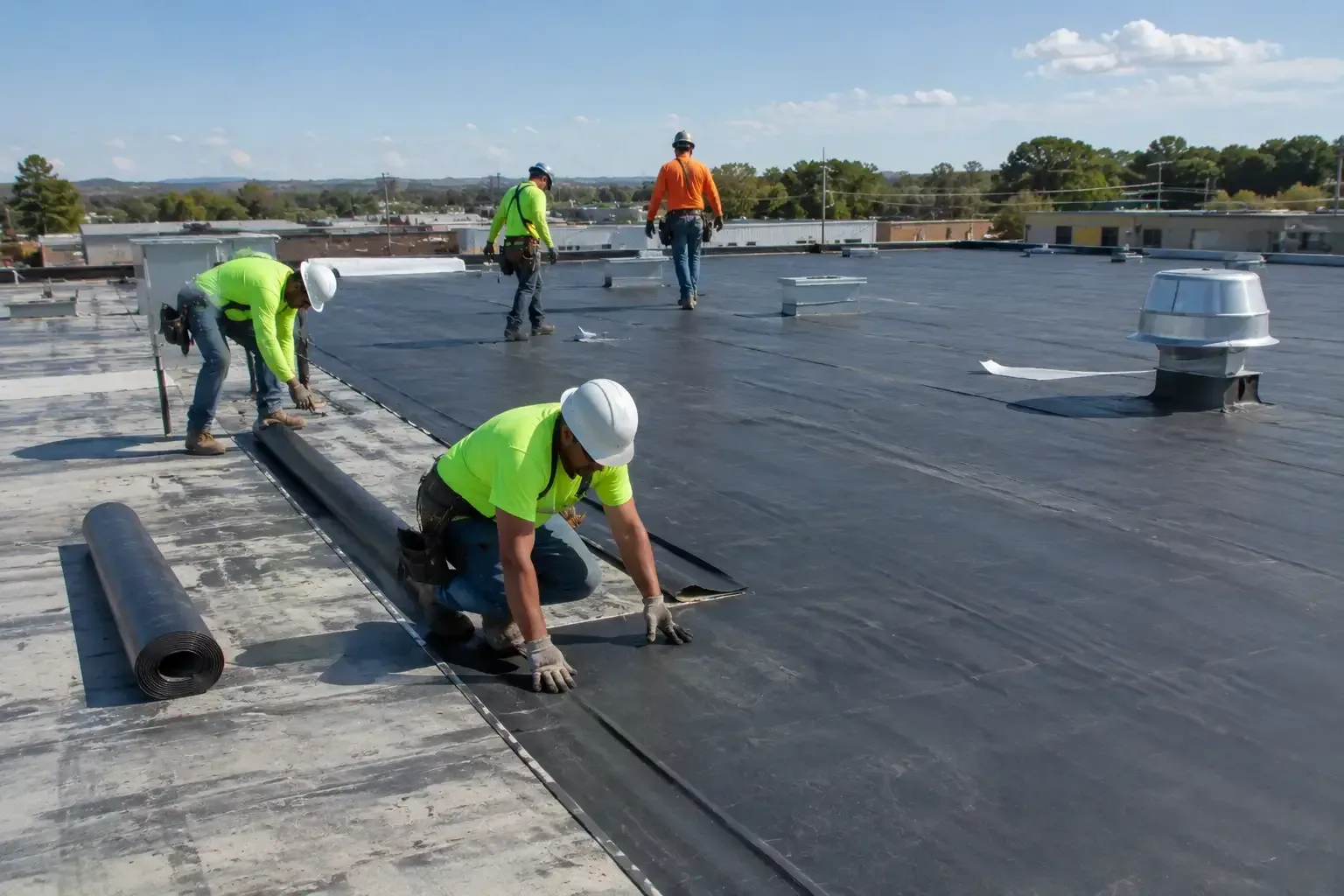
We review project documents, product labels, repair history, and visible roof details to verify the Carlisle system. A mechanically attached sheet, an adhered membrane, and an induction-welded assembly have different fastening and inspection points. We check substrate, insulation, cover board, fasteners, perimeter details, and prior patches before cutting or welding. A roof inspection records visible conditions and identifies layers or attachment points that need closer testing.
Commercial activity follows Southern Boulevard and NM 528, with industrial employment near Northern Boulevard. For a building in the Northern Boulevard area, we confirm its equipment, entry limits, and installed Carlisle product before mobilizing. We confirm access, site contacts, and the roof assembly at each address before mobilizing.
Test the weld before patching
A heat-welded lap needs a clean surface and a temperature, speed, and pressure that produce a continuous bond. We inspect the seam edge, probe suspect areas, and make a trial weld when the membrane and conditions allow. If the sheet is brittle or contaminated, patching over the surface can leave an open path underneath. The TPO system review helps frame general assembly choices, while the installed Carlisle documents guide the actual repair.
At corners, drains, and curb transitions, the field seam may tie into flashing with different reinforcement or attachment. We photograph the full detail, not only the visible split, and note the direction water can move. If a seam opening is confirmed, a seam repair identifies the patch length, preparation, and endpoint. A separate curb or wall failure gets its own flashing scope so the two defects are not hidden under one line item.
When the existing sheet has weathered, we do not start a weld until the surface can be prepared and the test result is acceptable. A repair can fail at its boundary if heat is uneven, contamination remains, or the patch crosses a change in membrane type. We set the equipment, make a test seam when conditions call for one, and verify the finished edge after cooling. At a detail with several layers, the crew identifies the correct sheet rather than welding onto a cap or accessory that serves a different purpose.
Seam position also matters where water approaches a drain, curb, or roof transition. We inspect whether runoff can travel toward the repair and whether the edge of the patch will remain outside a moving joint. The written scope lists the length and ends of the work so an owner can compare the repair with later photos.
Follow water through the roof assembly
A leak may show below a seam but begin at a drain bowl, curb, or termination. We compare the interior report with roof slope, low areas, and previous repair locations, then document the zones inspected. If a scan suggests moisture below the sheet, a test opening can confirm the layer condition at that point. The report states the scan method and limits. We do not apply one sample result to an entire building without supporting evidence.
A July 2018 burst dropped more than two inches near Enchanted Hills within an hour. After a storm, we inspect the property's strainers, scuppers, overflows, and seams around outlets. A drainage assessment can determine whether blockage, roof geometry, or concealed moisture needs separate review.