
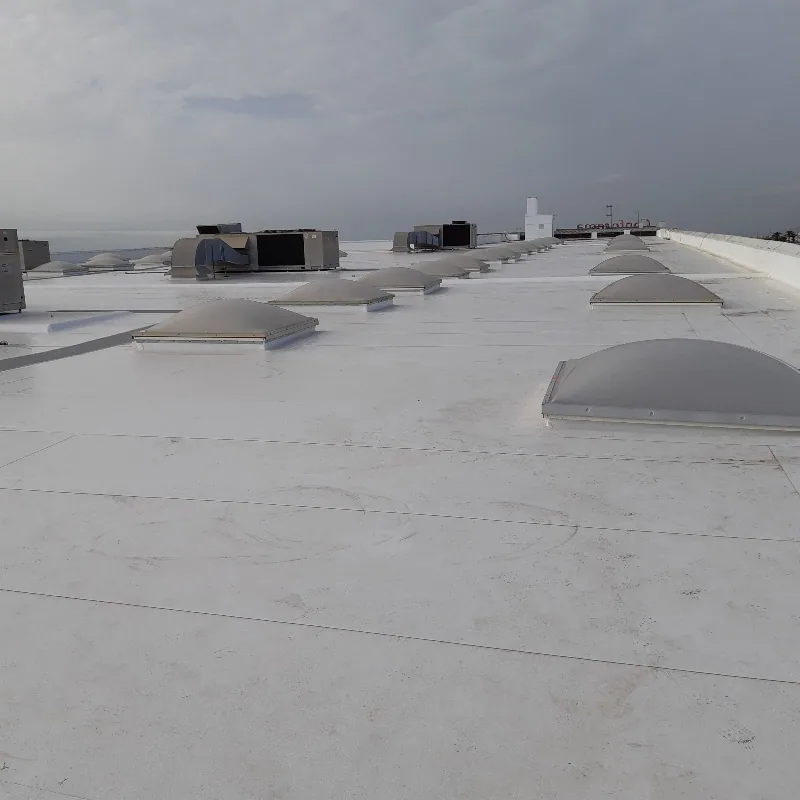
GAF Commercial Roofing in Rio Rancho, NM

A heat-welded lap can look closed at the surface and still need a probe check at its edge. When a Rio Rancho building has a GAF roof system, we identify the membrane, attachment, flashing, and repair history before selecting material. GAF’s commercial range includes EverGuard TPO and PVC single-ply membranes as well as asphaltic and coating systems. The name on a roof record does not prove which assembly is installed; field conditions and product documents set the repair boundary.

Confirm the GAF assembly in place

We review the roof map, project closeout, labels, invoices, and visible membrane details to identify the system. EverGuard TPO and PVC both use heat-welded seams, but the sheet, accessories, and compatible repair materials must match the installed membrane. We check reinforcement, attachment, surface condition, curb flashing, and edge terminations before welding or covering a detail. A system inspection records what is confirmed and what still requires a test.

Rio Rancho commercial routes include Southern Boulevard and NM 528, while employment uses are also identified near Northern Boulevard. A site on those corridors can have different rooftop equipment and access rules, but corridor location does not identify its GAF product. We inspect the actual building. A facility in the industrial park area needs its own access contact, roof map, and production limits before a repair crew is scheduled.

Check the seam and surrounding field

A sound weld depends on the surface, temperature, speed, pressure, and condition of the existing sheet. We clean and prepare a test area, then verify that the new weld bonds to the field material. If a prior patch is loose or the sheet has become brittle, the repair may need to extend to stable membrane. The TPO system review identifies common assembly details, while the actual roof documents confirm the installed GAF components.

Heat and ultraviolet exposure can age sealants and change membrane flexibility; neither condition alone confirms a leak. We inspect laps, penetrations, drains, edge metal, and areas around rooftop units. If an opening is present, photos tie the defect to a roof zone. A seam repair restores a verified lap failure; a puncture or flashing issue is mapped and scoped separately rather than hidden under one repair label.

Trace water before extending the repair

A ceiling report may point toward a roof seam, curb, drain, or wall transition. We trace the likely path and identify whether the visible GAF membrane is open or whether moisture remains unconfirmed below. A targeted scan can locate a test area, but only an approved opening verifies the layers at that point. The moisture survey records its method and limits. If the test confirms wet insulation, we define the removal boundary before restoring the membrane.

Rio Rancho has recorded more than two inches of monsoon rain near Enchanted Hills in about an hour. That short burst makes drainage a useful part of post-storm inspection, but it does not establish an issue at another property. We check the actual drain bowl, overflow, seams, and adjacent field. A drainage review can separate a blocked outlet from a roof plane that holds water after the path clears.

Match restoration to the installed system

GAF EverGuard membranes can be specified in adhered, mechanically attached, or other documented assemblies; the repair method depends on the roof in place. We verify the substrate, fasteners, insulation, cover board, and edge conditions before patching. GAF lists EverGuard fleece-back TPO and PVC membranes for selected recover assemblies, but an existing roof must be reviewed for moisture, layers, attachment, drainage, and structural limits before a recover is considered. A recover evaluation identifies those conditions.

For a local failure, the work scope names material, preparation, weld or adhesive, tie-in, protection, and closeout test. If a broad section has repeated openings, confirmed moisture, or failed attachment, compare repair with removal and replacement on the same measured boundary. A repair scope records the immediate work; a replacement plan includes dry-in, disposal, and protection below.

At a field repair, heat-welded seams should be checked at the transition and at the end of the patch, where an edge can be vulnerable to peeling. We set the welder for the membrane and ambient conditions, make a trial weld, and verify the bond before running the longer seam. The completed area is checked after cooling, including corners and termination bars. If the existing surface has dirt, weathering, or prior adhesive, we prepare a test area before trusting a new connection.

For a recover discussion, we also verify whether the existing assembly can receive added layers without trapping moisture or reducing drainage performance. Roof height at edges, penetrations, and equipment supports can limit the available detail space. We record those measurements before the owner compares an overlay with tear-off and replacement.

Keep product records with the roof zone

Closeout should identify the GAF product where verified, materials used, seam or flashing repaired, photos, and any area left for testing. We do not infer a warranty term or approval from a manufacturer name. If the owner provides a warranty or specification, we note the applicable details and any approval still pending. A Carlisle system comparison and a Versico product review can help an owner understand differences when more than one membrane is under review. The closeout photos and roof-zone label stay with the building record.

A later equipment change can disturb a completed GAF penetration. Record the service date and inspect the roof-side flashing after the unit or conduit work. Rio Rancho’s City Center and the Southern Boulevard commercial route help plan a return visit; the repair record remains attached to the building and its tested zone. The owner can then see which seam was verified and what still needs a separate inspection.

When the roof is opened for repair, we capture the seam detail, substrate, and adjacent flashing before closing it. That makes later comparison possible if the same area is reported again. The record should also identify any proposed alteration or material change that still needs review before it is installed.

Common Questions About GAF Commercial Roofing

How do you identify a GAF roof system?

We compare available project records with the installed membrane, seam, attachment, and flashing details. If the product cannot be confirmed, the report states that limit instead of naming an assumed assembly. A label or purchase record can help, but the current roof still needs field verification.

Can an EverGuard seam be repaired with any TPO or PVC patch?

The patch must match the membrane family and condition of the existing sheet. We clean the surface, set a test weld when appropriate, and verify the bond before completing the repair. A product name alone does not establish that materials are compatible.

Can an existing GAF roof be recovered?

A recover is considered only after checking existing layers, moisture, attachment, drainage, edge height, and the assembly requirements. A scan or test opening may be needed before a scope is defined. The report identifies the roof area and conditions that could rule the option out.

What should be checked after a Rio Rancho monsoon storm?

We inspect accessible seams, curbs, drains, overflows, and the path water took across the roof. A regional storm report does not show whether a specific building was affected. The visit maps actual conditions and any test needed before repairs are extended.

Do you provide GAF warranty coverage?

We document the installed system and the work performed. Warranty eligibility and terms depend on the project documents and the responsible issuer. If approval is required before an alteration, we identify that step before the owner authorizes permanent work.

Inspect the GAF roof before selecting a repair

Send the building location, roof product records, reported condition, access contact, and any warranty documents. We will verify the installed system and document the repair boundary.