
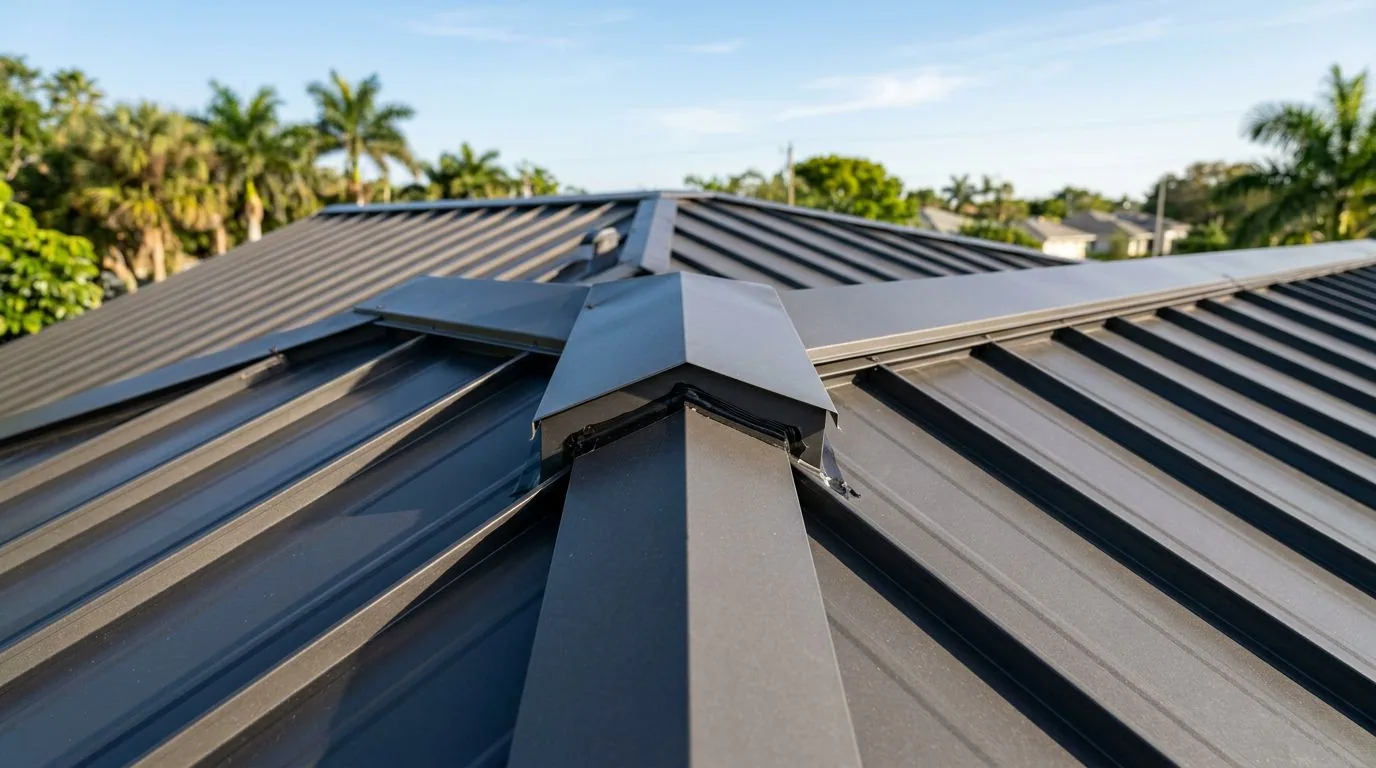
Standing Seam Metal Roofing in Rio Rancho, NM

A standing seam panel needs room to move without loosening its clips or opening a joint. In Rio Rancho, NM, hot sun and seasonal storms make panel attachment, ridge and eave details, and penetrations part of the inspection. We check seam engagement, clip condition, fasteners, coatings, flashings, and drainage before choosing a repair or replacement detail. A dent does not establish a leak; an open seam or punctured panel does. The roof map marks each condition and shows the repair boundary so the facility director can track the work.

Panels and Clips

Standing seam metal roofs use raised panel joints and concealed or exposed attachment details depending on the system. We inspect the panel profile, seam engagement, clips, fasteners, and movement allowance at eaves, ridges, and transitions. A seam that is pinched, separated, or distorted may allow water under the panel. Loose fasteners or damaged clips can change how a panel moves. We examine the attachment at accessible edges and use the installation records to identify the system where possible. Repairs must match the panel type and fastening method.

Panel movement affects flashing and penetrations as well as seams. A pipe boot or support needs a detail that accommodates movement without tearing the metal or stressing the roof seal. We check curbs, skylights, gutters, snow guards if present, and wall transitions for loose attachment and open sealant. We do not assume a flexible sealant can correct a panel joint designed to move. When the roof includes older repairs, we inspect the metal around each patch for distortion. A metal retrofit may be considered when the existing panel assembly cannot be repaired reliably, but it requires a separate attachment and drainage review.

Water-Shedding Details

The raised seam sheds water only when the panel runs to a functioning eave or gutter and the transitions are closed. We inspect valleys, ridge caps, end laps, sidewall flashing, curbs, and perimeter metal. Debris in a gutter can direct water back toward a panel joint. A roof transition near parapets or other low-slope sections needs a carefully integrated flashing detail. We trace runoff and check the discharge route before sealing any visible gap. If water has entered, we map the suspected path and test substrate or insulation where the roof build-up allows.

Rio Rancho’s short monsoon bursts can put concentrated flow through gutters and downspouts. We inspect the actual roof after rain where possible, checking the outlet, eave, and any location where overflow can reach a wall or entrance. Hail can dent a panel without opening it, so we look for a puncture, split seam, or displaced flashing before calling the metal damaged. The city’s NM 528 and Southern Boulevard corridors carry commercial activity, but each roof has its own panel length, slope, and drainage layout. The property plan and direct measurements guide the repair.

Repairing Metal Roofs

Repair begins by identifying the panel and the failure mode. We may reset a loose seam, replace damaged fasteners, rebuild a flashing, or replace a panel section where a puncture or split cannot be repaired reliably. A coating may be suitable for some metal surfaces only after rust, adhesion, fasteners, and seams are corrected. We prepare the repair and select compatible metal, sealant, or coating according to the system. An isolated leak can be addressed without coating the full roof when the surrounding panels remain sound.

At edges and penetrations, the repair must preserve movement. We check panel clips and seams before adding a patch that could lock a moving section. If an entire panel is replaced, its side laps and attachment need to integrate with adjacent sheets. For a standing-seam repair near equipment, we coordinate access so tools do not dent or scratch neighboring panels. The closeout labels the panel, seam, and transition by roof zone. A repair scope or edge-metal service can include the related gutter or perimeter work.

New Assembly and Retrofit

New metal roofing starts with deck, underlayment, attachment, panel profile, clip layout, and water-shedding transitions. We review the structure and roof slope, then coordinate panel lengths, expansion allowances, curbs, and gutter edges. The assembly must fit the building and project documents. A low-slope metal retrofit can use a new support system over an existing roof, but the loads, drainage, height, and attachment require design review. For a building with an older membrane, we also compare whether a modified bitumen assembly fits the deck and slope before selecting a retrofit. The choice depends on structural review, transition details, maintenance access, and how the new roof will discharge water. We do not assume an existing deck or frame can carry new panels without structural confirmation.

Work sequencing includes metal delivery, hoisting, safe staging, and protection of occupied areas. At Rio Rancho Industrial Park or City Center, the property contact sets access and delivery limits for the specific building. We inspect clips, seams, and flashings as installation proceeds rather than wait until every panel is covered. Each day ends with secure edges and protected roof openings. Photographs show the panel joints, eaves, ridges, and penetrations before they become difficult to reach.

Metal Roof Inspection Record

The inspection record names the panel profile, attachment condition, seam findings, flashings, penetrations, gutter status, and any test or repair performed. Photographs are labeled by roof zone so later service can find the same joint. We note whether a dent was cosmetic, whether a seam was open, and which panels were inaccessible. A condition report can carry that map into maintenance planning. A scheduled maintenance visit can check fasteners, gutters, and sealants after equipment work or a severe storm.

For a standing seam review, provide panel records, roof plans, leak locations, repair history, and access rules. We inspect the panel system and trace any water path before recommending repair, coating, or retrofit. The Campus Centre and Enchanted Hills Commerce Center are planned areas with different access conditions; the owner confirms the actual roof schedule. The recommendation shows the tested boundary and any structural or design review needed before a new metal assembly proceeds. We record panel gauge and profile when they can be confirmed, identify clips and fasteners at accessible areas, and photograph the eave and ridge details. The owner can then compare new findings with service history and know which transitions are still exposed. If the roof needs a retrofit, those records help the design team verify heights, interfaces, and drainage before panel material is ordered. Any area that could not be reached for inspection stays listed for a follow-up visit. The zone map stays with the service record.

Common Questions About Standing Seam Metal Roofing

Can standing seam panels leak at the raised joint?

Yes, if the seam is open, distorted, or improperly terminated. We inspect engagement and movement, then repair the detail with materials compatible with that panel system.

Do hail dents mean metal panels need replacement?

Not automatically. We inspect for splits, punctures, open joints, and displaced flashing. Cosmetic dents are recorded separately from a roof opening.

Can you coat a standing seam metal roof?

It may be possible after checking corrosion, fasteners, seams, adhesion, and drainage. Coating does not replace loose clips or a failed panel joint.

What makes a metal retrofit different from panel replacement?

A retrofit adds a support and attachment assembly over an existing roof. It needs review of structure, height, drainage, and access, while a panel replacement follows the existing system.

Inspect the Panel Joint

Share roof plans, panel specifications, leak locations, and access rules. We will inspect seams, clips, flashing, and drainage and document the repair or retrofit boundary.