
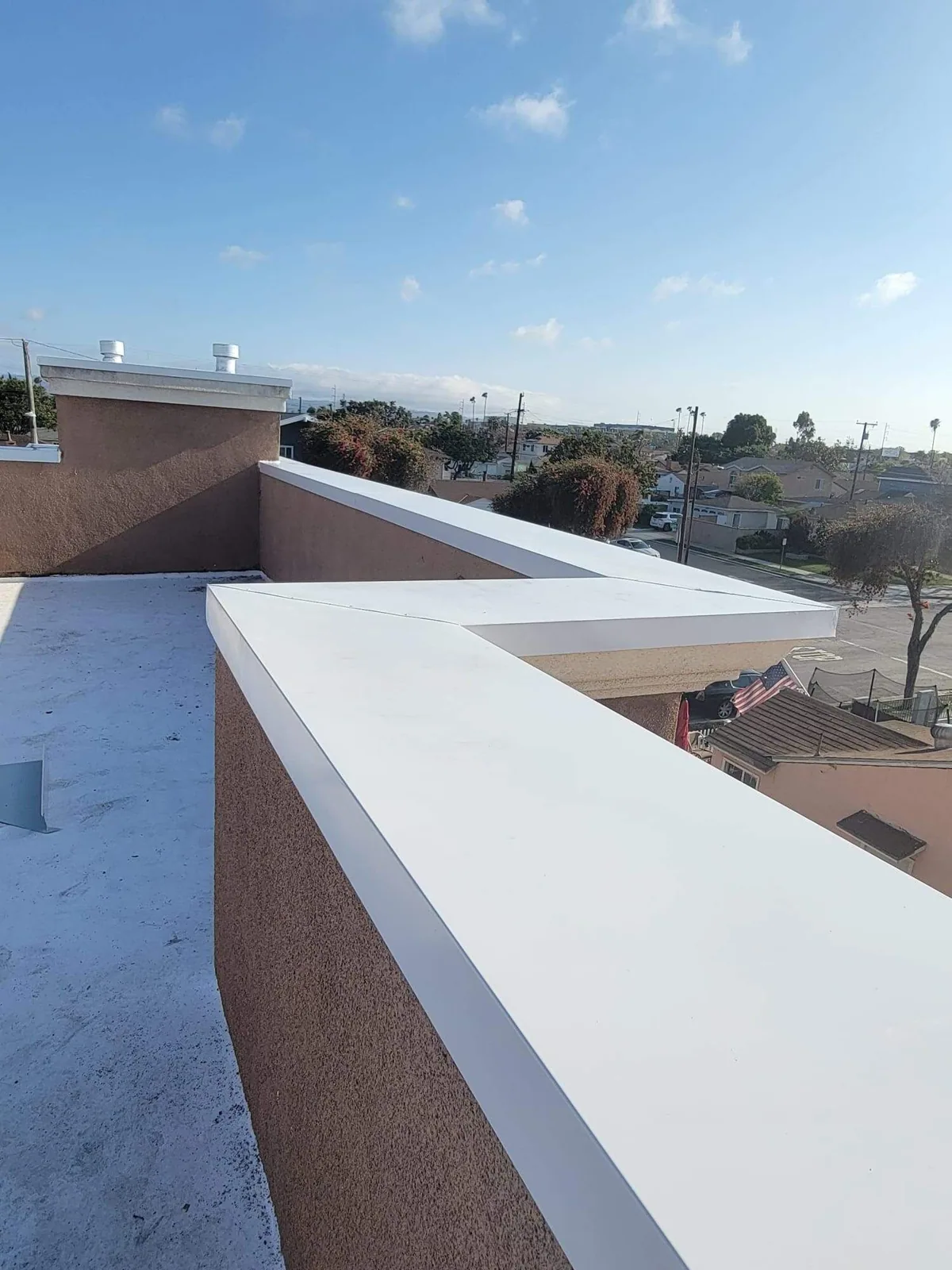
Commercial Roof Edge Metal, Coping, and Gutters in Rio Rancho, NM
A coping joint that lifts at the corner can open a path behind the roof membrane. In Rio Rancho, NM, heat cycles exposed metal and seasonal hail can damage edges, while short monsoon bursts quickly test gutters and downspouts. We inspect the coping, cleats, fasteners, laps, fascia, gutter seams, and membrane termination as one perimeter assembly. The repair scope identifies which metal can be secured, which flashing needs rebuilding, and where drainage remains restricted. That gives the facility director a defined boundary instead of a bead of sealant placed over an unresolved joint.
Perimeter Assembly
We inspect parapet caps and coping joints for movement, open laps, loose cleats, missing fasteners, corrosion, and sealant failure. Metal should shed water away from the wall and hold its position through expansion and contraction. We also check the membrane termination bar, counterflashing, and wall transition below the coping. If the coping is secure but the flashing beneath it has separated, repairing only the cap leaves the entry path open. The condition is photographed from a safe position and mapped to the roof zone so the repair includes the connection between metal and membrane.
Edges at roof level need a different review from parapet caps. We check drip edges, fascia, gravel stops, and termination details for separation or movement. Corners take particular attention because metal pieces and membranes meet at several planes. A loose edge can allow wind to work under the roof covering, while an open lap can direct water behind the fascia. We determine whether the substrate can hold the repair fasteners and whether the metal can be removed and reset without damaging the membrane. If the assembly is unstable, we define the replacement length and tie-in rather than relying on a surface seal. We also check how long metal sections are joined, whether a splice allows movement, and whether fasteners are pulling through their support. A repair should leave each section able to expand without opening the water-shedding lap. Where the metal profile is distorted, we measure the affected run and inspect the neighboring corners before finalizing the replacement limit. That prevents a short patch from leaving the adjacent joint under the same stress.
Gutter and Downspout Flow
A gutter repair begins with the discharge route. We inspect the gutter trough, seams, hangers, outlets, downspouts, elbows, and visible discharge point. Debris can block flow, but sagging, failed joints, or a restricted leader may require repair beyond cleaning. We confirm that water can leave the roof edge without backing up against membrane or wall flashing. A roof may need both a gutter correction and a separate drain or scupper repair if interior and perimeter drainage work together.
During a heavy burst, water volume reaches an edge detail quickly. Rio Rancho’s localized monsoon rainfall has produced more than two inches near Enchanted Hills in about an hour. A short, intense downpour makes a clear runoff path essential; we inspect the actual gutter and discharge at each property. We check for overflow staining, displaced sections, and water directed toward an entry or pedestrian route. If discharge ends at a busy area, temporary protection and an operating plan may be needed during repair. The facility contact can identify where runoff affects loading, sidewalks, or equipment access.
Repair and Replacement Choices
When metal remains sound, we may reset loose sections, replace fasteners, renew joints with a compatible detail, or repair a localized membrane termination. A corroded, distorted, or poorly fitted section can need replacement to restore the water-shedding shape. We identify the gauge and profile when records or field measurement support it, then detail the lap, cleat, and attachment. If the edge metal and membrane termination move together, the scope ties them into a stable substrate. A roof repair addresses the membrane connection; the replacement scope may be appropriate when deterioration extends through the assembly.
Sealant is selected for a joint that is designed to be sealed, not used to hide movement or missing attachment. We remove failed material, prepare the surfaces, and install the repair that fits the joint geometry. On a metal roof, panel seams and clips require inspection before coating or patching. On a membrane roof, edge flashing must tie into the field sheet without leaving an exposed water path. A standing-seam metal roof uses panel joints and clips that need their own movement and fastening checks. We record those details before proposing a coating or patch. We also check nearby penetrations and curbs because a perimeter leak report can originate at another transition.