
Commercial Roofing in Mariposa, Rio Rancho, NM
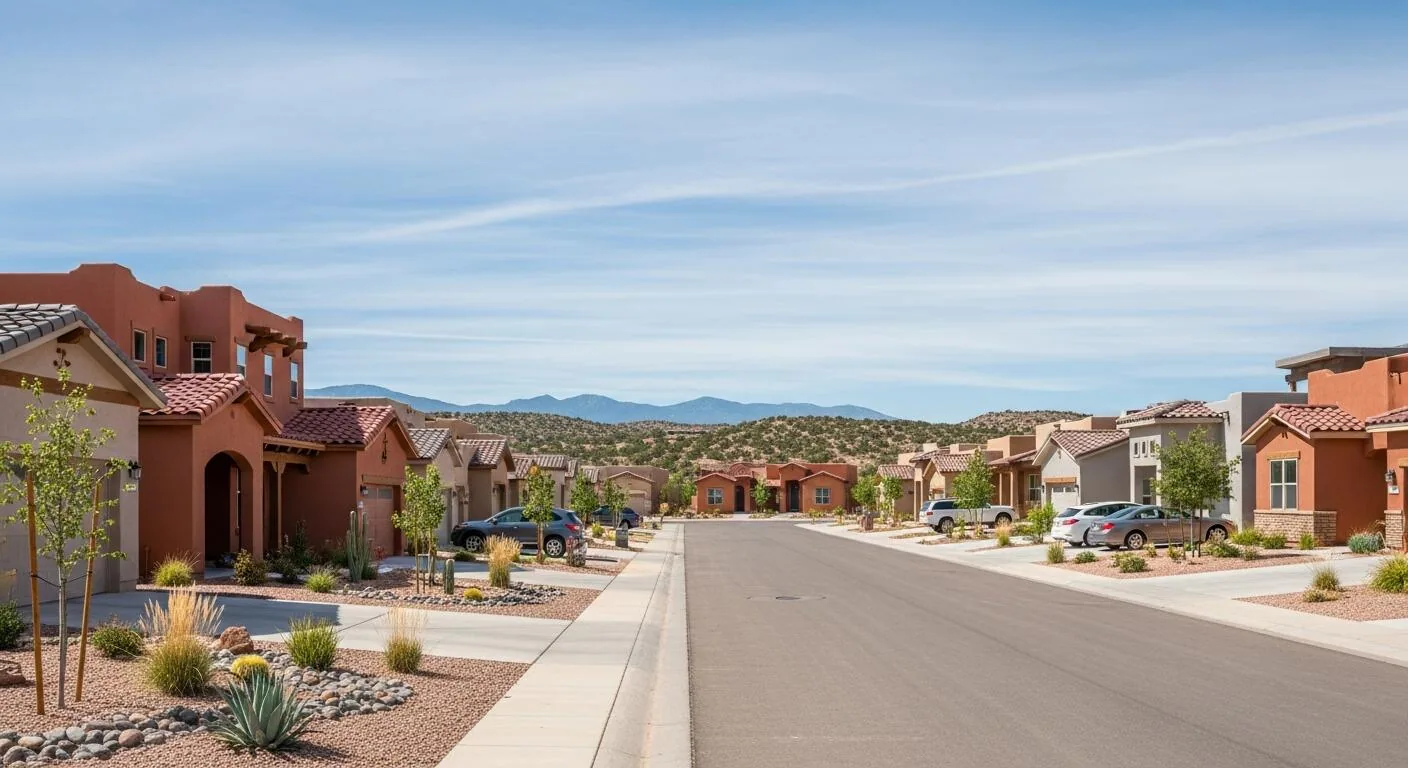
A curb flashing with a loose corner can move a repair from one unit to a connected roof zone. Mariposa is a planned district of about 1,465 acres west of Unser Boulevard along Mariposa Parkway, between US 550 and King Boulevard. Its early master plan included office and commercial space beside a custom-home and estate community; later market conditions shifted development toward a more traditional neighborhood form. Those planning facts provide context, not an inventory of current commercial roofs. We inspect the property the owner identifies and confirm the roof assembly and access before setting a scope.
Tie the report to a roof zone
Interior water can travel along a deck or insulation layer before it appears below. We start at the reported room, locate the likely roof area, and check field seams, penetrations, wall transitions, drains, and termination metal. A probe can test a suspect lap; moisture readings help decide whether a controlled opening is needed. The inspection record separates visual observations from tested findings and names any area that could not be reached.
Master-plan square footage describes planned office and commercial uses, not roof area or a current building's condition. For the actual property, we identify the membrane from records and field details, then check attachment, seams, prior patches, and the substrate. TPO, PVC, EPDM, modified bitumen, built-up roofing, and metal need different materials and repair methods. A PVC membrane review only applies once the installed system is confirmed. If an overlay changed the layers, we map that roof zone rather than extrapolating one detail across the whole building.
Work from the property that exists today
Mariposa's development pattern changed from its initial office, commercial, and estate plan toward a more traditional neighborhood form. That shift makes site-specific confirmation important: a plan label does not establish which businesses operate today or what type of roof sits above them. We use the owner-provided address and access contact, confirm the building entrance, and inspect the roof itself. If adjacent work has altered a parapet, penetration, or drain, we record the modification and include only the conditions that affect the repair.
Our inspection notes identify the point of entry, the roof zone inspected, the material tested, and the location of any temporary control. When a tenant improvement or equipment change is part of the history, we compare its timing with the leak report and examine the nearest flashing. The condition report gives a facility manager photographs and a marked plan that can be used during the next budget review. It avoids converting an older land-use intention into a present-day claim about the building.
Check details after heat and storm exposure
Rio Rancho's hot, bright season, hail exposure, and brief monsoon bursts all affect roof inspection timing. The Albuquerque airport's normal rainfall is highest in July and August; localized storms have produced heavy short-duration rain around Rio Rancho. Heat can affect a repair's working conditions, while sudden runoff tests low points, drains, and edge details. A hail impact needs examination for a cut, puncture, or opened seam before it becomes a repair item. The hail inspection marks confirmed damage separately from surface impressions.
We check drain bowls, scuppers, overflow openings, and the membrane at each flange. If water remains after debris is removed, we measure the low area and evaluate slope and insulation condition before choosing a correction. An open lap can admit water even when the outlet is clear, so we inspect the route between the reported entry and the drain. A drainage review records the outlet and nearby membrane condition. Maintenance photos taken from the same roof zone after a later storm can show whether a condition changed.