
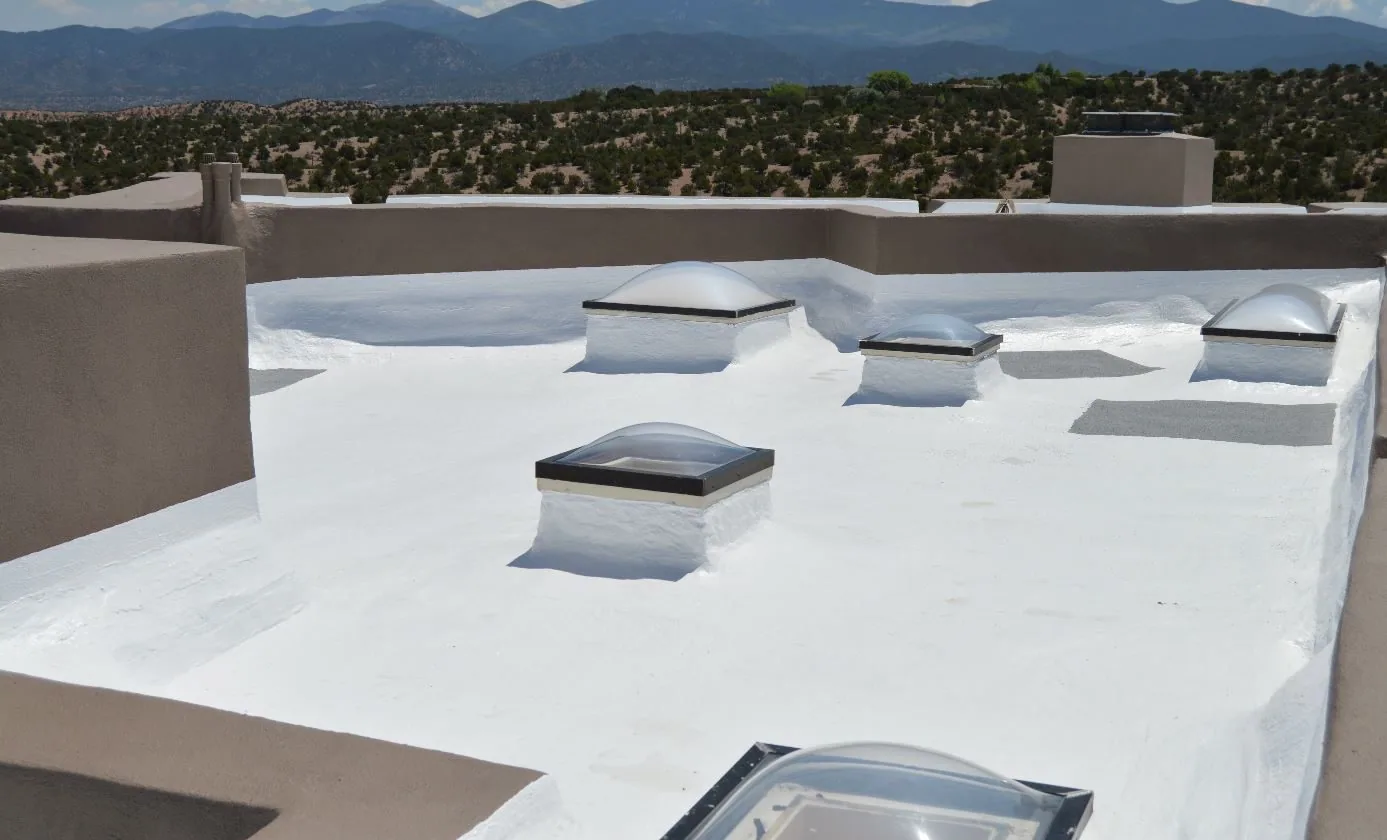
Commercial Roof Coating in Rio Rancho, NM
A coating belongs on a roof that is sound enough to receive it. In Rio Rancho, NM, heat and UV exposure can age an exposed surface, while hail and monsoon bursts test seams, penetrations, and drainage. We inspect the existing membrane, check for trapped moisture, repair weak details, and verify that the substrate can accept the selected coating. The recommendation identifies what must be corrected first and which roof zones are suitable. A coating can restore a compatible surface; it cannot make wet insulation dry or bridge a failed assembly. That boundary is established before the facility director compares restoration with replacement.
Substrate and Moisture Review
We begin by identifying the existing roof type, previous coatings, repairs, seam condition, and areas of standing water. The surface must be clean, stable, and compatible with the coating system. We inspect blisters, open laps, deteriorated flashing, loose edge metal, and penetrations, then test suspected wet areas. A coating over concealed moisture can trap a problem and make later repair more difficult. We document core or meter locations and distinguish confirmed moisture from surface staining. If the roof is not eligible, we explain whether localized repair, partial replacement, or full removal is the sounder path.
Adhesion testing may be needed before full application. A sample area shows whether the coating bonds to the prepared substrate and whether the existing layer reacts with the product. We also confirm that the roof can be cleaned without damaging the membrane and that all repair materials are compatible. TPO, PVC, EPDM, modified bitumen, metal, and existing coated surfaces each present different preparation questions. A manufacturer’s product sheet does not replace inspection of the actual roof. The scope states the preparation, primer, reinforcement, and detail work required for that assembly.
Repairs Before Coating
Every open seam, penetration, curb, edge, and drain detail must be addressed before coating begins. We rebuild failed flashing, repair membrane cuts, tighten transitions, and add reinforcement where the system calls for it. The coating layer is not used to hide loose metal, soft substrate, or a leaking termination. A targeted repair may be enough for a sound roof with isolated failures; widespread moisture can move the decision toward replacement. The work map marks completed preparation separately from coating coverage so the owner can see what each layer is doing.
Drainage is part of eligibility and application. We inspect bowls, scuppers, crickets, and low areas, then determine whether water can reach the outlet after the restoration. A coating follows the roof surface; it does not correct an underlying depression by itself. If water remains after drains clear, we evaluate slope, insulation, or localized correction before application. Rio Rancho has recorded intense, localized monsoon rainfall, so the runoff route matters even when the roof is dry on the day of inspection. We plan the application for a suitable weather window and do not coat over a surface that cannot cure correctly.
Selecting the Coating Assembly
Coating selection follows the existing roof, substrate, movement, drainage, and exposure. Silicone and acrylic systems have different strengths and limitations; we compare adhesion, water exposure, reinforcement needs, maintenance, and recoat conditions. We verify compatibility with the existing membrane and detail materials rather than applying a single product to every roof. The scope identifies the system type, surface preparation, primer if required, wet-film targets, reinforcement locations, and cure conditions. These requirements are tied to the selected product and roof assembly, not a general promise about service life.
Rio Rancho’s hot, sunny conditions make reflectivity a consideration, but a reflective finish does not resolve moisture, drainage, or edge failure. We inspect exposed fasteners, seams, penetrations, and metal transitions before specifying a coating. A silicone coating or acrylic coating is installed only after the roof passes the condition and compatibility checks. If future rooftop equipment or solar work is planned, the facility should coordinate walk paths and penetrations before application. A new detail after coating can interrupt continuity and require a compatible repair.