
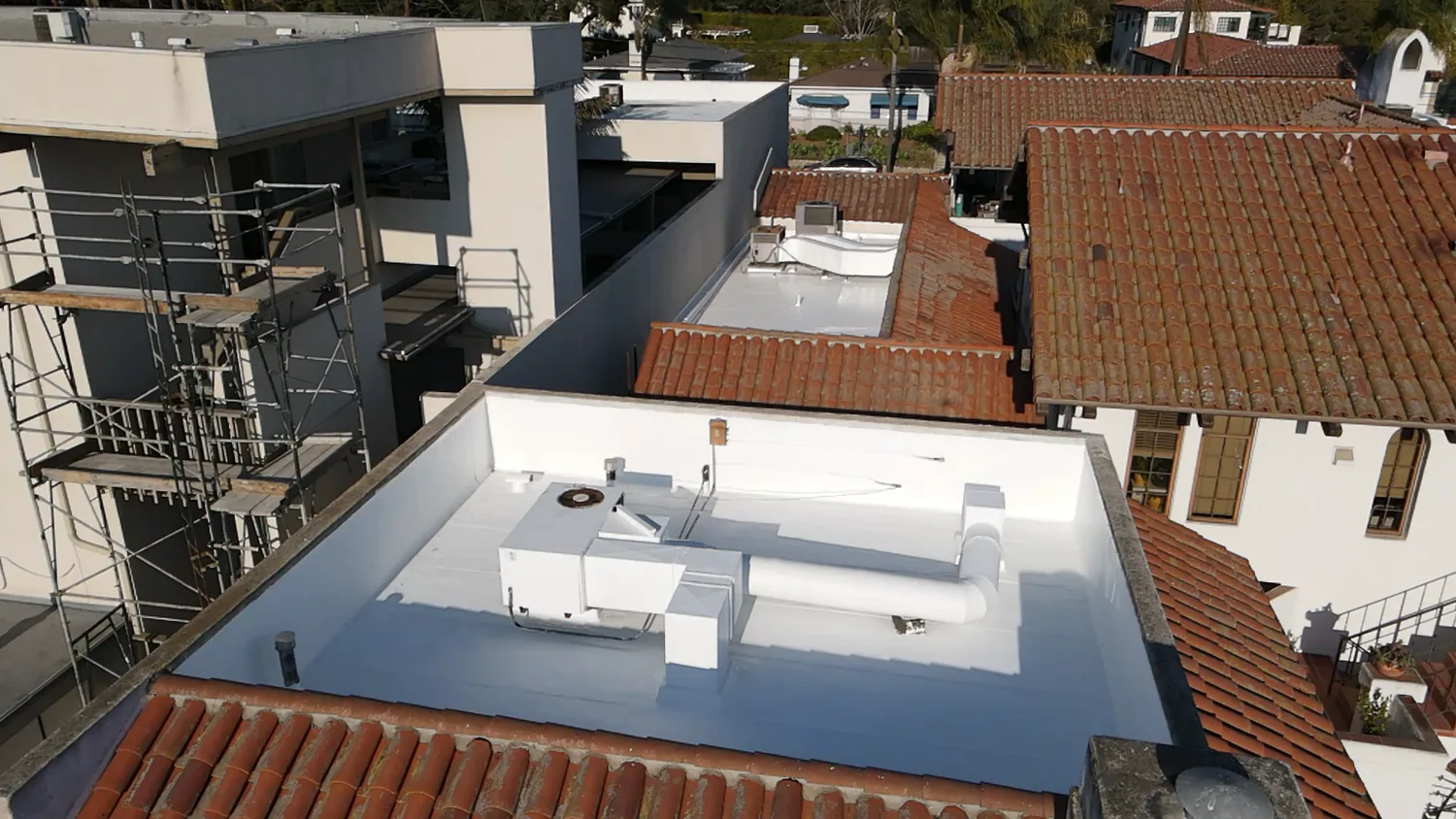
Silicone Commercial Roof Coatings in Rio Rancho, NM
A silicone coating can protect a sound roof surface, but it cannot stabilize wet insulation or a loose curb. In Rio Rancho, NM, sun and seasonal downpours make surface condition and drainage part of the coating decision. We inspect the existing membrane, test suspect moisture, repair seams and penetrations, and check that the substrate can accept silicone. The recommendation identifies which zones qualify and which need another repair or replacement path. The facility director receives a tested boundary before a coating system is specified.
Substrate and Adhesion
We identify the existing membrane, coating layers, repair materials, and surface condition before applying a new coat. The roof must be dry, clean, stable, and compatible. We inspect seams, blisters, flashing, fasteners, curbs, and prior repairs. Suspected moisture is mapped and tested; a thermal pattern or surface stain alone does not prove the insulation is wet. Where the membrane has separated or the foam is damaged, we repair or remove that material before coating. The report shows the test points and areas that remain outside the restoration boundary.
Adhesion tests can confirm whether silicone bonds to the existing substrate. We prepare a sample area, apply the proposed material, and inspect the bond after it cures. If there are multiple existing coating layers, we verify their stability and compatibility rather than coat over an unknown finish. The surface may need cleaning, primer, or localized replacement. The proposal identifies what preparation is required and what access limitations remain. Coating does not become a suitable option merely because it can be applied over a wide area.
A sample panel should represent the roof surface that will actually receive the coating. We choose a location that includes the existing finish and any relevant repair transition, prepare it with the proposed cleaning method, and apply the specified primer or coating. The test record identifies the substrate, preparation, application conditions, cure interval, and observed bond. If a second roof zone has a different membrane or prior coating, it needs its own compatibility decision rather than inheriting the first result.
Water Exposure and Drainage
Silicone coatings are considered where the roof’s surface and water exposure suit the selected product requirements. We still inspect slope, drains, scuppers, crickets, and low areas. A coating follows the existing roof and does not correct a settled deck or blocked outlet. If water remains after the drain clears, we test the insulation and measure the low area before deciding whether taper or removal is needed. The finished system must allow water to reach its outlet and leave the roof without backing up at a curb or parapet.
A short, intense monsoon storm dropped more than two inches near Enchanted Hills in about an hour. On the roof, we inspect the actual runoff route before setting a drainage or coating scope. We inspect drain bowls, coating terminations, and membrane transitions after preparation and before application. If a storm approaches while a roof is open, crews leave a secure, dry-in boundary. The drain and scupper service can correct an outlet or flashing before silicone is applied, and a restoration scope documents the complete preparation and coverage.
Repairs Before Application
Open seams, loose flashing, punctures, and failed sealant are corrected before coating. We remove unsound material, prepare the surface, and rebuild the detail with compatible flashing or membrane. A coat is not used to bridge a split seam or seal a moving curb. At equipment supports and penetrations, we check attachment and movement, then apply reinforcement where the product system requires it. If a moisture test finds wet insulation, that zone is removed or separately repaired; the coating boundary stops at sound substrate.
Where the roof uses spray polyurethane foam, we inspect the foam itself for erosion, punctures, and delamination before restoring the protective layer. A different membrane may need primer or a separate preparation. We verify compatibility rather than treat every substrate the same. If acrylic is being considered, the owner can compare an acrylic coating based on the project’s water exposure, existing surface, and maintenance needs. The selected coating and detail requirements are recorded for future repair.