
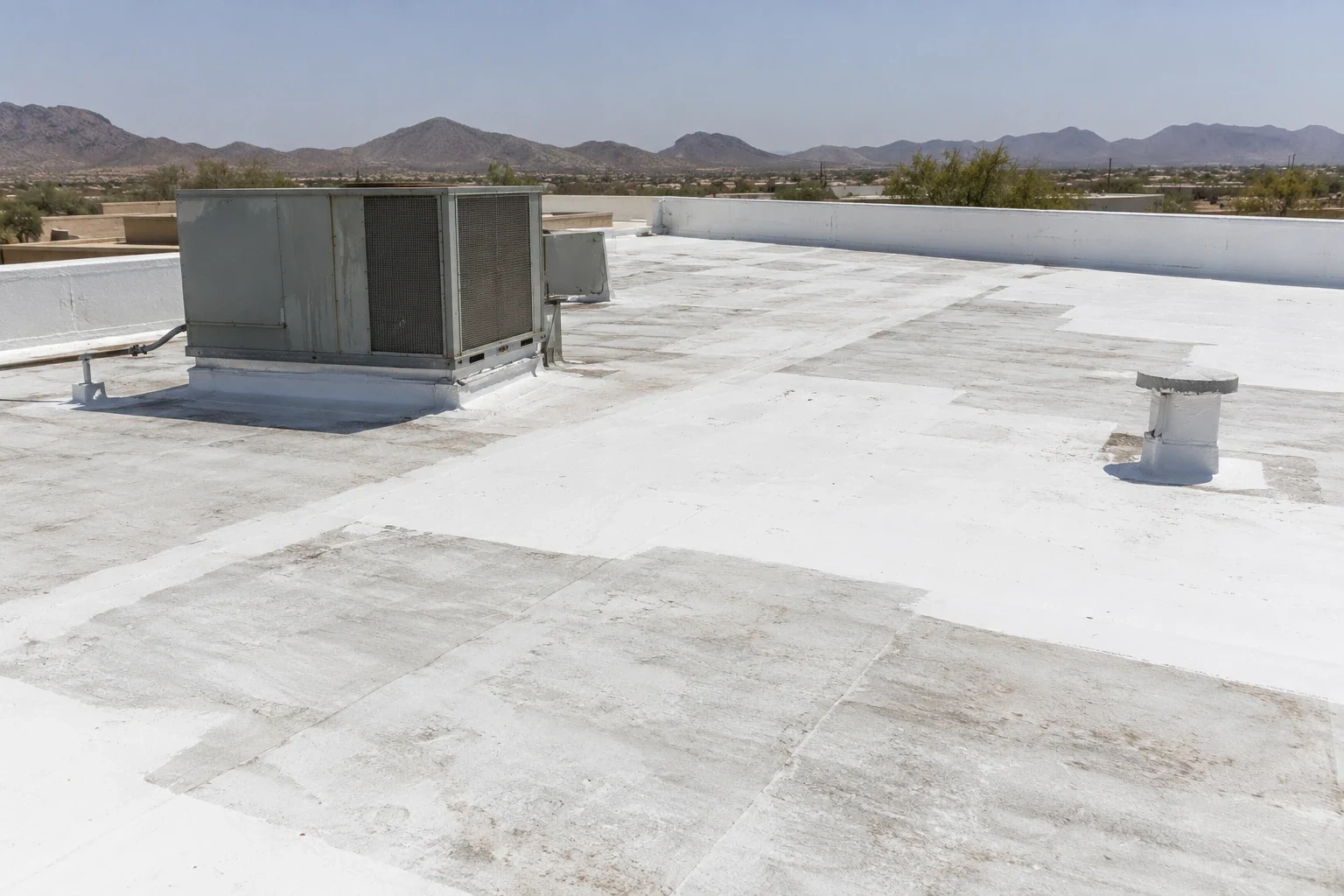
Acrylic Roof Coatings in Rio Rancho, NM
Chalking at a roof edge signals coating wear; an adhesion and moisture check shows whether the membrane below can accept another layer. In Rio Rancho, NM, summer heat, hail, and short monsoon bursts put the decision on adhesion, drainage, and repair boundaries. We inspect the existing system, test questionable areas, and identify the preparation needed before acrylic is specified. The director gets a map of sound zones, repairs, and disqualifying conditions.
Surface and Substrate
Acrylic coating is a restoration layer, not a substitute for a stable roof assembly. We identify the membrane and prior coating, check seams and flashings, and look for blisters, exposed reinforcement, loose edges, and repairs that have separated. A surface stain or color change calls for inspection, not an assumption about the insulation beneath it. Where moisture is suspected, we map and test the area; wet insulation or a soft deck must be addressed before coating can close the surface.
Preparation is selected for the material that is actually present. We remove loose coating, clean the surface, repair compatible details, and test adhesion on representative sections. A roof with more than one existing finish may need separate test areas because the layers can behave differently. The report names the tested zone and records whether cleaning, primer, localized removal, or a different restoration method is required. That boundary prevents a sound section from hiding a weak transition nearby.
Industrial properties near Rio Rancho Industrial Park and mixed employment uses in Campus Centre can have very different roof access and equipment layouts. At the building, we confirm the assembly and select a test area that reflects its surface and repair history.
Drainage Before Coating
Acrylic coating follows the roof profile, so it does not correct a settled deck or blocked outlet. We trace water from the high points toward drains, scuppers, and overflow paths, then inspect the membrane where runoff slows. If water remains after an outlet is cleared, we measure the low area and test the assembly before deciding whether repair, taper, or removal belongs in the scope. A coating line cannot replace a drainage correction.
Rio Rancho has had intense short-duration rain near Enchanted Hills and in the northwest part of the city. Those bursts make drain capacity and open discharge paths practical inspection points. On the roof, we check drain bowls, scupper throats, wall terminations, and the coating edge around penetrations. If hail has marked the surface, we distinguish a shallow impact from a cut or puncture before setting the preparation boundary. The owner receives the actual locations that need repair, not a weather-based assumption.
When an outlet or flashing needs correction, the work can be scoped through drain and scupper service before coating begins. A broader restoration scope records cleaning, repairs, primer, and application areas so the owner can compare the full sequence with a membrane replacement option.
Repair Lines and Compatibility
Open laps, punctures, loose coping, and failed penetration flashing are repaired before the coating is applied. We remove unsound material and rebuild the detail with a compatible membrane, flashing, or sealant system. A coating should not bridge a moving curb or conceal a seam that continues to open. At parapets, we inspect termination height and edge metal; at rooftop units, we check how movement and service traffic reach the flashing.
Existing foam, single-ply, and built-up roofs each require a different compatibility review. For a roof with spray foam, the protective finish and foam surface must be sound before restoration; for a thermoplastic membrane, surface preparation and adhesion need to suit the sheet. We compare the actual substrate with the proposed product requirements instead of treating acrylic as a universal topcoat. If silicone is also under consideration, its water exposure profile can be compared with the silicone coating system after drainage and substrate conditions are mapped.
Acrylic systems are often selected where their water exposure and maintenance requirements suit the roof. If the assembly has persistent ponding, widespread wet insulation, or recurring open seams, another repair or replacement path may be more appropriate. The recommendation explains which finding changes the boundary and what test would resolve an uncertain section. It also identifies any area left outside the coating scope so a future leak is not mistaken for a failed treated zone.