
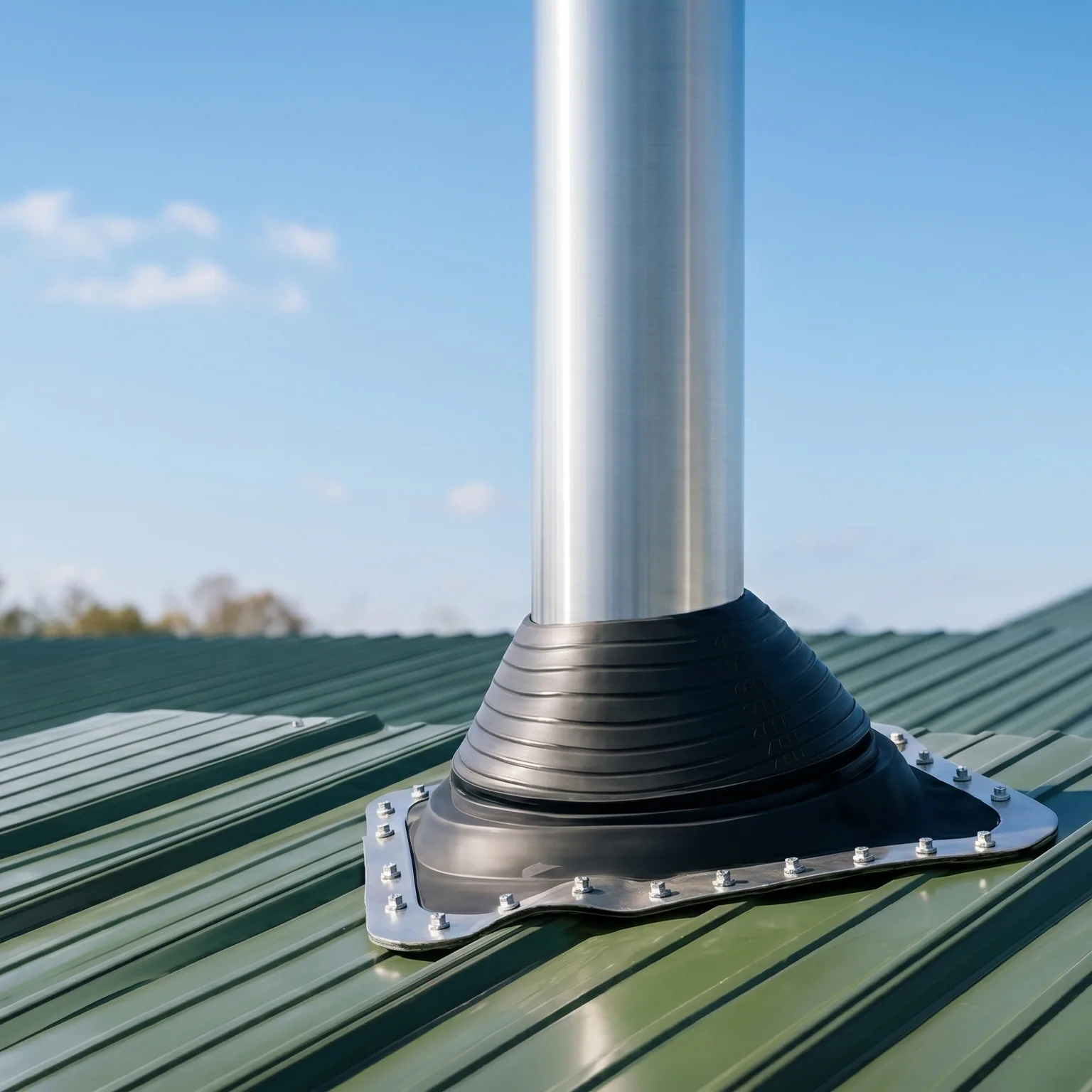
Commercial Skylight and Penetration Flashing in Rio Rancho, NM
A roof penetration interrupts the membrane, so its flashing has to manage movement and keep water outside the assembly. In Rio Rancho, NM, intense sun, seasonal hail, and sudden rain put that transition under repeated stress. We inspect skylight curbs, pipe boots, equipment supports, counterflashing, sealant, and the membrane around each base. The repair boundary follows the detail that failed, not every opening on the roof. We record whether the condition is a loose seal, split flashing, damaged curb, or moisture below the membrane, then recommend the smallest complete repair the assembly can support.
Skylight and Curb Condition
At a skylight, we check the curb corners, flashing height, cap, glazing frame, fasteners, seal, and membrane tie-in. Water entry can begin at the curb base or at a frame joint, so we inspect both surfaces and note any condition that cannot be confirmed from the roof. A cracked seal does not prove that water has reached the insulation, and interior condensation can resemble a roof leak. We compare the reported time and location with the roof detail, then test the surrounding assembly if moisture is suspected. The map labels each opening so maintenance staff can distinguish one curb from another.
Movement matters where skylights meet the roof. A curb can expand differently from the membrane around it, and a repair has to allow the flashing to remain secure through that movement. We remove failed material, prepare sound surfaces, and install compatible flashing or a replacement curb detail where needed. If the frame or glazing is damaged, the scope identifies the boundary between roofing work and skylight work. We do not seal over a loose frame or a wet substrate and call the entire opening repaired. Photographs capture each corner, the curb-to-membrane connection, and the completed detail.
Pipes, Curbs, and Supports
Each pipe, conduit, equipment curb, and support creates a separate path through the roof. We check the boot or pitch pocket, clamp, seal, base flashing, and distance to nearby seams. A boot may be cracked by movement or sun exposure; a curb may have a loose corner or poorly tied flashing. Equipment service can also leave tools, fasteners, or damaged membrane nearby. We mark the component and roof zone, then inspect the surrounding surface for a puncture or open lap. If the penetration is crowded by lines or supports, we coordinate with the facility contact before moving any component.
Rooftop additions should be planned with the existing membrane in view. New equipment supports, conduit, solar paths, or service walks can change loads and create penetrations that need a compatible detail. We coordinate with the equipment contractor on access and sequencing, but the roof scope specifies how the membrane and flashing will be restored. The curb and support details should be completed before the roof is returned to service. If future solar is planned, a solar-ready roof review can identify penetrations and pathways before installation.
Leak Tracing and Repair
A ceiling stain below a skylight or pipe does not identify the opening by itself. We compare the interior location with the roof plan, inspect uphill seams and adjacent transitions, and follow the likely water path. A monsoon burst may reveal a weak curb corner or an obstructed drain near the penetration. Rio Rancho has had localized heavy rainfall, including a short intense event near Enchanted Hills. We use that weather context to check the actual flashing and drainage, not to conclude that a particular curb failed. When a leak is active, we protect the building and then return for a permanent repair under suitable conditions.
We match the repair method to the roof system. Heat-welded membranes, EPDM, modified bitumen, metal, and coating assemblies do not share one universal flashing detail. We remove incompatible patches and loose sealant, prepare the curb or pipe surface, and restore the membrane transition. If moisture testing finds wet insulation beyond the opening, the boundary expands to include the affected layer. A leak repair or detail repair record identifies which penetration was corrected and what adjacent condition remains for follow-up.