
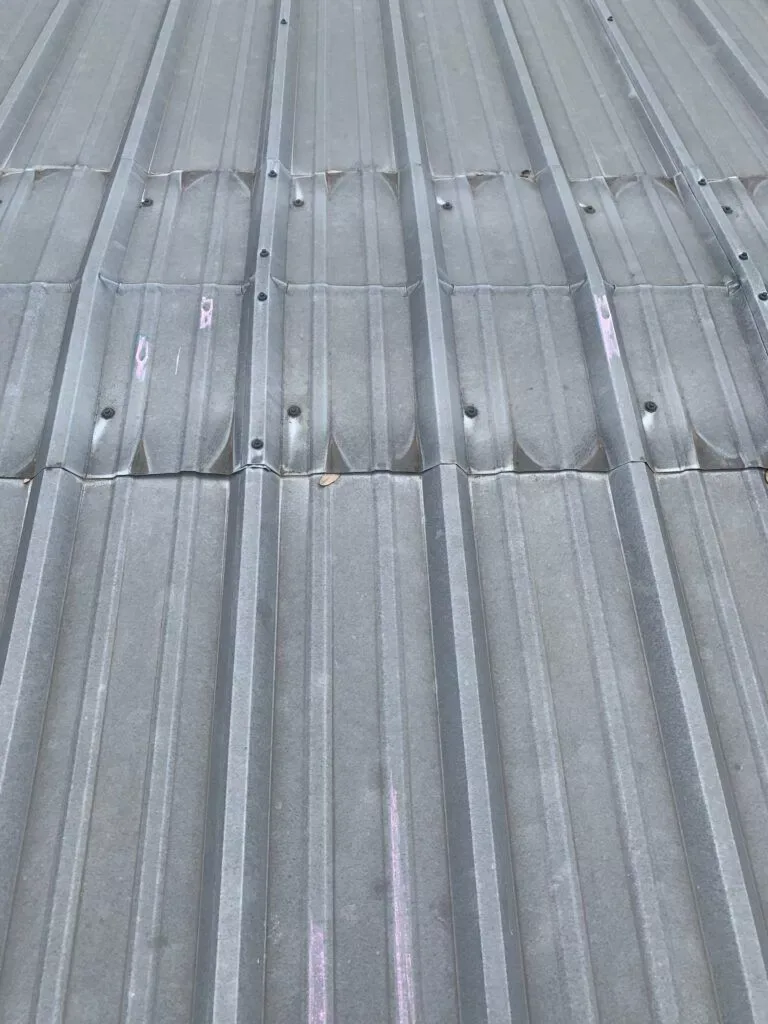
Wind Damage Roof Repair in Rio Rancho, NM
A loose edge-metal cleat can expose a membrane termination before water reaches the interior. After a wind report, we inspect the perimeter, corners, field seams, rooftop equipment, and nearby penetrations, then mark the roof zones reached. The repair decision depends on what moved, what remains attached, and whether the underlying assembly changed. Rio Rancho’s severe-weather season can include hail and damaging storms; the event report is a reason to inspect, while the building itself establishes the damage boundary.
Wind pressure is not even across a roof. Corners, edges, parapet returns, and changes around rooftop equipment can see different forces from the center field. We note the particular detail that moved rather than describing the whole roof as damaged. If a repair depends on replacing securement, the fastener pattern, substrate, and edge assembly need to match the installed system and project requirements.
Start at the perimeter and follow the load path
Wind-related movement often becomes visible first at edges, corners, metal coping, and terminations. We check fasteners, cleats, laps, membrane pullback, flashing, and the condition of the substrate beneath the detail. A photograph should show both the suspected point and enough adjacent roof to locate it again. If edge metal is bent but still secure, that is different from a termination that has separated from the wall or deck. The edge-detail inspection records the condition without assigning failure to an area that was not examined.
Rio Rancho’s commercial activity follows Southern Boulevard and other major southern roads, with industrial employment near Northern Boulevard and NM 528. At a property along those routes, we confirm access and inspect the installed attachment before planning repair. We confirm the property and system from available plans and the field. A visit in the Rio Rancho Industrial Park area still needs its own roof map and operating contact.
Separate wind movement from water entry
A displaced cap, open seam, or lifted flashing can create a path for water, but a ceiling mark may have another source. We compare the interior report with roof slopes, drains, nearby curbs, and previous repairs. The inspection notes whether a detail is open, merely displaced, or still secure. If water may have traveled beneath the membrane, targeted testing can confirm how far removal needs to extend. A roof condition inspection lists the access limits and the evidence that would change the repair boundary.
After a reported storm, hail marks can appear alongside wind damage. A 2018 severe-weather summary notes quarter-sized hailstones in the Rio Rancho area. That fact supports careful inspection after an event, not a conclusion that all nearby roofs were affected. We distinguish a dent or surface mark from a cut, puncture, open lap, or loss of attachment. A separate hail assessment can document impact where the material shows a condition that changes its function or water resistance.
Repair the detail that actually moved
A local repair starts with the installed roof material, attachment, and surrounding condition. We remove loose or incompatible material, prepare a sound surface, and tie the correction into a stable area. If the edge assembly has lost securement, a bead of sealant over the visible opening is not a substitute for restoring the connection. The flashing correction addresses the wall or curb interface, while a seam repair restores the sheet-to-sheet connection when the lap itself has opened.
If inspection finds water below the field, we define removal from the tested area rather than surface appearance. A test opening can confirm insulation, substrate, and attachment at the selected location. The written scope identifies the test, material, tie-in, and any condition that would require a change authorization. Where a roof has broad movement, recurring leakage, or compromised fastening, we compare repair with recovery or replacement using the same roof zone and evidence instead of treating a single patch as the full solution.