
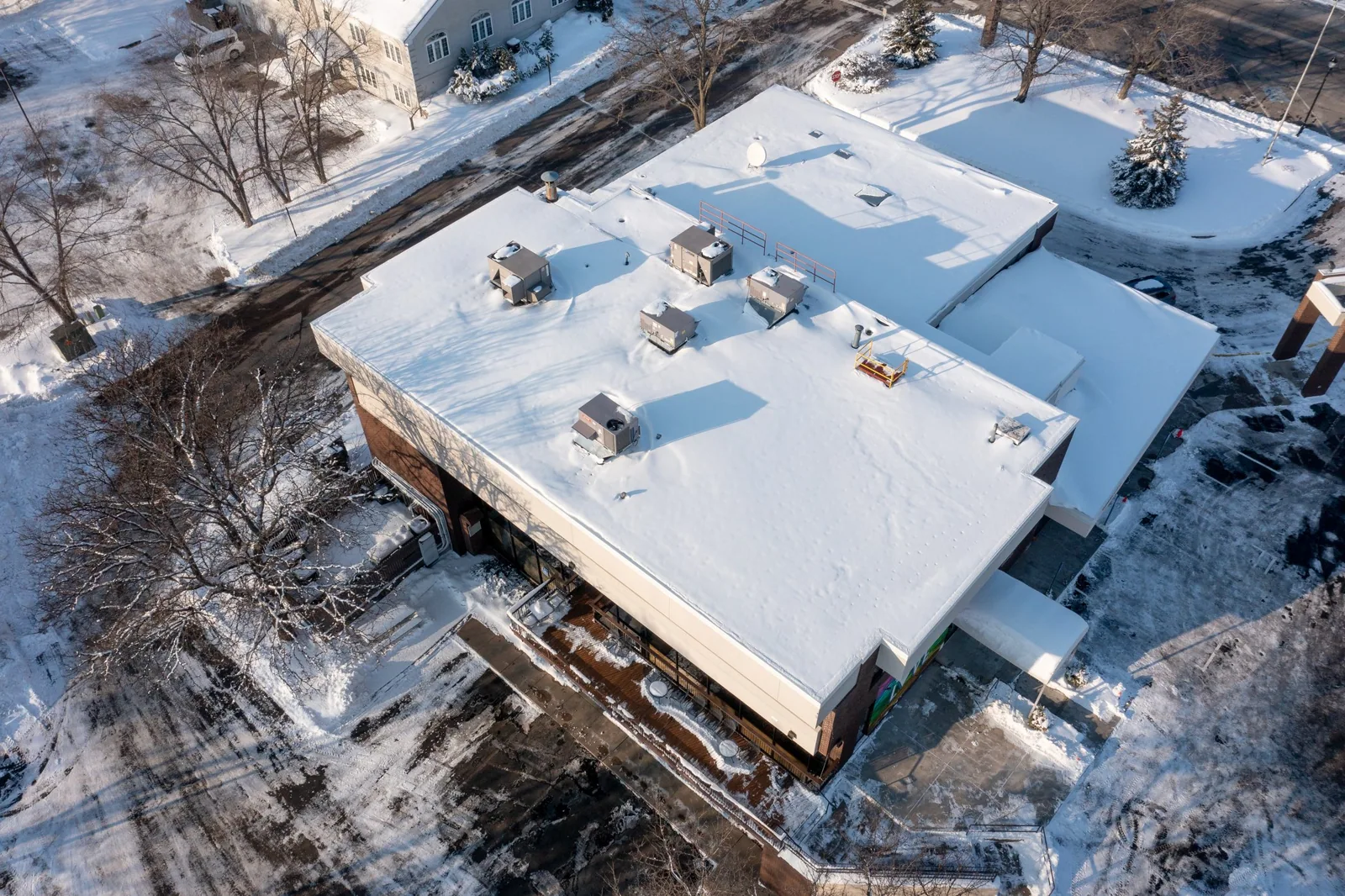
Commercial Roof Snow and Ice Damage Repair in Rio Rancho, NM
A frozen drain bowl can hold meltwater against a seam after most of the roof has cleared. We inspect the outlet, low area, edge, and reported interior zone before deciding whether ice caused a defect or exposed an existing one. Albuquerque airport climate normals show an annual snowfall average of 7.9 inches, with the largest monthly normal in December. That regional measure is not a roof load at a Rio Rancho building; the site’s actual accumulation, drainage, and assembly set the repair question.
Check the roof after snow begins to melt
We inspect accessible drains, scuppers, overflow openings, seams, flashings, and low areas for ice blockage, movement, or water left behind after thaw. Photos show the roof zone and the direction meltwater can travel. A ceiling stain may appear below a distant curb or lap, so we compare the interior report with the roof map before naming a cause. A condition inspection records areas reached and any part that remained covered or unsafe to enter.
The service area includes Rio Rancho and neighboring Placitas in the Sandia foothills. Those locations do not share a single roof condition or measured snow accumulation. We confirm the building’s location, roof access, and weather conditions at the time of the visit. A Placitas property still needs its own photographs, drain observations, and repair map rather than a generalized regional conclusion.
Separate ice blockage from roof-plane drainage
Ice can temporarily obstruct a drain or scupper, but persistent water after thaw may point to debris, a low area, or a defect in the roof plane. We check accessible outlets, overflow routes, and the membrane around them after the obstruction clears. If standing water remains, the report maps its boundary and notes how long after precipitation the observation was made. A ponding-water investigation can then determine whether the issue is an outlet restriction or a condition that persists without ice.
The Albuquerque airport’s normal December snowfall for 1991 to 2020 is 2.8 inches, and the annual normal is 7.9 inches. These figures describe airport climate, not a measured snow depth or design load at one roof. We assess actual accumulation, drift, drainage, and structural instructions available for the site. If a concern involves deflection or structural capacity, the owner may need an engineer’s review before snow removal or roofing work proceeds.
Repair a confirmed opening after safe access
We do not remove ice with methods that could cut or tear the membrane. Once access is safe and surfaces can be worked, we inspect the suspected seam, flashing, and drain detail for separation or damage. A compatible repair restores the connection to sound material and preserves the outlet path. A seam repair addresses an opened lap, while a flashing correction restores a wall, curb, or penetration transition.
If thaw water entered the assembly, testing may be needed before the repair boundary is set. We identify the roof system, scan limits, and sample location; a controlled opening confirms material at the tested point. If insulation or deck is affected, the scope describes removal, dry-in, and replacement. If the assembly is sound, work remains limited to the confirmed detail. A temporary response can protect an active opening while conditions allow a permanent repair.
Ice at a drain can hide the point where a membrane has separated, so we wait until the surface can be assessed safely. We do not force a tool beneath a frozen lap or pry at a metal edge without confirming how it is attached. Once the roof is accessible, we examine the seal, weld, fasteners, and adjacent sheet for movement. If a small area has become brittle or torn, the repair method must fit the installed material and the surrounding surface condition.
Melting snow can move under a loose counterflashing or enter at a penetration even when the field appears intact. We inspect those transitions after thaw and compare the resulting interior reports with the roof map. A test opening is useful only when its result changes the removal boundary. The work plan records how the opening is restored and what protection is available if colder weather returns before permanent repair is complete.