
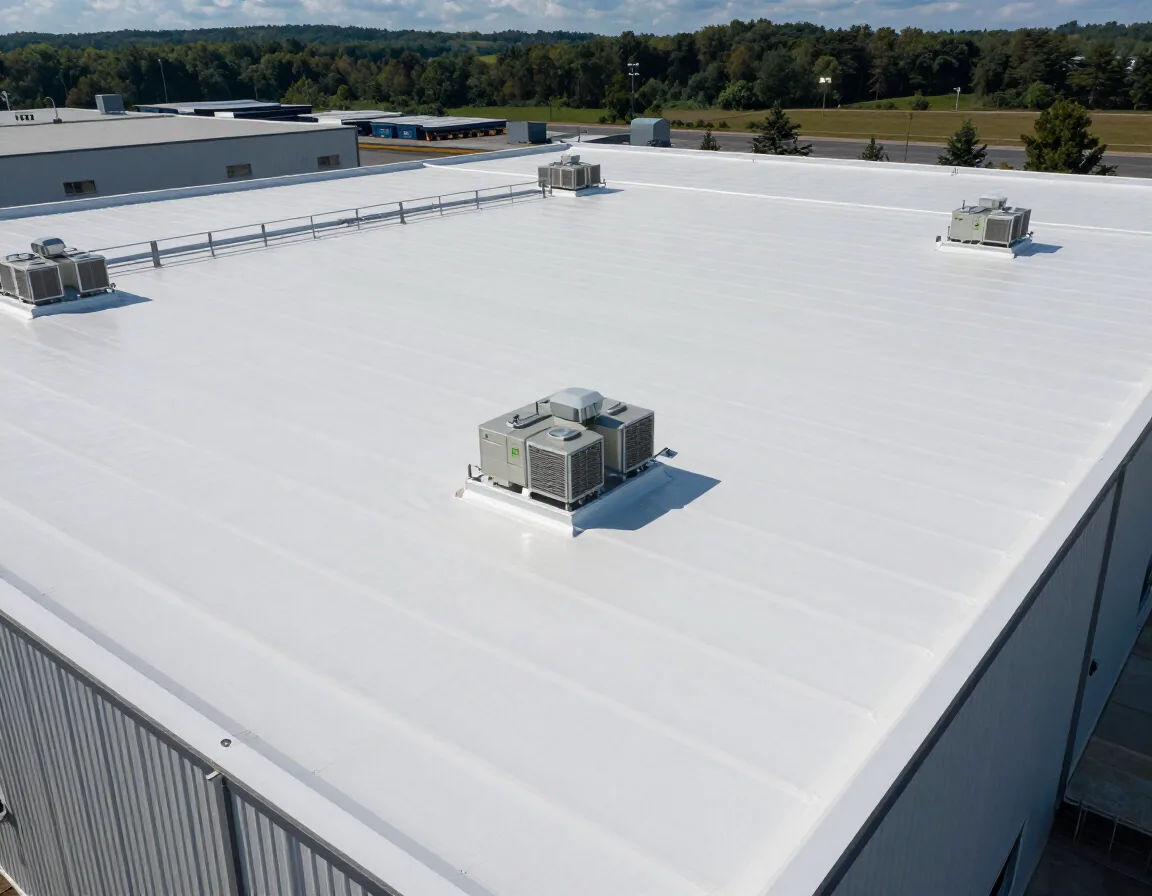
Versico Commercial Roofing in Rio Rancho, NM

A loose corner at a field seam can reveal whether a repair belongs in the membrane or at the termination. For a Versico roof in Rio Rancho, NM, we identify the product, attachment, and prior work before selecting a patch. VersiWeld is the company's reinforced TPO membrane line; sheet width and assembly details vary by system. We inspect the actual roof rather than reading the product from a building type or location. The report names the tested area, adjacent details, and the evidence that sets the repair boundary.

Identify VersiWeld and the installed assembly

Versico's commercial products include reinforced TPO systems, with specifications and details that differ by attachment and assembly. We compare the membrane, seam, fastener pattern, edge metal, and available installation records. A 16-foot sheet may reduce the number of field seams in a specified layout, but it does not automatically mean fewer leak points across every roof. The deck, insulation, perimeter, penetrations, and wind design still need to fit the project. A hands-on roof inspection confirms the details at the building and records areas where the existing product still needs identification.

Rio Rancho's employment uses cluster near Northern Boulevard and NM 528, while Southern Boulevard and NM 528 carry important commercial activity. A site along either route may have different access controls, rooftop equipment, and operating windows. Those conditions guide scheduling, not product identification. We mark roof zones, review access with the facility director, and check whether production, deliveries, or tenants limit the work route. A City Center roof review also begins with the actual roof plan; the facility's roof plan and field inspection identify the roof material and condition.

Probe the weld and test the repair

A TPO seam is joined by heat, so the condition of the sheet and surface preparation affect the repair. We probe the suspect lap, inspect the seam end and corners, and check for contamination or previous adhesive. Before making a longer weld, we prepare a test area and verify the bond. If the sheet is brittle or a patch edge is peeling, the repair may need to move to stable material. The TPO system review explains standard assembly components, while field testing confirms what is present on this roof.

High summer sun and heat can affect surface work timing, and Rio Rancho has also experienced quarter-size hail. We separate a surface mark from an actual cut or puncture by checking the membrane directly. After a storm, nearby curb flashing and perimeter metal matter because water can enter at a transition even when the field seam remains sound. A seam repair closes a confirmed lap opening; an edge defect receives a distinct detail and closeout record. The inspection should not combine separate failure types under one broad patch description.

Review fasteners, edges, and penetrations

Mechanical attachment transfers load through fasteners and plates, while an adhered assembly relies on a prepared bonding surface. We look for displaced fasteners, plate movement, membrane flutter, loose termination, or an edge detail that has opened. At a curb or pipe, flashing height and continuity matter. If a roof has been overlaid, the number of layers and condition below must be checked before another assembly is added. A perimeter detail inspection can separate loose edge metal from a field seam concern and record the connection between them.

Rio Rancho's Northern/Rainbow plan identifies the Rainbow Business Park as a focus for employment uses. City Center's plan combines education and commercial activity with housing. Those district plans help orient access discussions, but neither identifies a particular roof's material or equipment; we verify the actual assembly on site. During active work, we coordinate around occupied areas and identify where tools, materials, and temporary protection can be placed. An occupied-building work plan can set the access window and protection sequence before a repair or replacement begins.

Trace the runoff path

Water reported inside may have entered several feet or a roof zone away. We trace the route from the reported ceiling area toward the curb, lap, drain, overflow, or wall transition, then inspect the membrane along that path. If moisture below the sheet is suspected, we mark the candidate area and choose a test suited to the assembly. A scan can guide that choice, but a core or opening may be required to confirm insulation condition. The written record identifies visual observations separately from tested findings.

A July 2018 monsoon storm dropped more than two inches near Enchanted Hills in roughly an hour. A brief burst can load drain bowls and overflows quickly, so those details belong in a post-storm check. We inspect the building's actual outlets and runoff route before deciding whether drainage work is needed. We inspect the actual outlet, clear debris when authorized, and see whether water remains after the flow path is open. A drain and scupper service can identify an obstruction; a low area that remains wet may need a separate ponding-water assessment and insulation check.

Keep the repair history usable

The closeout should record the confirmed Versico material, repair preparation, test weld, seam or penetration restored, photographs, and any unresolved item. We note the roof zone and the exact boundary that was checked. If the owner provides warranty or project documents, we review requirements before permanent alteration and identify any approval still needed. A roof condition report can hold the repair record with a marked plan and follow-up priorities.

Later work on HVAC units, conduit, or rooftop solar can disturb a finished flashing. The facility director should keep vendor dates and altered roof zones with the Versico record. At the Northern Boulevard industrial area or City Center, access and security procedures may differ, but the closeout still tells staff what was inspected, tested, and restored. Owners comparing systems can review Sika Sarnafil PVC and a Carlisle TPO assembly against the current deck, insulation, drainage, and project specification. The installed roof remains the baseline for repair, even when a future replacement uses another product.

If water is active inside, we first protect equipment and occupied space, then stabilize the exposed detail. Permanent work follows when the surface and material can be properly prepared and tested. We identify any temporary patch separately in the report and return to verify the completed seam or flashing. The owner receives a repair boundary that can be located on the roof plan without relying on memory or a vague description.

Common Questions About Versico Commercial Roofing

How do you confirm a VersiWeld roof?

We compare the product records with the installed sheet, seam, reinforcement, attachment, and edge details. If a recover or later repair changed part of the roof, we document each confirmed zone rather than applying one product name to the entire building.

Does a wider TPO sheet mean fewer roof problems?

A wider sheet can reduce field seam count in a layout designed for it, but roof performance also depends on attachment, perimeter details, penetrations, drainage, and workmanship. We inspect those details before attributing a condition to sheet width.

Can you repair a Versico seam without replacing the roof?

A localized weld repair may fit when the surrounding sheet is sound and the failure boundary is confirmed. We probe the seam, prepare a test weld, and verify the bond. Widespread brittle material, wet insulation, or repeated attachment failure can call for a broader scope.

What does hail inspection include on a TPO roof?

We document impact marks and check for cuts, punctures, open laps, displaced flashing, and edge movement. We inspect each mark for a cut, puncture, or open lap before calling for membrane repair. We photograph the test area and state whether damage was confirmed or further investigation is needed.

Which records should stay with a Versico repair?

Keep the roof-zone map, identified product, materials used, preparation, test results, photographs, access limits, and any open follow-up. Add the date of later HVAC or electrical work if it changes flashing or membrane near the repair.

Verify the Versico detail before work expands

Send the roof plan, product records, reported condition, access contact, and inspection window. We will identify the installed assembly, test the suspect zone, and record the repair boundary.