
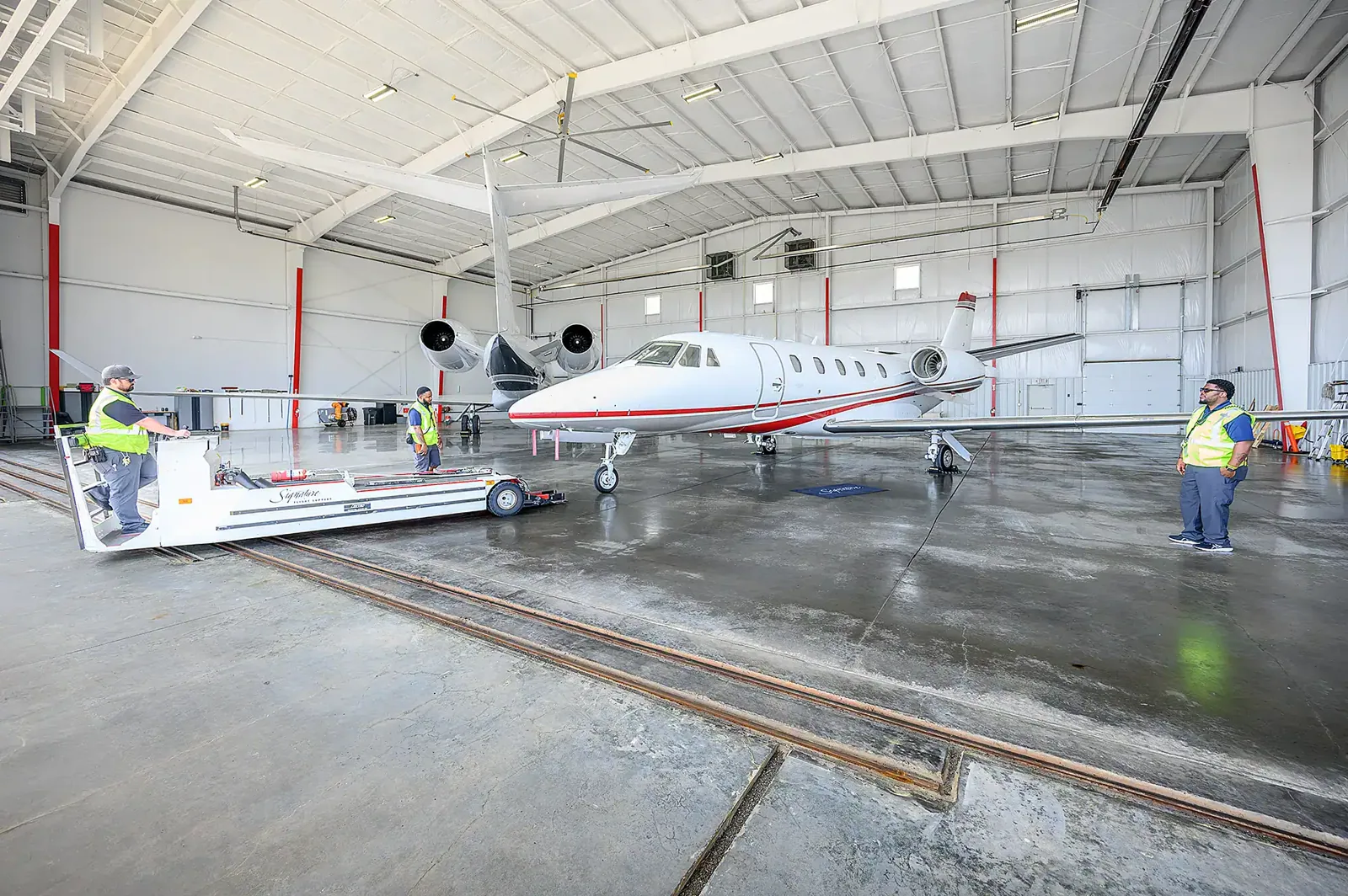
Aircraft Hangar Roofing in Rio Rancho, NM
A roof leak beside a large hangar door can wet equipment or aircraft even when the water entered at an uphill seam. Door movement, clear-span framing, and access constraints affect where the repair can be staged and how the roof closes each day. We trace the runoff path, inspect the panel or membrane connection, and identify the tested boundary before specifying work. Rio Rancho’s Industrial Park sits near NM 528 and Northern Boulevard, and Enchanted Hills Commerce Center occupies the NM 528 and NM 44 junction farther north. Those commercial areas provide local context for material access and weather planning; they do not establish an aviation facility or roof system. The building inspection sets the scope around the installed assembly, door operation, and equipment below.
Follow the water path through the roof
Hangar roofs may use metal panels, low-slope membrane, or a combination across office and service additions. We identify the system, check panel laps or membrane seams, and inspect curbs, vents, wall transitions, drains, and interior water reports. A high-volume building can make the visible drip point especially misleading: water may follow a purlin or deck flute before reaching the floor. A commercial roof inspection maps the affected bay, documents accessible details, and identifies whether moisture testing or a controlled opening is needed to set the repair boundary.
Large doors add a moving interface to a fixed roof. We inspect the head flashing, adjacent wall panel, fasteners, sealant joints, and any roof-to-wall transition that can direct water toward the opening. Door tracks and controls should remain free of debris and temporary work materials. If the door is open during operations, coordinate the inspection so equipment and people are not beneath a work area. The roof scope should state which panels or membrane zones were reached and which interior areas remain outside the inspection.
Coordinate door and equipment operations
Aircraft movement, ground equipment, maintenance tasks, and door cycles can set the work window. Before mobilization, the facility contact identifies active bays, restricted zones, lift access, equipment that cannot be moved, and any required escort. We confirm where panels or membrane can be staged and how a crew can work without blocking an opening needed for aircraft or service equipment. An occupied-building sequence can divide work by roof section, with tie-ins and a secure stop point defined before a shift begins.
Rooftop exhaust, lighting, communications, and mechanical equipment require separate coordination when their supports or penetrations meet the roof. If a unit must move, identify who controls the equipment and how the opening will be protected while work proceeds. A curb and support repair restores the flashing interface without compromising service clearance. Door operation should be checked after the work area is cleared, and the closeout should state any limit on movement or access that remains for a follow-up visit.
Prepare for Rio Rancho sun and storm water
Rio Rancho roofs face extended sun, summer heat, seasonal hail, and short monsoon downpours. In 2018, quarter-size hail was reported in the area. A July storm near Enchanted Hills delivered over two inches in about an hour, and a separate northwest Rio Rancho storm in August reached rainfall rates approaching three inches per hour. Hangar operators should have a daily closure method ready when a roof section is opened. At the site, we check edge metal, seams, penetrations, drain bowls, and overflow paths for observed damage rather than assuming a regional event reached every roof.
NM 44 is the closest physical connection from Enchanted Hills Commerce Center toward I-25 and Bernalillo, while the Rio Rancho Industrial Park is concentrated near the NM 528 and Northern Boulevard area. Material delivery and equipment access can use different routes depending on the property. The field plan confirms staging with the owner and keeps removed panels or membrane clear of operational lanes. A drain and scupper inspection checks whether runoff can leave the roof and whether the membrane remains secure around the bowl. Water that persists after outlet cleaning requires a separate review of roof geometry or deck condition.