
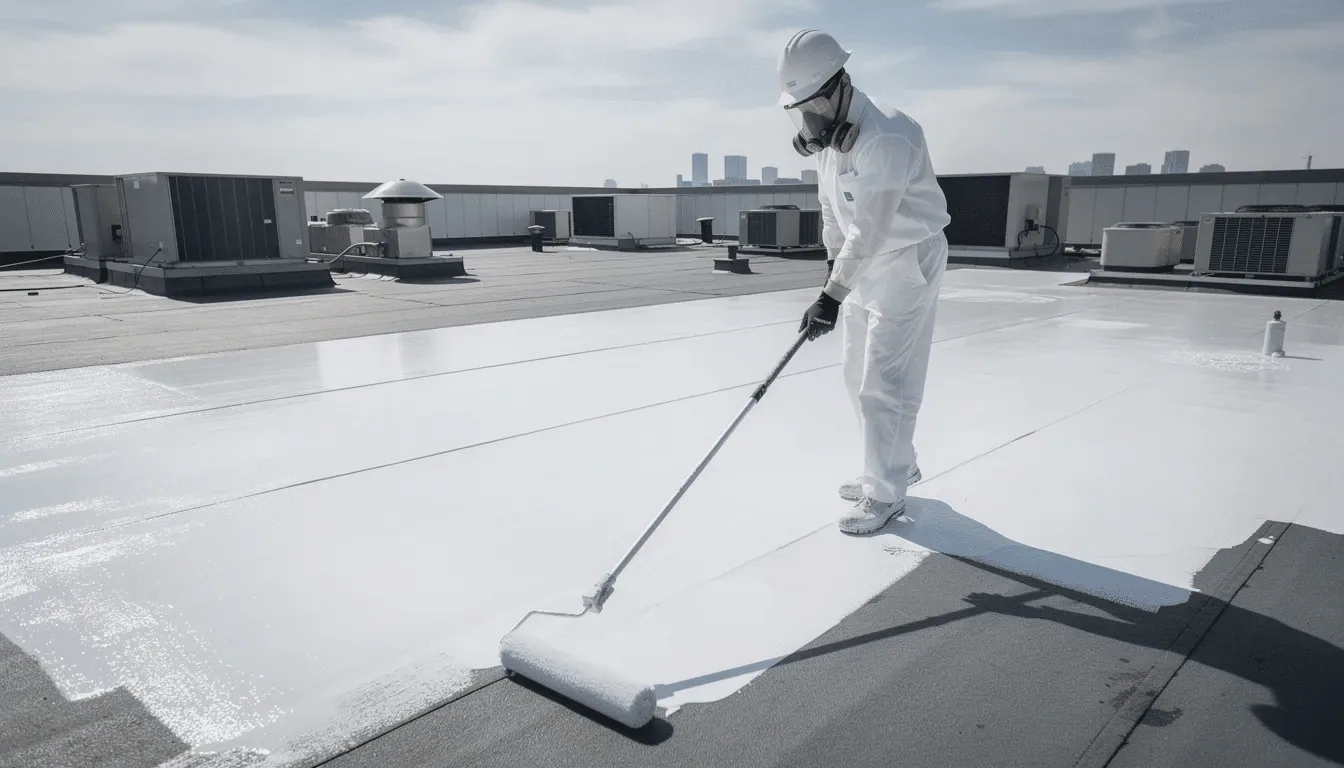
Cool Roof Installation in Rio Rancho, NM
A reflective roof changes how the surface absorbs sunlight, but it does not correct a wet assembly or a poor drain path. In Rio Rancho, NM, strong sun and high summer temperatures make surface choice part of the roof discussion. We inspect the existing system, verify insulation and drainage, and compare compatible reflective membranes or coatings against the building’s use. The recommendation explains the roof conditions a cool surface can address and the defects that need separate repair. The facility director gets a system decision tied to the assembly, access, and maintenance plan, not a promise of a particular utility-bill reduction.
Solar Exposure and Roof Condition
At the Albuquerque airport, normal daily highs reach at least 90 degrees Fahrenheit on 64.4 days each year. That regional climate context makes exposed roof surfaces an important design consideration, but the actual temperature and energy use at a building depend on its envelope, equipment, insulation, and operating schedule. We assess the existing roof and identify where heat-related wear appears at seams, flashings, or exposed materials. Strong sun can age a surface without proving the underlying assembly has failed. We inspect the membrane and test suspect moisture before choosing a reflective system.
A cool roof can be a new membrane with reflective characteristics or a compatible coating over an eligible existing surface. The substrate and roof type decide which path is possible. We review surface condition, previous coatings, attachment, insulation, drainage, and warranty constraints stated in the project documents. If the roof is wet, unstable, or incompatible, coating over it is not an energy strategy. Repair, selective removal, or replacement may be needed first. A reflective finish cannot solve ponding, poor insulation, or unsealed penetrations. Before choosing a color or coating, we compare the expected maintenance path with the roof’s condition. A surface that needs frequent access for filters, controls, or service work may require protected walk routes. A roof with repeated equipment changes may be better served by a membrane detail that can be repaired easily. We also review whether a coating can be recoated under the product requirements and how future patches will bond. These are owner decisions about the full roof cycle, not just the installation day.
Membrane or Coating
For a new assembly, we compare membrane type, attachment, insulation, cover board, edge detail, and expected roof traffic. TPO and PVC are common reflective single-ply options; the selected system still needs proper seam welding, curb flashing, perimeter termination, and drainage. An existing roof may qualify for coating restoration only after moisture, adhesion, and compatibility checks. We distinguish an eligible surface from a roof that needs removal. The proposal identifies the selected membrane or coating type, substrate preparation, and detail work so the owner can compare scope rather than color alone.
Reflectivity is one roof characteristic, not an entire performance claim. We do not estimate savings from roof color without building-specific analysis. We can explain how the roof assembly, insulation, rooftop equipment, and operating hours contribute to heat transfer. If a facility is planning equipment replacement or solar, we coordinate penetrations and service paths before finalizing the surface. A TPO assembly or acrylic coating must be installed in a way compatible with the roof and the manufacturer's published requirements.
Drainage and Detail Work
Water management remains a core part of a cool-roof project. We inspect drain bowls, scuppers, crickets, and low areas before installation and check whether the new assembly will preserve the flow path. A higher surface can affect drain elevation, parapet height, equipment curbs, and wall flashing. If a roof holds water after an outlet clears, the condition needs slope or insulation review. We do not assume a reflective coating will change the standing-water pattern. The repair plan may need drain or scupper work before the new surface goes down.
A 2018 monsoon burst near Enchanted Hills delivered roughly two inches in an hour. We use that local rainfall pattern as a reason to check whether water can move across the actual roof to an outlet. Each curb, skylight, edge, and penetration receives a compatible transition. At a large facility, we map roof zones and close each area before weather exposure. The same inspection discipline applies near the Industrial Park and City Center, where equipment and access patterns are specific to each building.