
Sika Sarnafil Commercial Roofing in Rio Rancho, NM

A probe that catches at the edge of a heat weld can mark the start of a real repair. On a Sika Sarnafil roof in Rio Rancho, NM, we check the PVC sheet, seam, flashing, attachment, and roof-zone history before choosing a repair method. Sarnafil and Sikaplan product families include PVC membranes in adhered and mechanically attached assemblies. The family name is a starting point; sheet type and field condition determine the repair. We inspect the affected detail and test the boundary before closing the membrane.

Confirm the PVC assembly

Sarnafil PVC and other single-ply products may look similar from a roof hatch. We compare surface texture, reinforcement clues, seam width, fastening pattern, flashing details, and available records. A product record can help identify the original system, but a later alteration or recover may have changed the assembly. We note each verified roof zone and check that a proposed repair material belongs with the sheet in place. S327-80 EnergySmart is a reinforced PVC membrane with heat-welded seams; the installed model still needs confirmation before work begins.

Rio Rancho's commercial corridors include Southern Boulevard and NM 528, and employment uses are also identified around Northern Boulevard. Those settings can bring distinct access and rooftop equipment constraints, but neither corridor tells us which membrane is installed. We coordinate inspection with the facility director, use the roof plan to locate equipment and drains, and document areas that cannot be reached. A visit near the Industrial Park may require production-aware scheduling; a hands-on inspection confirms the actual sheet and tested details.

Test welds and transitions

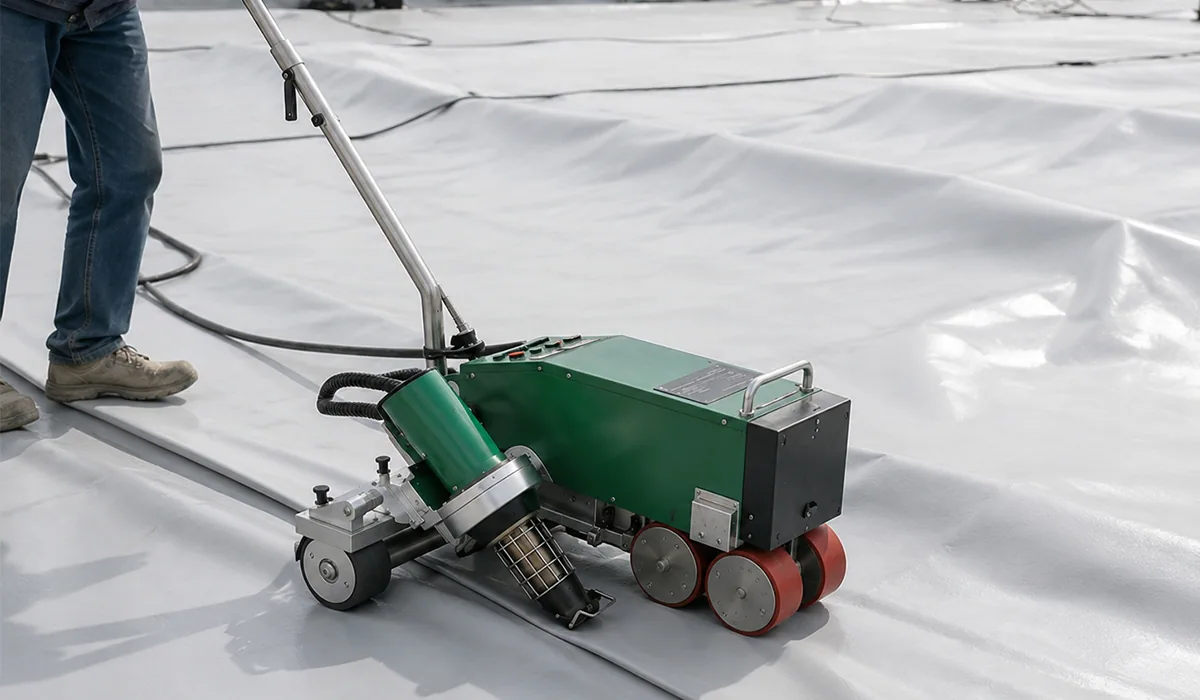
Heat-welded PVC seams depend on clean material, suitable temperature, controlled speed, and consistent pressure. We check the suspected opening with a probe, then prepare a test weld on compatible sheet before extending the repair. The seam's termination and corners deserve attention because a narrow gap can admit water beneath a much larger field. We also inspect adjacent curb flashing, edge metal, and earlier patches. A PVC roof assembly still needs a test weld at the specific repair zone; the field check sets the boundary.

Hot, sunny conditions can affect work timing and membrane surface temperature. Rio Rancho also recorded quarter-size hail during a 2018 severe storm. Hail marks are not automatically punctures; we look for cuts, splits, or open laps and keep cosmetic observations separate from verified damage. If a weld is sound but a nearby flashing is loose, we scope that transition directly rather than replacing an unnecessary membrane area. The completed work is checked after cooling, with the repaired lap, edge, and tie-in recorded in photographs.

Inspect penetrations and edge details

A PVC field can remain intact while water enters at a curb, pipe, parapet, or edge termination. We inspect the flashing height, corners, attachment, sealant, and connection to the field sheet. Rooftop equipment replacement can disturb a curb after the original installation, so service history matters. If the membrane is cut too close to an old patch or the substrate has softened, we extend work only after testing the surrounding zone. The penetration flashing review can document a separate curb or pipe failure without treating it as a membrane seam issue.

At Rio Rancho City Center, planned uses include commercial, employment, education, and residential activity; the Rainbow Business Park is part of a city-planned employment district. Buildings in either broad area can have different access rules and equipment layouts. We confirm the site-specific route from hatch to repair zone, protect occupied space, and agree on a work window. For a longer-term roof decision, the condition report maps verified details and identifies where further testing may change the scope.

Follow runoff before opening the field

A leak report near an interior wall may originate at a higher roof penetration or a slow drain. We trace the runoff path across the membrane, inspect primary and overflow outlets, and look for debris, open seams, or a low area that stays wet. Moisture mapping can identify a candidate test area, but a core or opening is needed when the assembly below must be verified. The report identifies what is visible, what is tested, and where the evidence stops.

Rio Rancho has experienced intense, localized monsoon rain, including more than two inches near Enchanted Hills in about an hour. The record supports attention to drainage after a heavy burst, not an assumption that another roof saw the same conditions. We check the actual drain bowl, scupper, overflow, and nearby lap. A drain and scupper check helps determine whether an outlet is obstructed; a ponding-water repair review addresses a low area that persists after flow is restored. That distinction changes whether a repair stays local or includes insulation and slope correction.

Preserve the tested repair boundary

The closeout record should name the confirmed membrane, preparation, repair sheet, weld test, flashing restored, photographs, and any remaining access or moisture question. When warranty or specification documents apply, we review them before changing a protected detail. A manufacturer name does not establish a term or approval. The owner should keep the roof-zone map where facility staff and later service vendors can locate the work. A targeted repair scope lists the immediate work; replacement can be compared against verified moisture and attachment findings if failures extend beyond the test boundary.

At a multi-zone property near City Center or Southern Boulevard, roof access may be shared with HVAC and electrical trades. We identify which curb, conduit, or service path was included so a later alteration is not confused with the completed Sika Sarnafil repair. Owners comparing PVC systems can consider a GAF product family or Versico membrane system, while keeping the current structure, drainage, attachment, and project requirements in view. We ask for the reported condition, access contact, roof records, and inspection window before setting the route.

When water is entering occupied space, a temporary stabilization visit and a permanent weld repair are separate steps. We protect the interior, mark the exposed zone, and return to verify the PVC sheet and substrate when conditions allow. The closeout identifies temporary materials and any open question, then records the permanent seam or flashing test. That sequence gives the facility team a clear line between immediate protection and the final repair boundary.

Common Questions About Sika Sarnafil Commercial Roofing

How do you confirm that the roof is Sika Sarnafil PVC?

We compare project records with the installed sheet, seam, reinforcement clues, attachment, and flashing. A later recover or alteration may have changed part of the assembly, so each zone is checked before a repair material is selected.

Can a heat-welded seam be repaired in place?

Often a local weld repair is possible when the sheet is compatible and the surrounding material is sound. We clean and prepare a test area, verify the bond, and probe the completed seam after it cools. A brittle or contaminated surface may require a wider repair boundary.

Does a hail mark mean the PVC membrane is punctured?

Not by itself. We inspect for a cut, split, puncture, or open lap and document surface marks separately. If the impact area is near flashing or an equipment curb, we include those transitions in the hands-on check.

What should be checked after a heavy monsoon storm?

We inspect reported zones, drains, overflows, seams, edge metal, and penetrations, then trace where runoff moved. A storm record for the region does not establish the condition of one property; the roof itself determines what work is justified.

Can a coating restore a damaged Sarnafil roof?

A coating is not a substitute for a failed weld or wet insulation. We first identify the PVC product, test adhesion on the actual surface, inspect drainage, and repair open details. Any coating decision must suit the substrate and the manufacturer's product requirements.

Test the PVC seam before scoping work

Provide the building location, roof records, reported leak or damage, access contact, and inspection window. We will identify the installed Sarnafil assembly and document the tested repair boundary.