
Commercial Hotel Roofing in Rio Rancho, NM

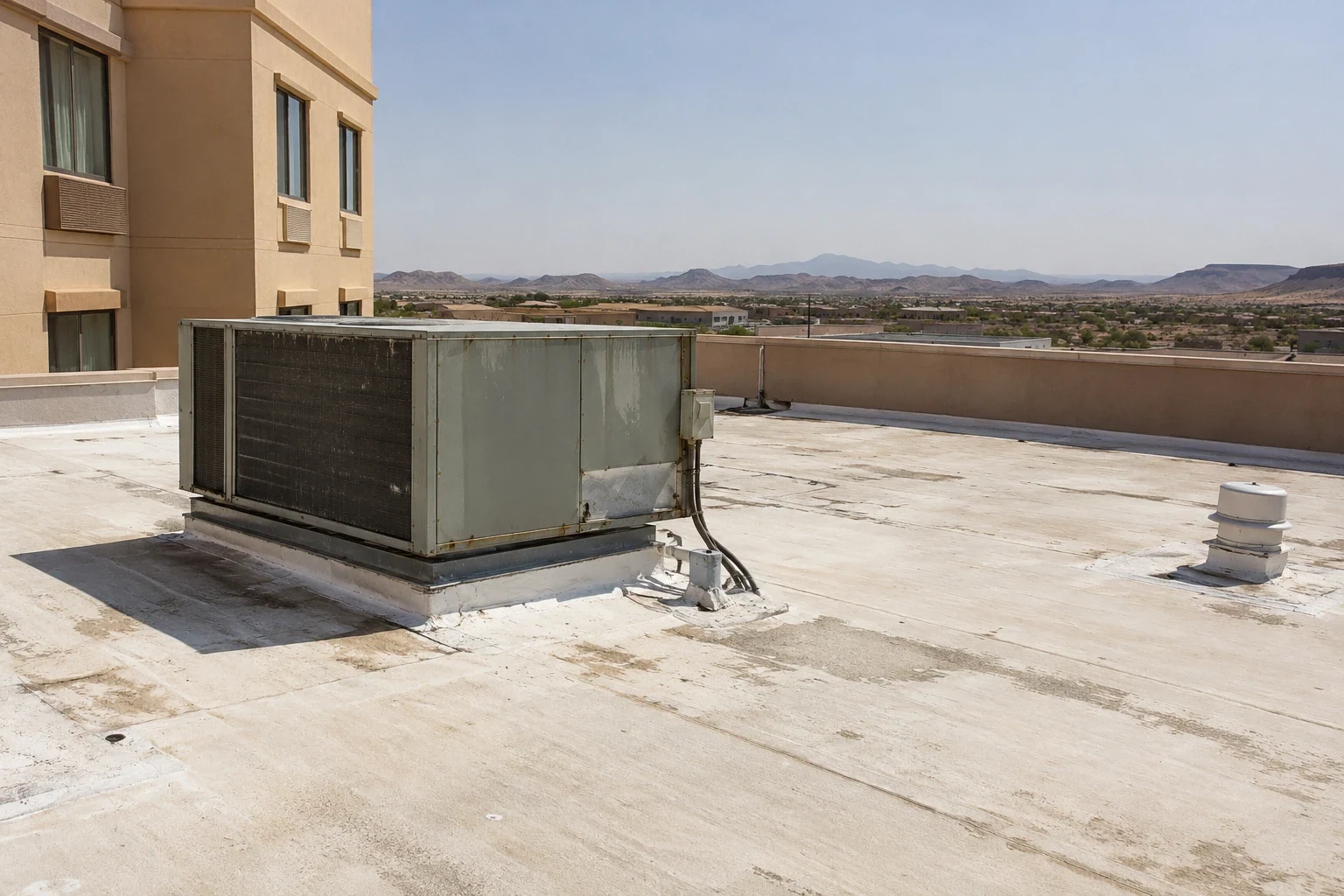
A curb serving a rooftop air handler above guest rooms needs a secure flashing detail before the unit is moved. Hotel roofs also carry kitchen exhaust, laundry vents, building lift systems, drains, and service routes, while guests expect quiet, dry rooms below. Rio Rancho’s City Center planning area includes commercial and entertainment components, and Enchanted Hills Commerce Center is located at the NM 528 and NM 44 junction. These places describe commercial activity and access, not an existing hotel roof system. We inspect each building’s assembly, identify the affected roof zone, and coordinate the work window with the property contact. A hotel roof visit near Rio Rancho City Center begins with the guest-area concern and available access records.

Trace the room report to a roof detail

A wet ceiling in a guest room may sit below a drain, curb, wall joint, or seam that is several feet away. We compare the room number and time of the report with roof slope, mechanical equipment, prior repairs, and water paths through the assembly. A commercial roof inspection records visible conditions and identifies whether targeted moisture testing could change the removal boundary. The report should separate active water, wet insulation confirmed by testing, and zones that could not be reached.

Hotels often have additions, meeting areas, kitchen wings, and back-of-house spaces built at different times. A transition can have a raised curb, expansion joint, or termination hidden behind equipment screens. We check the flashing, lap condition, drain, and surface around the detail before calling the leak isolated. If a room report follows fan service, we also compare the equipment work order with the curb and membrane. The roof map and the guest-area report remain connected by location and date, so the next visit can check the same detail instead of reopening the diagnosis from a room number alone.

Keep guests and hotel service moving

Check-in, housekeeping, events, meal service, deliveries, building lift access, and quiet hours can affect staging. Before roof work begins, we confirm which rooms or public spaces sit below the opening, where material can be lifted, and which paths must remain clear. The hotel contact identifies any rooms to keep out of service while interior protection is placed. A phased occupied-building sequence can divide work by roof zone when the assembly and forecast support a dry, secure closure at the end of each shift.

Roof access may be shared with HVAC, building lift, kitchen, or laundry vendors. If a unit must be moved, its position and curb dimensions should be settled before the roofing detail is closed. We identify who disconnects equipment, who restores the penetration, and who checks operation afterward. A lift near the loading entrance may affect deliveries even when guest circulation remains open, so the plan names each access route and staging time. If an active leak reaches a guest room, temporary protection and room coordination happen before broader restoration is priced.

Inspect exhaust, drains, and service paths

Kitchen exhaust can leave residue around a curb; laundry and HVAC service can add foot traffic and condensate near penetrations. We inspect the membrane, flashing, seams, and nearby surfaces for residue, wear, loose fasteners, or an open termination. Cleaning products must be compatible with the roof material. If a fan vibrates or a condensate line drips, the equipment source and roof detail need separate checks. A curb and support repair restores the roof interface after a unit change, while the equipment contractor addresses the mechanical condition.

Several drains may serve a guest-room wing, meeting area, or kitchen roof. We check strainers, bowls, scuppers, overflows, and the membrane at each connection. If water remains after a drain is cleared, low deck geometry or compressed insulation may be involved. A drainage repair can document what flows and what needs another trade or test. Where wet insulation is confirmed, the work plan identifies the removal area, how the opening is protected, and how the repair will be checked before guests return to the space below.

Work through Rio Rancho heat and monsoon rain

In Rio Rancho, high summer exposure puts stress on roof surfaces and sealants; hail and abrupt monsoon downpours create separate inspection triggers. A storm near Enchanted Hills in July 2018 delivered over two inches in an hour, while a later northwest event neared three inches per hour. Hotel work needs an end-of-day closure plan and verified drainage before crews open a section. The inspection documents the property’s actual seams, accessories, drains, and signs of water entry.

Heat also shapes the safe access window and the surface conditions required by a weld, adhesive, or coating product. After a reported event, inspect actual roof details for openings, impact damage, displaced metal, and blocked outlets. A hail damage inspection can document the affected zone and any test needed before repair. A multifamily roof scope may have similar occupied-space needs, while hotel work adds guest turnover, event, and service timing that belongs in the schedule.

Set a repair boundary before choosing renewal

Hotel additions may have a thermoplastic or rubber membrane, asphaltic layers, coated surfaces, or metal panels. Identify the assembly and visible substrate before selecting a patch, weld, adhesive, or flashing component. Grease, old sealant, wet insulation, and prior repairs can change what remains suitable. A curb or seam repair is appropriate only when surrounding material is stable and dry; testing or a controlled cut can establish a larger removal boundary where needed.

Repeated leaks, widespread moisture, loose attachment, or deck deterioration can make replacement worth comparing with continued repairs. Recovery requires a review of existing layers, roof height, drainage, attachment, moisture, and applicable code. Tear-off reveals hidden material but requires more debris handling and interior protection. We show what each option removes, where the new system ties to walls and drains, and who approves a change if concealed conditions differ. A hotel roof replacement scope should identify room protection, equipment access, guest routes, and each day's weather-tight stopping point. A shopping center roof project may also use phased access, but its tenant arrangement is not a substitute for the hotel’s own operations plan.

Record the room, roof zone, and equipment

Closeout should record the roof system, building area, room or service zone affected, materials installed, test results, photos, and any item left for monitoring. Keep it with HVAC, kitchen, building-lift, and laundry service notes that touched the same curb or roof path. If a temporary cover remains, identify who will return and what will close the permanent repair. A roof maintenance visit can recheck drains, edge metal, equipment flashings, and seams before the next wet period.

The hotel manager can attach the report to work orders and the next room-maintenance review. A later ceiling mark should be compared with the prior roof map, not assumed to be the same defect. For multiple buildings, preserve a separate history for each system and roof zone. The next facilities contact should be able to tell what was observed, what was repaired, what remains concealed, and what condition calls for another inspection. This protects the usefulness of the roof record as staff, vendors, and operating schedules change.

Common Questions About Commercial Hotel Roofing

Can a hotel remain open during roof repairs?

Often, when work is phased around guest areas, deliveries, events, and equipment access. The plan sets the rooms below each opening and a weather-tight end-of-shift condition.

What if a leak reaches a guest room far from the roof opening?

We trace the report across roof slope, seams, curbs, drains, and prior repairs. Water can move through the assembly before appearing on a ceiling.

Do kitchen exhaust or laundry vents change the repair?

They can affect residue, service traffic, and flashing around a curb. We identify the roof membrane and equipment condition before selecting cleaning or repair materials.

How are rooftop units handled during reroofing?

The final curb position, mechanical connection, roof flashing, and service route are coordinated before the opening is closed. The scope names responsibility for each interface.

When should a hotel roof be replaced instead of patched?

Broad moisture, repeated leaks, failed attachment, or deck damage can support replacement. We compare those conditions with serviceable areas and any test still needed.

Coordinate a hotel roof assessment

Share the property contact, room or service area affected, roof access details, and equipment or guest restrictions. We will inspect the relevant roof zone and return a defined work boundary.