
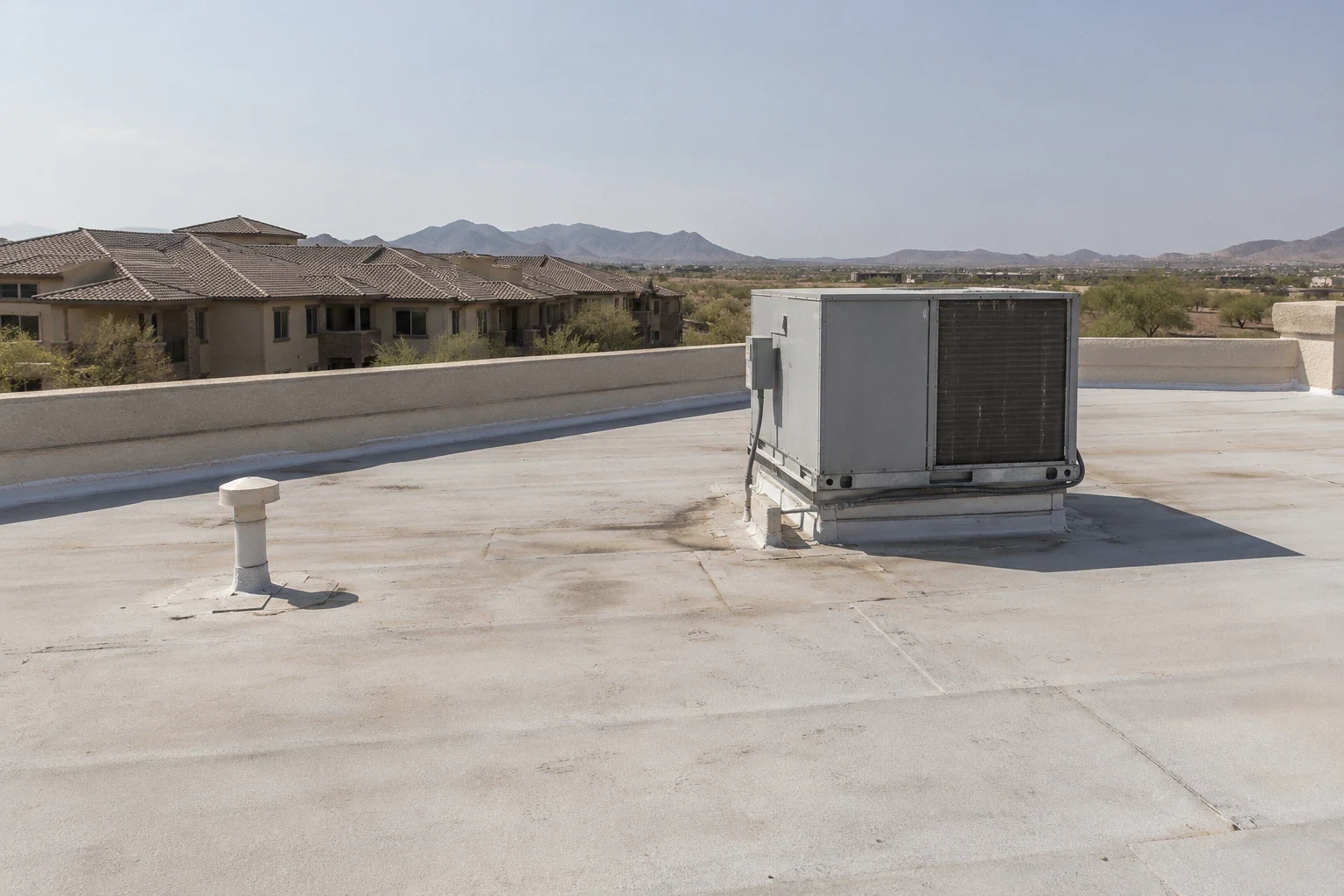
Senior Living Community Roofing in Rio Rancho, NM
A loose edge above a resident wing needs a repair boundary that protects the rooms below without closing more of the campus than the work requires. Senior living roofs can serve residences, dining, care areas, offices, and shared rooms with different schedules and access needs. We map the roof zone, the space below, and the route to the nearest drain before setting the scope. In Rio Rancho, heat, hail, and brief monsoon downpours make laps, edge metal, and drain bowls useful inspection points. Loma Colorado is planned as a mixed-use area beside schools, a sports complex, library, and aquatic center; that broader public setting does not tell us a particular community’s roof condition. We inspect the installed assembly and organize the work around resident care and safe movement.
Map resident areas to roof zones
A ceiling mark in a resident room is only one reference point. Water can travel along a deck, enter through an equipment curb, or move through insulation before it appears indoors. We compare the report with roof slope, field seams, parapets, penetrations, drains, and earlier repairs. The roof map identifies the affected wing and the tested area, while interior notes stay limited to the information needed to protect the space. A commercial roof inspection can distinguish an open lap from a suspected wet layer and list where access or testing remains incomplete.
Memory-care, dining, therapy, and common areas may have different access rules. The facility contact identifies which rooms need notice, whether staff should escort the inspection, and where carts or lifts can move. A hospital roof operation may require additional access controls, but the schedule still follows the actual building and patient-care requirements. We do not need broad resident information to locate roof conditions; roof-zone labels and dates keep the repair record useful while protecting private details. Photos show the roof feature and surrounding context, not resident identifiers. A condition report with roof-zone photos can carry those findings into maintenance and capital reviews.
Protect resident movement during work
Material staging, lift placement, noise, and temporary barriers can affect entrances used by residents, visitors, and staff. Before work begins, we confirm accessible routes, emergency access, loading periods, dining deliveries, and the rooms directly below each work area. The plan sets a daily stopping point with the roof weather-tight and identifies who receives an update if a forecast changes the sequence. An occupied-building roofing sequence can phase work by wing when the assembly, access, and tie-ins support it.
A leak above a common room may need temporary protection before the permanent repair is ready. We label that measure as temporary, document what it protects, and set the next visit or repair step. If HVAC service, kitchen exhaust, or a medical equipment vendor needs roof access, coordinate the equipment window before opening a curb or changing flashing. A curb and penetration repair should restore the roof connection while preserving service clearance for the unit. Care staff should know which entrance or roof area is affected and when the restriction will be lifted.
Inspect runoff after Rio Rancho storms
Near Enchanted Hills, a July 2018 downpour delivered more than two inches in about an hour; a separate August storm in northwest Rio Rancho approached three inches per hour. Those regional events make drainage capacity and secure end-of-shift closure important planning details, while the building inspection establishes what the community roof needs. We clear and inspect strainers, scuppers, overflow openings, and the membrane around each drain bowl. A drain and scupper review can record whether an outlet was obstructed or whether a low area remained after debris was removed.
Hail in the Rio Rancho area during a 2018 severe storm reached quarter-size. At a senior living property, we inspect metal edge details, skylights, rooftop accessories, and exposed membrane for actual openings or displaced components. A mark on a surface does not define how far moisture extends, so testing may be needed before insulation removal is priced. When an impact or open seam is confirmed, hail-related roof repair should identify the roof zone, material, and tested limit. We keep storm observations separate from routine wear and explain what remains under review.