
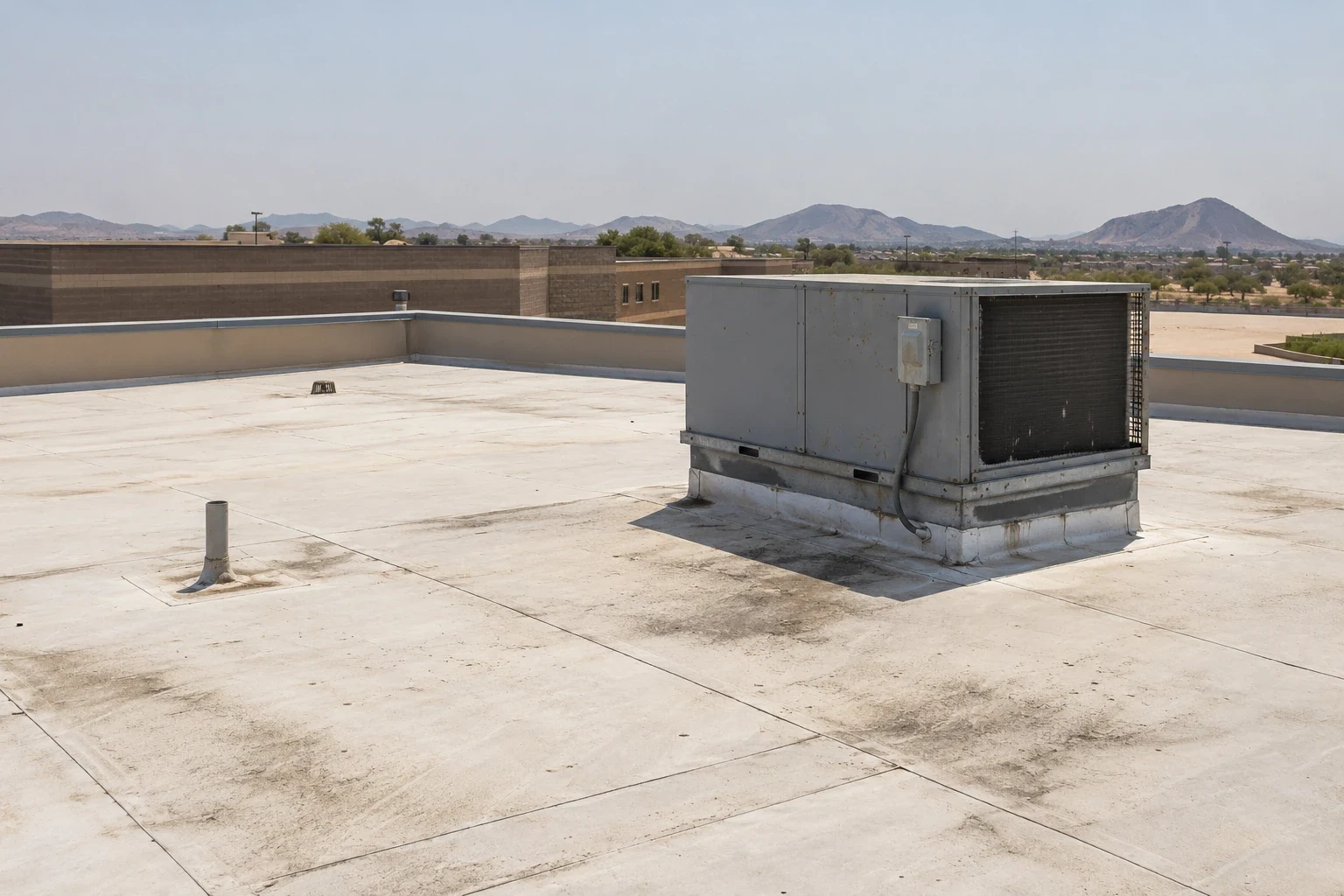
Commercial School Roofing in Rio Rancho, NM
A roof drain beside a gym wing can decide whether the first repair stops at the bowl or reaches wet insulation. In Rio Rancho, school buildings carry classrooms, offices, kitchens, gyms, and mechanical rooms under one roof plan, but each zone has a different access and protection need. Loma Colorado is planned as a mixed-use activity area beside Rio Rancho High School, with schools, a sports complex, a library, and public amenities connected through the district. We inspect the actual assembly and map the repair boundary before work affects a school day. A roof assessment in Loma Colorado can begin with the building contact, available roof records, and the access window that fits campus operations.
Inspect where water crosses a school zone
A ceiling mark in a classroom is a starting point, not the roof opening. Water can travel along a deck, move through insulation, or follow a curb before it reaches a ceiling tile. We compare the reported room with the roof slope, field seams, wall transitions, drains, skylights, and previous patches. The inspection map names the roof section and the interior area involved, then separates visible evidence from material that remains concealed. A commercial roof inspection can record those findings before a school decides whether to authorize a local repair or a test opening.
School additions can leave several roof systems on one campus. The original classroom wing may meet a later gym or cafeteria at a transition with different deck heights and drainage paths. We check those tie-ins for open flashing, movement, and water held against a termination. Rio Rancho High School sits beside the Loma Colorado redevelopment area, but that location does not tell us the roof age or assembly of a particular school building. Each roof gets its own material identification, photos, access notes, and tested boundary before we extend the scope.
Separate roof damage from classroom symptoms
A stain may appear well after water entered the assembly, especially when insulation or deck flutes carry moisture away from the opening. We document the first report, note whether the condition followed rain or equipment service, and trace likely paths toward drains, curbs, skylights, and parapets. If moisture could change how much material must be removed, targeted testing or a controlled opening can confirm the wet area. We show the school where the test occurred and how the opening will be closed. A drain and scupper review can also establish whether an outlet is blocked or the low point remains after debris is cleared.
The record should distinguish roof work from interior response. School staff can identify rooms, equipment, books, or technology that need protection; the roof scope describes the membrane, flashing, insulation, and deck condition observed above them. If water is active, temporary protection can reduce exposure while the permanent repair is defined. We document both steps without describing a temporary cover as a finished repair.
Coordinate the roof with the school day
Campus access changes with arrival, dismissal, athletics, food delivery, and after-school use. Before a lift or material truck arrives, we confirm the school contact, approved entry, pedestrian paths, fire lanes, roof hatch, and any room below the work area that needs protection. A short repair above a kitchen may need a different window from a project above a classroom or gym. If staff remain in the building, the work plan identifies noise, dust control, interior access, and the section that must be weather-tight before the crew leaves. Occupied-building reroofing can be phased by roof area when tie-ins and weather allow.
School calendars can help the owner compare a summer project with a sequence during the term, but a break does not remove the need for daily dry-in or safe routes. We define where materials stage, which doors remain available, when equipment can be shut down, and who can approve an expanded opening. If a school shares a district service schedule with other facilities, records should still identify each building and roof zone separately. A hospital roof scope can use a similar record but needs its own access and life-safety review. That keeps a verified leak or deck concern at one campus from becoming an assumption about another school with a similar plan or roof system.