
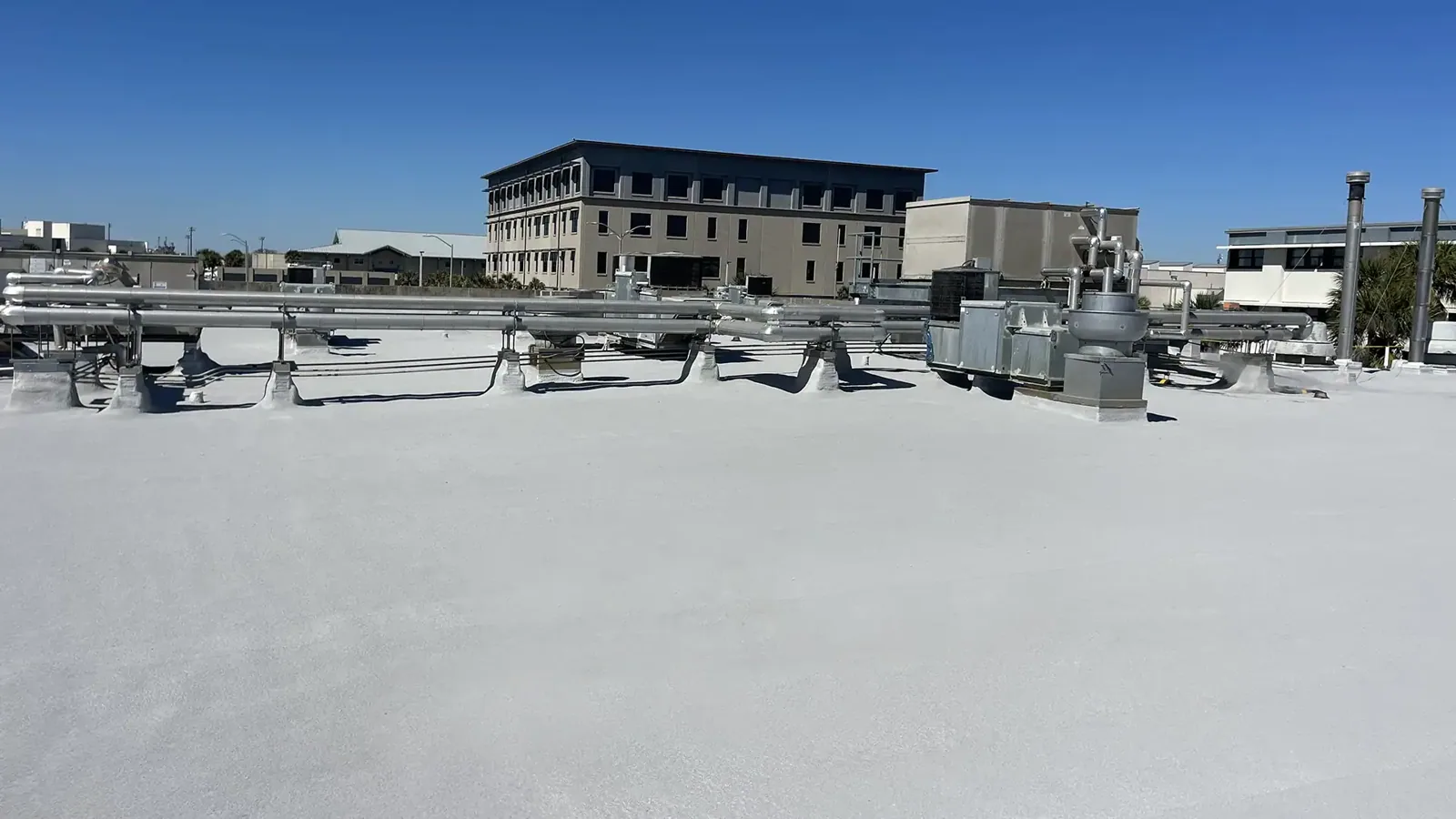
Spray Polyurethane Foam Roofing in Rio Rancho, NM
A worn coating over spray polyurethane foam does not show whether the foam beneath it is sound. In Rio Rancho, NM, strong sun, hail, and monsoon rain make the protective surface and drain path part of the inspection. We check coating wear, foam condition, adhesion, penetrations, and moisture before proposing restoration. Suspect areas are opened or tested so a soft or wet substrate is not covered over. The facility director receives a map separating sound foam, repair areas, and any section that needs removal or replacement.
Foam and Coating Review
SPF roofing uses spray-applied polyurethane foam shaped to create a continuous surface, then protected by a coating. We inspect the coating for erosion, pinholes, cracks, blisters, and exposed foam. We also check whether water has entered the foam or separated it from the substrate. A surface color change does not establish foam failure, and a coating patch does not confirm adhesion. We mark the condition and test representative areas with core cuts or another suitable method. The record identifies coating thickness or foam condition only where a field measurement supports it.
Repair depends on whether foam is dry and firmly bonded. We remove loose coating, trim damaged foam to sound material, rebuild the surface, and apply a compatible protective coating. If moisture or delamination extends broadly, full restoration may not be suitable. A coating evaluation begins with substrate and adhesion checks, while replacement may be needed for unstable or wet areas. The repair boundary is set after testing, not estimated from the visible discoloration alone. The owner sees what can be restored and where the assembly has reached a different decision point. Foam thickness can vary across a roof when it was shaped for slope, so a single measurement may not represent the whole system. We record sample locations and compare them with the drainage plan. That information helps identify whether a low surface needs additional foam, whether existing foam can remain, or whether another assembly is required. We keep those measurements with the roof map.
Protective Coating
The coating shields foam from UV exposure and weather. We inspect coverage, adhesion, cracks, and transitions at curbs, drains, parapets, and equipment. A recoating schedule depends on the existing product, wear, and condition, not a fixed calendar alone. Before application, the surface must be clean, dry, and compatible with the new coating. We verify the product requirements and prepare repairs first. If a roof has multiple coating layers or an unknown repair material, adhesion testing helps determine whether a new coat can bond.
Silicone and acrylic coatings have different water exposure and maintenance characteristics. We compare the roof slope, ponding, drainage, existing coating, and access before selecting a system. A silicone coating or acrylic coating is considered only when the substrate and project specifications support it. Reflective color can reduce solar absorption, but it does not correct damaged foam, low areas, or a leaking curb. The proposal lists repair material, coating type, preparation, and application limits by roof zone.
Slope and Water Path
Foam can be shaped for drainage, but later settlement, damage, or blocked outlets may leave water on the roof. We inspect crickets, bowls, scuppers, low points, and the route to each discharge. A thin coating does not correct a depressed foam surface. If water persists after the drain clears, we measure the low area and inspect the foam below it. A slope correction may require foam repair before protective coating is installed. Where a drain connection or flashing has failed, we include that detail in the scope rather than coat over it.
Rio Rancho rainfall can arrive in concentrated bursts. Short, heavy downpours have occurred near Enchanted Hills and northwest Rio Rancho, so we inspect drainage paths and foam transitions after storms. We verify each roof’s runoff route rather than infer ponding from regional weather. Hail has also been reported locally; after a storm, we check for foam punctures, coating splits, and damage around rooftop equipment. The drain and scupper scope or a hail inspection can be coordinated with foam testing when the findings overlap.