
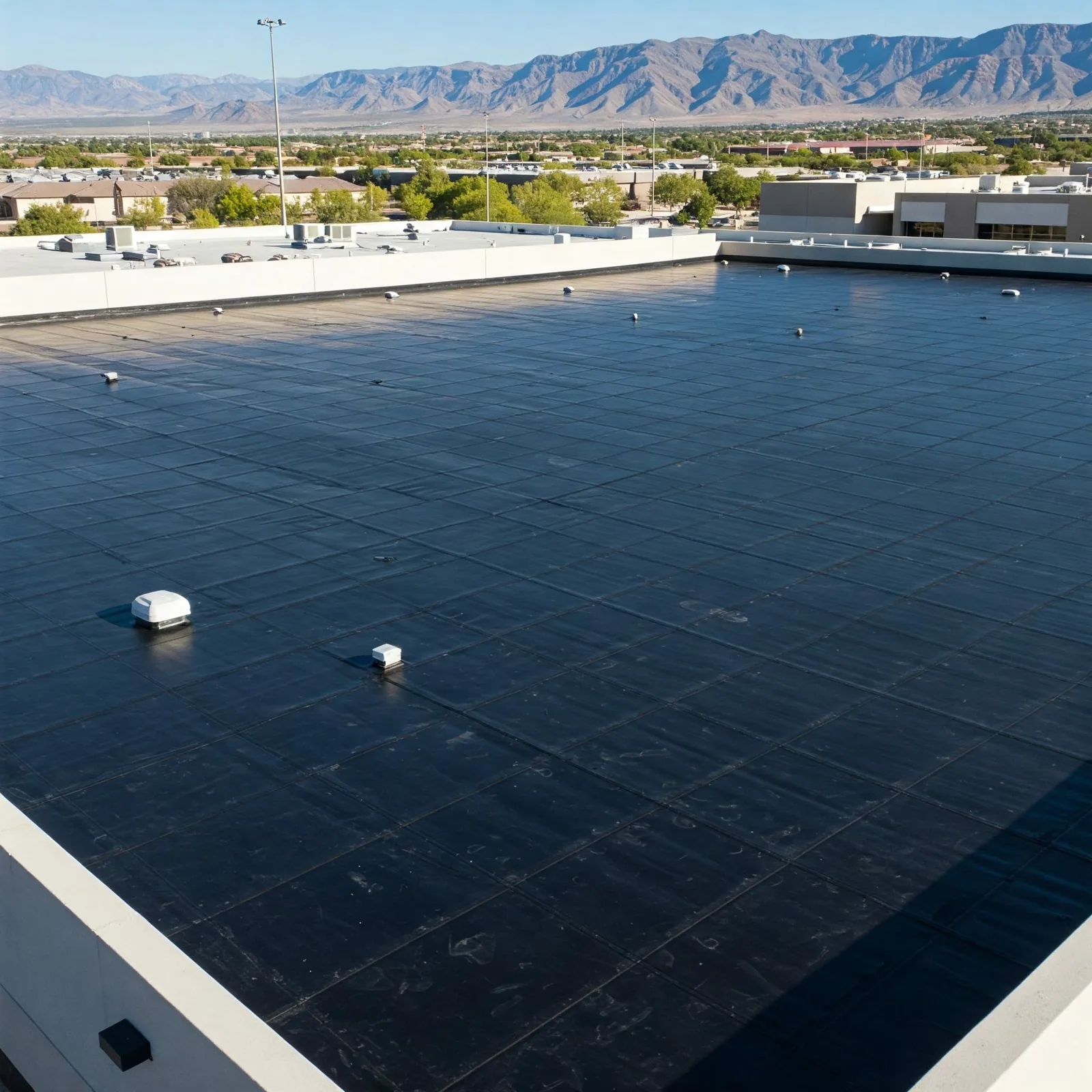
Soprema Commercial Roofing in Rio Rancho, NM

A blister at a membrane lap can be a surface concern or a sign that the repair needs to reach a lower layer. For a Soprema roof in Rio Rancho, NM, we first identify whether the assembly uses modified bitumen, a synthetic membrane, or a liquid-applied system. Soprema's product range includes SBS-modified bitumen, PVC, and PMMA/PMA materials. Each needs its own preparation and tie-in. We inspect the roof zone, confirm the substrate, and test the repair area before deciding whether a patch, detail repair, or broader scope fits.

Separate the system families

SBS modified bitumen uses asphaltic sheets with reinforcement, while PVC single-ply relies on membrane seams and compatible flashing. Liquid-applied systems form a different assembly and depend on substrate preparation and specified thickness. We do not select a repair by the manufacturer's name alone. The roof may include multiple generations of work, repairs over older layers, or a coating applied to a compatible base. We review closeout records, surface texture, lap geometry, flashing, and attachment clues, then mark what is confirmed and what requires a test opening.

Rio Rancho's commercial activity follows routes such as Southern Boulevard and NM 528; industrial employment is identified near Northern Boulevard. Those corridors help plan access and operating coordination, but do not establish which Soprema material covers an individual building. We confirm roof zones and existing layers on site. A City Center roof visit records the system clues and conditions that can change repair choice. Where the facility has production or tenant restrictions, the access contact sets an inspection window that protects operations below.

Inspect asphaltic laps and surfacing

On modified bitumen, we inspect lap edges, granule surfacing, base flashing, penetrations, and transitions into drains or walls. A lifted lap can admit water even if the field nearby looks stable. We probe the suspect edge, check whether the sheet is bonded, and look for trapped moisture or movement below. A localized repair has to connect to stable material and restore the intended lap direction. If the sheet is split or the underlying assembly is wet across a broader area, the scope expands only after that boundary is verified. The modified-bitumen assembly review can help the owner understand the layers being inspected.

At Albuquerque International Sunport, daily highs typically reach 90°F or more on 64.4 days per year. On a Rio Rancho roof, that heat makes work timing and surface temperature part of the preparation plan for a liquid repair. We inspect lap edges and vertical transitions directly, then sequence the work for suitable surface conditions. We photograph the affected lap before and after work and record the repair material. A seam repair evaluation separates an open sheet edge from unrelated curb or drain conditions.

Prepare the substrate for liquid systems

Liquid-applied flashing or restoration depends on a clean, sound substrate and the correct reinforcement at transitions. A resin product may be used at a detail or as part of a broader system, but it does not automatically bridge an unstable base. We inspect the existing surface for dirt, chalking, loose granules, failed sealant, moisture, and movement. A test area can show whether preparation and adhesion are adequate. We document the substrate, reinforcement, and details treated so the owner can distinguish a localized flashing application from a roof-wide coating scope.

City Center is planned for commercial, employment, education, entertainment, and residential uses, while Enchanted Hills Commerce Center is a planned commercial and industrial area near NM 528 and NM 44. A building in either area may have a different access pattern or equipment layout; the roof field and substrate need direct inspection. If a liquid repair is proposed around a curb or pipe, the penetration detail service can map the transition separately. A broader restoration review includes adhesion, drainage, and repairs needed before coating application.

Check moisture before adding layers

A new layer over wet insulation can preserve the problem instead of correcting it. We review drainage, attachment, and the number of existing layers before considering recover or restoration. If the roof plan shows low areas, we inspect the actual drain bowl and look for water that remains after the outlet is clear. When moisture testing is used, we describe the method and confirmatory steps; a scan helps target investigation but does not prove every area is dry. A core cut or controlled opening may be necessary to verify the substrate and insulation.

July and August are the wettest normal months at the Albuquerque airport, so drainage deserves attention before and during the monsoon season. We inspect the actual drain bowl and overflow instead of assuming that a regional weather pattern identifies a problem at one property. A drain and scupper check looks at the real flow path. If standing water persists, a ponding-water assessment determines whether blockage, slope, or insulation condition is involved.

Record the system and repair limits

The work record should identify the confirmed Soprema family, surface preparation, materials, details restored, tested area, and photographs. If an owner has product specifications or a warranty document, we compare proposed work with those requirements before altering the assembly. We record open questions instead of treating an unverified product as settled. A condition report can tie each repair to a marked roof zone and list a separate follow-up test.

Facilities near Northern Boulevard or City Center may have ongoing HVAC and electrical work. Vendor visits can disturb membrane, flashing, or coating at a curb, so maintenance staff should add later alterations to the roof file. If a future replacement is considered, the measured zones, moisture results, drainage, and substrate condition should stay with the decision. Owners comparing other membrane choices can review a Johns Manville system and a Holcim Elevate assembly without assuming that the products share repair materials. The repair is complete when the tested boundary and closeout record match the work performed.

For occupied buildings, we coordinate material staging, roof access, noise, and protection of interior operations. A temporary water-control measure is recorded separately from permanent restoration. The facility contact receives a concise list of confirmed work, any area still requiring access, and the date or condition for the next inspection. That record helps an asset manager decide whether to monitor, repair another detail, or price a larger roof scope using field evidence.

Common Questions About Soprema Commercial Roofing

What Soprema roof systems do you inspect?

We inspect the installed system, which may include modified bitumen, PVC membrane, or liquid-applied products. The actual material is confirmed from records and field details before we specify a repair. A single roof can also contain more than one generation of work.

Can Soprema liquid-applied material fix any roof leak?

No material should be chosen before the substrate and detail are checked. We identify the leak path, remove loose or incompatible surface material as required, and test preparation and adhesion. If moisture or movement extends below the detail, that condition needs its own repair boundary.

How do you decide whether modified bitumen needs a patch or replacement?

Our assessment covers laps, surfacing, flashing, attachment, and moisture around the reported area. A local split on stable material may be repairable; widespread deterioration or wet layers can change the scope. The report lists the findings that support a repair or a replacement comparison.

Should a coating go over an older Soprema roof?

Only after the existing surface is identified and tested for compatibility, adhesion, moisture, and drainage. We record preparation needs and repairs that must be completed first. A coating will not correct a blocked outlet or wet insulation beneath the roof.

What information do you need for the first inspection?

Send the roof plan or access point, product records, reported leak location, access contact, and operating limits. We use those details to map zones and choose a safe inspection route. If the system cannot be confirmed from records, field testing resolves the repair material.

Identify the Soprema assembly before repair

Share the building location, reported condition, roof records, access contact, and inspection window. We will inspect the substrate and details, then document the repair limits and any testing needed.